


The first national convention of the Rastriya Swatantra Party (RSP), currently the country’s ruling party, marks a significant milestone in Nepal’s evolving political landscape. The convention is not merely an organisational gathering; it is a crucial moment for a party that has risen with unprecedented speed from a political newcomer to a governing force. While the convention is expected to strengthen the party’s organisational legitimacy through the election of a new leadership and endorsement of key policy documents, its greater significance lies elsewhere: it offers RSP an opportunity to clearly define its ideological identity. Few political parties in Nepal’s recent history have achieved what RSP has accomplished in such a short period. Riding on widespread public frustration with traditional parties and a promise of clean governance, accountability and change, the party rapidly transformed itself into a major political force. Its success reflects not only effective leadership and communication but also the electorate’s desire for an alternative to established political actors. The enthusiasm surrounding the convention, attended by leaders from across the political spectrum, is therefore understandable. The advice offered by many of those leaders—to respect and safeguard the public mandate entrusted to the party—deserves serious consideration. Nepal’s political history is replete with examples of parties that squandered popular support through complacency, internal conflict and a failure to remain responsive to public expectations. RSP must avoid a similar fate.
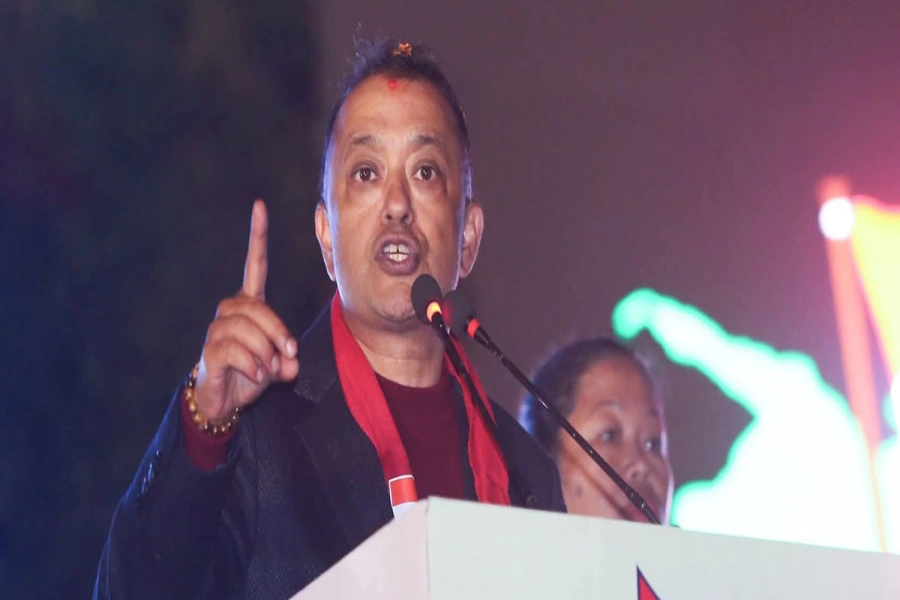
Gagan Thapa says NC’s internal debate is ideological, not a pow...
One of the most persistent criticisms levelled against the party since its inception has been the absence of a clearly articulated ideological foundation. Unlike traditional political parties that identify themselves through established political doctrines, RSP has largely defined itself through opposition to the status quo and a commitment to better governance. While this approach helped attract a broad coalition of voters dissatisfied with existing political forces, it has also created uncertainty about the party’s long-term political vision. Questions regarding the party’s stance on key constitutional and political issues remain unanswered. RSP leaders have repeatedly expressed support for the federal democratic republican system. However, their position on federalism itself has often appeared ambiguous. Similarly, the party has advocated constitutional amendments without always specifying the precise changes it seeks or the principles guiding such reforms. As a governing party, it can no longer afford to rely on broad slogans or strategic ambiguity. This convention presents an ideal opportunity to address these concerns. The policy documents, political reports and organisational resolutions discussed and adopted during the gathering should clearly articulate the party’s vision for the state, governance, economic development, federalism and constitutional reform. Ideological clarity is not merely an academic exercise; it provides direction for policymakers, helps maintain internal coherence and enables citizens to evaluate a party’s performance against clearly stated principles.
The convention is also important from the perspective of internal democracy. The election of a new Central Working Committee will test the party’s ability to manage competition without fostering permanent factionalism. Leadership contests and alliances are natural features of democratic organisations. The challenge is not to eliminate competition but to ensure that internal elections strengthen rather than weaken party unity. A mature political party is one in which members can compete vigorously for leadership positions while remaining committed to common goals after the contest concludes. The speeches delivered by party leaders at the convention suggest a growing awareness of these responsibilities. Their efforts to respond to criticisms and clarify the party’s positions indicate a degree of political maturity. Yet confidence born from electoral success should not evolve into complacency. Public trust, particularly the trust placed in a relatively new political force, can be remarkably fragile. There is every reason to believe that the convention will successfully complete its organisational tasks. However, its lasting legacy will depend less on who occupies leadership positions and more on whether the party succeeds in defining what it fundamentally stands for. Organisational legitimacy is important, but political credibility ultimately rests on clarity of purpose. For a party entrusted with governing the country and shaping its future, this is the moment to move beyond being merely a vehicle of public frustration and become a political institution guided by a coherent vision. If RSP uses its first national convention to provide that ideological clarity, it will not only strengthen itself but also contribute to the maturation of Nepal’s democratic politics.










-1782125987.webp)
-1200x560-1782120651.webp)


