


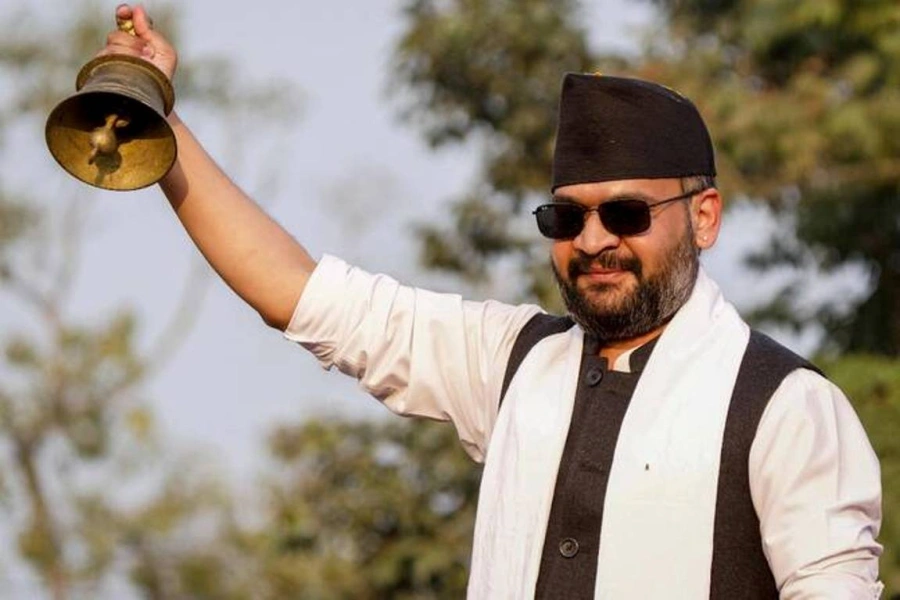
KATHMANDU, March 28: Rapper-turned-politician Balendra “Balen” Shah has made history as Nepal’s youngest democratically elected Prime Minister at the age of 36.
President Ram Chandra Paudel administered Balen, senior leader of Rastriya Swatantra Party (RSP) the oath of office and secrecy amidst a special ceremony held at Sheetal Niwas on Friday.
On the occasion of Ram Navami, following traditional Sanatan Vedic and Buddhist customs, Balen was sworn in at 12:34 PM. The ceremony featured prayers for peace by 108 Batuk, recitation of the Ashtamangala by 16 Buddhist monks, and the sounding of seven conch shells.
Shortly after his swearing in, 14 cabinet ministers, who assumed their offices on Friday itself, were also sworn in. In the 15-member cabinet, Minister for Finance Dr Swarnim Wagle holds the second rank, while Minister for Home Affairs Sudan Gurung ranks third.
The first cabinet meeting led by PM Balen on Friday evening approved four key decisions. The meeting decided to approve 100 new initiatives aimed at administrative and governance reforms, signaling a focus on efficiency and systemic improvements and immediately implement the recommendations of the Gen Z movement probe commission-led by former judge Gauri Bahadur Karki.
Born on April 27, 1990, in Nardevi, Kathmandu, Balen was elected to the House of Representatives from Jhapa-5, defeating former Prime Minister and CPN-UML chairman KP Sharma Oli by a landslide margin of 49,614 votes. Balen secured 68,348 votes, while Oli garnered only 18,734.
Before entering national politics, Balen served as the Mayor of Kathmandu Metropolitan City (KMC). He resigned from the mayoral post on January 18 and joined the RSP, which campaigned for him as a future PM.
Balen is also Nepal’s first Prime Minister from the Madheshi community, breaking decades of political dominance by Brahmins and Chhetris.
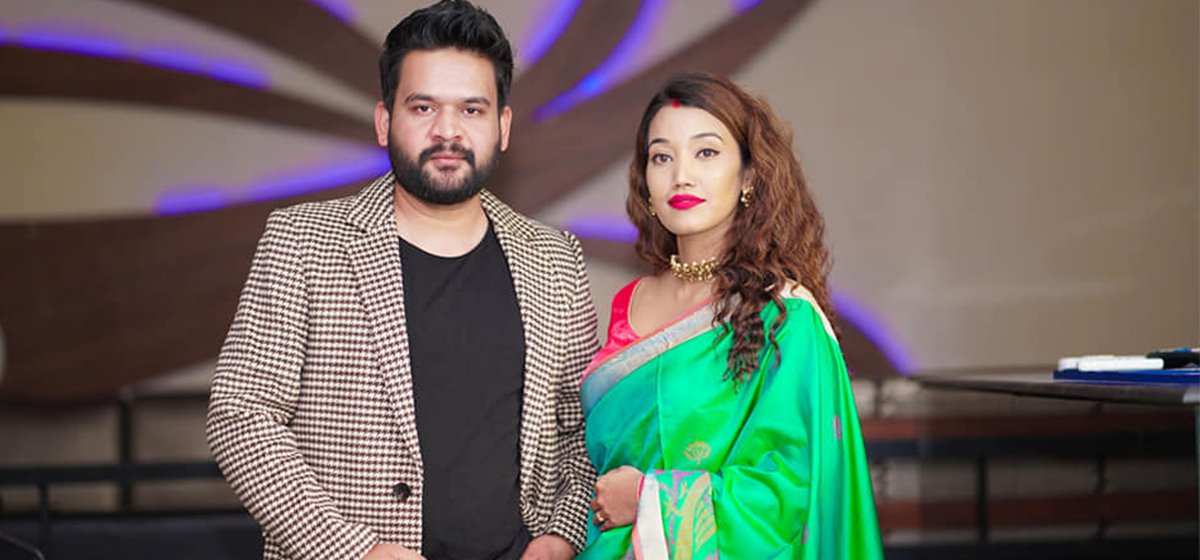
Kathmandu’s new Mayor Balen Shah’s wife says - “From my Balen,...
Nepal’s first Prime Minister, Bhimsen Thapa, served from 1863 BS to 1894 BS (1806–1837 CE), assuming office at 32. In the 219 years from Thapa to Balen, Jung Bahadur Rana was previously the youngest prime minister at 31, although the position was not democratically elected at the time. Among 40 prime ministers in this period, only Marich Man Shrestha came from an indigenous community. During the Panchayat era, Tulsi Giri became prime minister at 33 under King Mahendra’s supervision.
Following the 1990 political changes, traditional parties repeatedly promoted the same leaders to the premiership. Balen’s election marks a generational shift, making him the first new, young prime minister in decades. With his appointment, Nepal has a prime minister under 40 for the first time in 52 years.
Balen, the youngest son of Dr. Ram Narayan Shah and Dhruva Devi Shah, lives in Gairigaun, Sinamangal, Kathmandu. He holds a Bachelor’s degree in Civil Engineering from White House Institute of Technology and a Master’s in Structural Engineering from Visvesvaraya Technological University, Karnataka, India.
After the 2015 earthquake, Balen actively participated in rescue and relief operations, establishing his reputation as a social worker. He married Sabina Kafle eight years ago; she is a public health professional.
Balen’s interests in music and poetry began at an early age. Alongside rap and engineering, he has maintained a long-standing interest in Nepalese politics.
He had initially planned to contest the 2017 local elections under the Bibeksheel Nepali Party but later announced on social media that he would abstain due to insufficient preparation. In the 2022 local elections, Balen ran for Mayor of KMC, promising to secure 90,835 votes. Though many considered this claim ambitious, he went on to defeat influential candidates, including UML’s Keshav Sthapit and Nepali Congress’ Sirjana Singh. Balen won with 61,767 votes; Sthapit received 38,341, and Singh finished third with 38,117 votes.
Balen Cabinet: Ministers by Portfolio
Balen – Prime Minister
Dr Swarnim Wagle – Minister for Finance
Sudan Gurung – Minister for Home Affairs
Shisir Khanal – Minister for Foreign Affairs
Sunil Lamsal – Minister for Physical Infrastructure, Transport, and Urban Development
Biraj Bhakta Shrestha – Minister for Energy, Water Resources, and Irrigation
Khadka Raj (Ganesh) Paudel – Minister for Tourism, Culture, and Civil Aviation
Sasmit Pokharel – Minister for Education, Science, and Technology, and Youth and Sports
Nisha Mehta – Minister for Health and Population
Dr Bikram Timilsina – Minister for Communications and Information Technology
Pratibha Rawal – Minister for Federal Affairs and General Administration, and Land, Management, Cooperatives, and Poverty Alleviation
Deepak Sah – Minister for Labor, Employment, and Social Security
Sobita Gautam – Minister for Law
GeetaChaudhary – Minister for Agriculture, Livestock Development, and Forest and Environment
Sita Badi – Minister for Women and Children, and Water Supply




-1782782519.webp)


-1200x560-1774606010.webp)


