

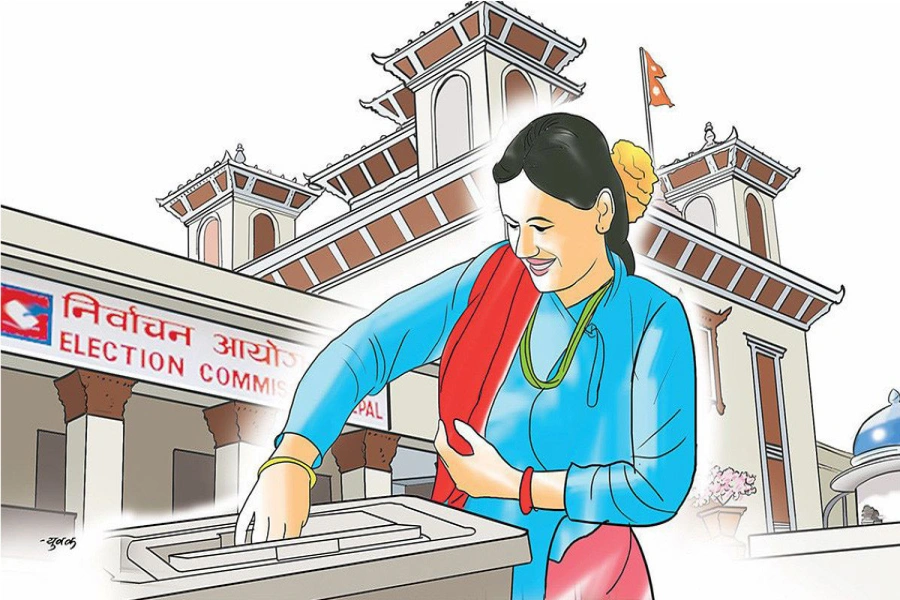
KATHMANDU, Feb 16: With mass meetings, rallies and processions restricted under the election code of conduct until February 16, candidates contesting the House of Representatives election have intensified door-to-door outreach and small-scale interaction programs.
Voting is scheduled for March 5.
The Election Commission (EC) has designated February 16 to March 2 for formal campaign activities, including public meetings, rallies, processions, corner meetings and the use of loudspeakers. Until then, parties and candidates are barred from organizing large gatherings.
Campaigning intensifies in Karnali as Election Day draws closer
As a result, candidates have spent the past three weeks conducting door-to-door visits, internal meetings and voter-focused programs. Many say direct interaction with voters has proven more effective than large rallies.
Most candidates prefer morning hours for door-to-door outreach, citing higher chances of finding voters at home. Some have also gone live on social media platforms during their visits and held small, closed-door meetings with local supporters and party workers.
Candidates typically travel with close aides, and in some areas, door-to-door campaigns have included local musical instruments and traditional practices, occasionally resembling small rallies. Before beginning outreach, candidates assess local issues, past election results and voter sentiment.
The Nepali Congress presented its election manifesto to the Election Commission on Sunday. General Secretary Gagan Thapa, a candidate from Sarlahi–4, returned to Kathmandu on Saturday evening for the event after conducting campaign activities in Madhes.
Similarly, CPN-UML Chair KP Sharma Oli, a candidate from Jhapa–5, returned to Kathmandu to release his party’s manifesto after spending nearly 20 days campaigning in his constituency.
Rastriya Swatantra Party Chair Rabi Lamichhane, contesting from Chitwan–2, has also resumed campaigning in his constituency after visiting several districts. Meanwhile, leaders of other major parties are engaged in door-to-door outreach in their respective constituencies.
According to the EC, ballot printing is nearing completion. Ballots for 133 constituencies across 63 districts have already been printed, totaling 17.163 million ballot papers. The commission said printing for all 20.323 million ballots required under the first-past-the-post system is expected to conclude within the next three days. Printing began on January 6.





