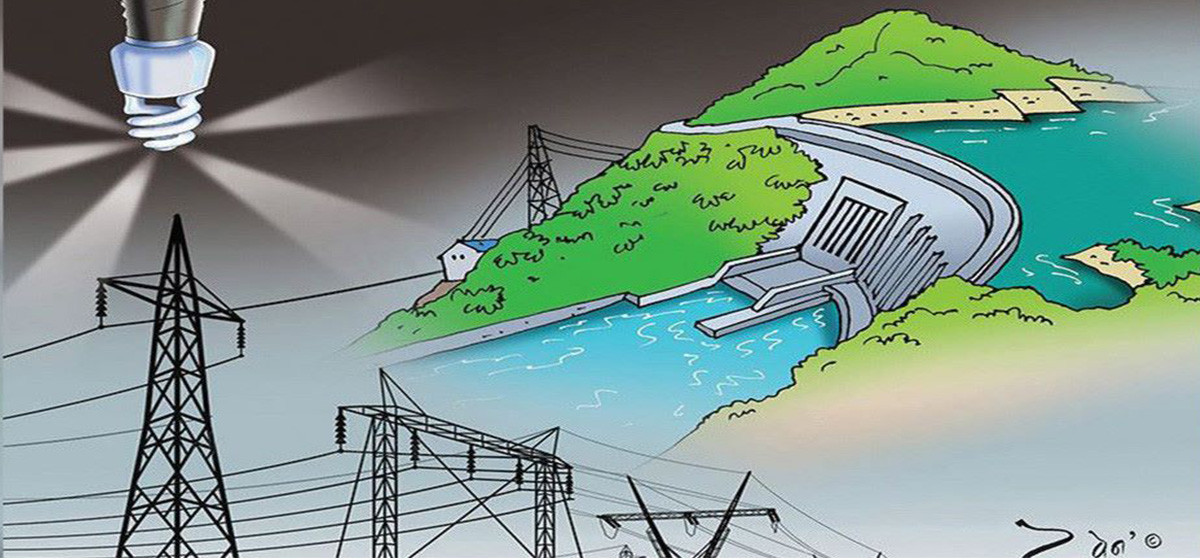
Nepal has set itself an enormous goal: generating 15,000 megawatts of electricity within five years and 30,000 megawatts within ten. The Rastriya Swatantra Party-led government sees hydropower as the engine that can drive industrial growth, exports and national prosperity. On paper, it sounds like the long-awaited breakthrough for a country blessed with rivers yet trapped for decades in energy scarcity. But experts are raising a difficult question that governments often prefer to ignore: what happens when a country produces far more power than it can use or sell? Nepal is no longer struggling only to produce electricity; it is also struggling to make hydropower profitable. Despite increases in population and the number of households, domestic demand has remained weak. Similarly, transmission infrastructure remains inadequate, while export markets—especially India—are becoming increasingly competitive due to the expansion of cheap solar power and regional energy grids. If policymakers continue chasing megawatt targets without addressing storage, pricing and market access, Nepal may end up building an energy empire on paper while creating financial stress in the real economy. The government deserves credit for thinking big. Nepal has spent too many years underestimating its hydropower potential. The country’s rivers can power homes, factories and public transport while reducing dependence on imported fossil fuels. Hydropower could also become a major export commodity, giving Nepal a stronger economic footing in South Asia.
Floods disrupt 32 hydropower projects, 16 affected in Ilam alon...

However, the obsession with installed capacity hides a deeper structural flaw. Nepal’s current hydropower expansion remains heavily dominated by run-of-river projects. These plants generate abundant electricity during the monsoon, when rivers swell, but output drops sharply during the dry season. As a result, Nepal exports surplus power in summer and imports electricity in winter. In effect, the country must continue building more projects to generate excess energy during the rainy season, only to buy electricity again when river flows decline. Progress, in this sense, risks becoming circular. Large reservoir-based projects such as the Kulekhani Hydropower Project, along with proposed projects like the Budhi Gandaki Hydropower Project and the West Seti Hydropower Project, could help solve this imbalance by storing water and releasing electricity during peak demand periods. Nepal could then sell electricity during evening peak hours, when demand and tariffs in India rise. India’s rapid expansion of solar energy makes this issue even more urgent. Companies such as the Adani Group are investing billions in solar farms that produce extremely cheap daytime electricity. Consequently, electricity prices on Indian exchanges often fall sharply during daylight hours. Nepal’s hydropower, produced at comparatively higher costs, risks becoming expensive electricity sold into a cheap market. Meanwhile, Nepal’s banking sector and stock market are becoming increasingly tied to hydropower projects. Many independent power producers are financed through bank loans and public share offerings. If these projects fail to generate stable returns, the consequences will not remain confined to the energy sector. The impact could spread to banks, investors and ordinary households that invested in hydropower shares believing they were a guaranteed path to wealth.
Nepal possesses immense hydropower potential, and the country’s priorities should now be clear: it is time to accelerate reforms, not merely expand capacity. The government must focus on building storage infrastructure and strengthening cross-border electricity trade to create a more resilient energy system. Long-term power trade agreements with neighboring countries would further reinforce this effort. Encouraging electric public transportation and attracting energy-intensive industries should also become central to Nepal’s hydropower strategy. At the same time, stronger government support is needed to promote the domestic use of electricity for cooking and heating, as well as the rapid expansion of electric vehicle charging stations. To transform Nepal’s rivers into sustainable economic assets, authorities need a comprehensive strategy that combines the right mix of hydropower projects with smart energy marketing and management policies. Nepal must also attract both domestic and foreign investment through clear, consistent and predictable laws and regulations. If managed effectively, hydropower can indeed become the backbone of Nepal’s economy, transforming not only the energy sector but also the country’s broader socio-economic future.












-1778746562.webp)