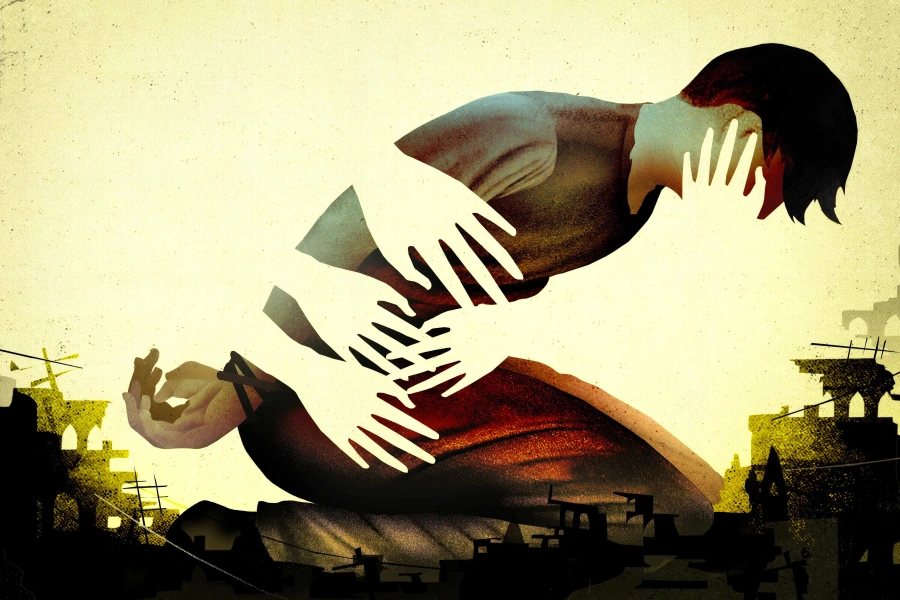
ROLPA, April 17: Survivors of sexual violence during Nepal’s armed conflict have come together in a large-scale gathering, issuing a 10-point declaration and demanding justice, recognition, and reparations, while sharing deeply personal accounts of trauma and survival.
Sitting cross-legged on cushions inside a training hall, two women—identified as ‘Comrade 11’ and ‘Comrade 12’ to protect their identities—broke down in tears as they reunited after more than two decades. Once teenage girls caught in the violence of the Maoist conflict, their emotional embrace reflected years of suppressed pain and separation. Organizers used pseudonyms to maintain confidentiality and ensure the safety of participants.
One survivor recounted how, during the conflict around 1998–1999, two 14-year-old girls from a remote village were unable to flee when security forces arrived. Hiding inside a large bamboo basket proved futile as they were discovered and forcibly taken away. They endured months of physical torture and were subjected to gang rape. Eventually released, they returned to their village physically and emotionally scarred, later being compelled to join the Maoist movement despite having no understanding of politics.
Their lives took separate paths after the conflict, and they lost contact for years. It was only 22 years later, through a program organized by a Lalitpur-based civil society organization working on mental health and interim reparations for survivors, that they reunited. One of them said revisiting past trauma through shared tears had brought a sense of emotional relief, but lamented that their suffering has largely gone unacknowledged.
In another account, six young women detained during the conflict on suspicion of Maoist affiliation were subjected to abuse in police custody and prison. After the peace process, they were scattered across different places, carrying psychological scars in isolation. At a recent gathering, five recognized each other instantly, while one—aged significantly—took time to be identified. The reunion turned emotional, with the women embracing and crying as they recalled their shared trauma.
TRC faces backlash over public call for sexual violence complai...

Participants said they spent the night together during the program, sharing stories without sleep. “We talked all night, cried remembering the past, and found some healing in sharing our experiences,” one said. They expressed a desire for more survivors to be brought together to share their pain and support one another.
One survivor shared that she was raped by a Maoist commander while assigned to cook in a safe house. She continues to suffer from mental health issues and struggles to trust men, including her own family members. “Even today, I don’t feel comfortable around men,” she said, adding that the state still fails to recognize them as conflict victims and instead demands proof of rape.
According to Dr Susan Risal, head of a Lalitpur-based organization working on sexual violence during the conflict, more than 350 survivors were brought together under the banner “Path to Peace and Justice.” Over two days, participants engaged in group discussions, shared experiences, and reviewed the status of complaints filed with the Truth and Reconciliation Commission.
The survivors, dressed in traditional attire, discussed their concerns about justice, reparations, and confidentiality of their cases. They jointly issued a 10-point declaration calling for immediate justice, access to healthcare and counseling, comprehensive reparations, protection from stigma and threats, independent monitoring of justice processes, official recognition of their suffering, social reintegration, implementation of the 2006 peace agreement, inclusion in policymaking, and free legal aid for all survivors.
“We demand identity, security, and justice,” the declaration states, emphasizing urgency with the slogan: “Justice now, not later.” Survivors said they want to see perpetrators held accountable through fair investigations and ensure their voices are heard in the legal process.
Dr Risal said her organization aims to act as a bridge between survivors and the government, noting that sexual violence during the conflict has not received adequate state priority. “Girls as young as 12 and women up to 60 were victims of rape during the conflict,” she said, adding that the gathering was organized to help survivors feel they are not alone and to support their mental and social recovery.
Legal expert Dr Mandira Sharma described the gathering as historic, noting that such a large-scale collective meeting of survivors had not taken place before. “Coming together helps them realize they are not alone and can influence how society perceives them,” she said, stressing the importance of survivor-led advocacy in transitional justice.
Shikha Bhattarai, Nepal head of the Global Survivors Fund, said the organization is working in five districts to support survivors’ mental health and interim reparations. She added that the demands raised through the declaration would be taken to the government and donor agencies.
Currently, a total of 4,236 complaints—314 old and 3,912 new—related to conflict-era abuses remain pending with the Truth and Reconciliation Commission. Survivors have urged the government, now backed by a strong majority, to address transitional justice issues that previous administrations failed to resolve.
Calling on the state to hear “a mother’s plea,” the survivors said they hope to see justice delivered within their lifetime.