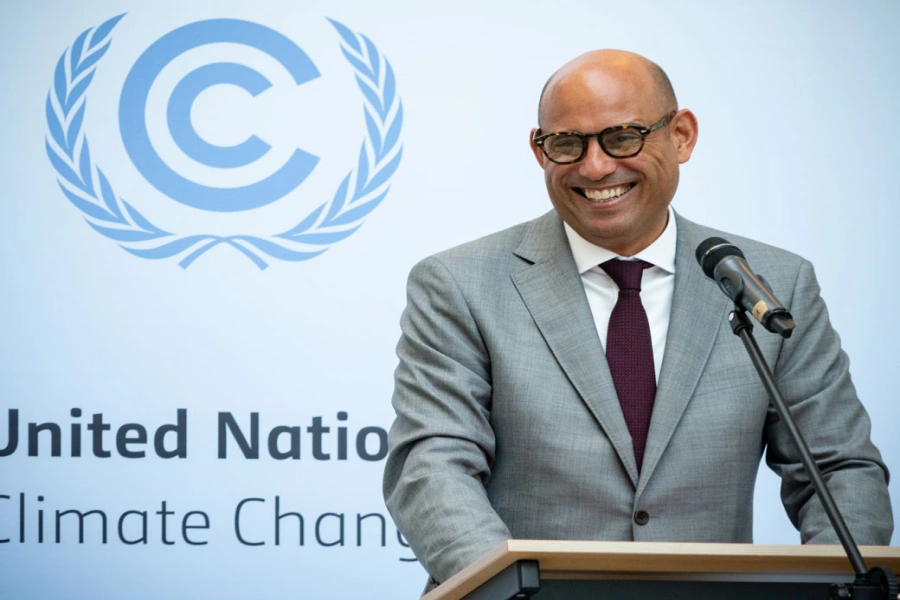
KATHMANDU, Sept 18: Nepal’s catastrophic flood along the Bhotekoshi-Trishuli corridor on August 26 has been cited as a stark example of the human consequences of climate change by COP31 President-designate Murat Kurum, who said the Himalayan country offers a direct picture of what climate risks mean for people, infrastructure and development.
Addressing a high-level session at the headquarters of the World Meteorological Organization (WMO) in Geneva on Wednesday, Kurum said climate risks were now directly affecting people’s lives and livelihoods, cities and development prospects across the world.
“We saw one of the most painful examples in Nepal just a few weeks ago,” Kurum said, referring to the disaster in Nepal’s Himalayas. “A glacier collapse in the Himalayas triggered devastating floods. Entire communities, roads, bridges and energy infrastructure were hit.”
He cited Nepal’s latest official disaster figures, saying the disaster had claimed 1,386 lives and left more than 5,130 people missing.
SHIFT for Our Planet: Youths urge authorities to make climate j...

“If we want to understand the consequences of climate change, we need only look at Nepal,” Kurum said.
His remarks placed Nepal’s August disaster at the centre of a wider discussion on the growing importance of climate science, weather observation, forecasting and early-warning systems.
Kurum stressed on strengthening the link between climate science and implementation ahead of COP31, which will be held in Antalya, Türkiye from November 9 to 20.
Kurum said the global climate system was becoming increasingly unstable, with record temperatures, drought risks, melting glaciers and warnings of El Niño towards the end of 2026.
Türkiye, he said, supports the WMO’s Early Warnings for All initiative and has developed systems combining weather observations, radar, satellite data and forecasting models. He said Türkiye was also sharing technical knowledge with other countries and would train 30 technical personnel from least developed countries each year over the next three years.
For Nepal, the COP31 president-designate’s remarks come at a time when the country is confronting the enormous humanitarian and economic consequences of the August disaster. More than 13,700 people have been rescued, while thousands of displaced people have been housed in temporary centres.
Kurum said COP31 would focus on implementation—turning existing climate commitments into concrete action—and addressing barriers related to finance, technology and capacity.
“The 1.5°C goal is our compass,” he said, calling for faster emissions reductions, stronger adaptation and greater support for vulnerable communities.
Nepal, through the COP31 presidency’s own framing, has therefore emerged not simply as a victim of a Himalayan disaster but as a real-world illustration of why climate science, early warnings, adaptation finance and international cooperation need to translate into action.