


Nepal Airlines Corporation (NAC) was once regarded as a symbol of national pride, a flag carrier meant to connect Nepal to the world. Today, it looks more like a financial burden that no one in power wants to examine carefully or address urgently. With outstanding loans exceeding Rs 55.78 billion, the airline is not merely struggling; it is sliding deeper into a crisis that has been years in the making. The numbers tell a blunt story. Back in 2013, NAC borrowed around Rs 36 billion, mainly from the Employees’ Provident Fund (EPF) and the Citizen Investment Trust (CIT), to finance Airbus purchases. That decision alone locked the corporation into long-term repayment pressure. Today, NAC owes Rs 31.33 billion to the EPF and more than Rs 21.12 billion to the CIT. The Office of the Attorney General has now stepped in, demanding a repayment schedule. That instruction is a clear signal that routine financial discipline within NAC has already broken down. But the outstanding debt is only the surface problem. The deeper issue lies in NAC’s balance sheet, where the debt-to-equity ratio has reportedly fallen to negative 12.33. In simple terms, the airline owes far more than it owns, effectively wiping out its capital base. This is not a temporary cash-flow problem but a full-scale solvency crisis.
Public debt hits Rs 2.8 trillion mark
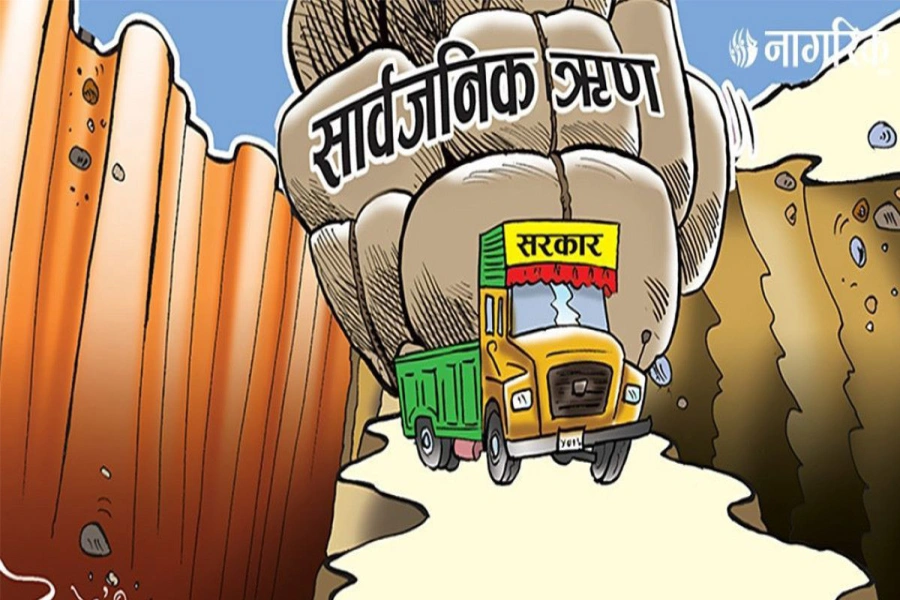
How did the national airline end up in such a mess? A large part of the answer lies in constant political interference. Every time a new government comes to power, it pushes for changes in NAC’s top leadership. This constant turnover prevents long-term planning and encourages short-term, politically driven decisions. Instead of implementing sustainable reforms, the corporation has repeatedly been forced to restart under new management. Management failures have compounded the crisis. NAC has failed to maintain proper financial oversight, allowing operating costs and expenses to rise without improving efficiency or service quality. Several aircraft procurement decisions have also been questionable. For example, the purchase of Chinese Y12e and MA60 aircraft between 2014 and 2018 added another Rs 6.66 billion to the airline’s debt burden. Those aircraft failed to generate the expected returns, worsening the corporation’s financial losses. At the same time, NAC has long operated under allegations of corruption, mismanagement, and opaque dealings. Rather than restructuring itself, the airline has continued accumulating debt simply to stay afloat, without addressing the structural weaknesses at the heart of the crisis.
The collapse of the national flag carrier cannot be blamed on a single group alone. Politicians are responsible for treating the airline like political property. Management has failed to ensure efficiency, accountability, and transparency. Regulatory and oversight bodies, despite repeated warnings, have also failed to enforce meaningful reforms. Even major lenders such as the EPF and CIT are now exposed to long-term financial risk because of the loans they extended to NAC. What is even more alarming is the absence of urgency. NAC continues to operate, but there is still no credible recovery strategy in place. As a result, the government is effectively allowing public liabilities to grow while the airline’s operational capacity continues to weaken. NAC now requires a comprehensive restructuring plan backed by political commitment, professional management, and strict financial discipline. Route rationalization, asset optimization, and transparent procurement must move beyond policy slogans and become enforceable practices. If nothing changes, the airline will not only remain trapped in debt but will continue draining public resources while gradually losing its ability to function as Nepal’s national carrier.












