I flew nearly 10,000 kilometres from Australia to Nepal to cast a single vote. At one level, this may seem like a personal decision. In reality, it reflects a much larger political story that has been unfolding in Nepal over the past three decades. My journey back home captures a wider sentiment among the Nepali diaspora: a desire to remain engaged with the country’s future and a growing frustration with a political system that has remained stagnant for far too long, recycling the same leaders and the same failures.
Like many younger Nepalis, I have never been a traditional party voter. I have always been drawn more to individuals, ideas, and credibility rather than to party flags. That is why movements such as Bibeksheel and later Bibeksheel Sajha once gave me hope. For many urban and younger voters, they represented the possibility of a different political culture centered on accountability, professionalism, and civic responsibility rather than patronage and hierarchy.
That is why the recent rise of the Rastriya Swatantra Party (RSP) is not simply a sudden electoral wave. It is the outcome of deeper societal changes taking place in Nepali society since the early 2000s. Diaspora influence is only one part of that story. To understand why so many voters shifted so decisively, we need to examine the interaction between migration, generational change, digital connectivity, and a sequence of political moments that intersected at the right time, leading to convincing citizens that alternatives were finally possible.
The Diasporic Influence
One of the defining features of modern Nepal is migration. Over the last two and a half decades, Nepal has quietly become one of the world’s major labour-exporting countries. The post-COVID-19 era saw a 70% annual increase in workers migrating to the Gulf and Malaysia, compared to 2020 and 2025, based on Department of Foreign Employment reports. The same can be said about students migrating for educational purposes. According to the 2021 National Population Census, it can be estimated that more than six million Nepalis live overseas. Today, the scale of migration is so significant that nearly one in four Nepali households is estimated to have some connection to a family member abroad.
Two-day Huawei Digital Nepal Conclave 2022

Migration has not only reshaped Nepal’s economy; it has also reshaped its political consciousness. Through daily conversations on messaging platforms, Nepalis abroad remain deeply connected to their families back home. They compare governance systems, public services, urban management, employment opportunities, and the everyday efficiency of life in other countries with the frustrations of Nepal. Hence, migration did not only bring remittances into Nepal; it also brought new expectations of government.
The Digital Era
This can also be seen concurrently with how digital connectivity has transformed the way political information flows. According to the Nepal Rastriya Bank Report (Payment System Oversight Report 2023/2024), 73% of Nepalis have access to smartphones. Access to social media platforms has also increased drastically since COVID-19. In the 2000s and much of the 2010s, political messaging was still heavily filtered through party structures and traditional media. That created room for manipulation and narrative control. But the spread of smartphones and affordable internet gradually changed that. By the late 2010s, and especially after COVID-19, political discourse had moved decisively onto digital platforms. Facebook, TikTok, YouTube, and other social platforms became central spaces where political narratives were challenged, satirized, exposed, and debated in real time.
This shift mattered because access to information changed voter behaviour. Citizens, especially young citizens, became more informed, more sceptical, and more politically expressive than before.
The Transition of Generation
This digital shift coincided with the generational transition in the electorate. Many of us who watched Nepal’s political instability unfold through the 2000s and 2010s were too young to vote when repeated constitutional delays, parliamentary dissolutions, and ego-driven political bargaining were taking place. But we were watching, absorbing, and forming judgments. Those born in the 1990s are now mature adult voters. Those born in the early 2000s have entered the electorate. Even those born in the mid-2000s have begun participating in political conversations with confidence and intensity. Younger voters became more globally connected, digitally literate, and less emotionally tied to the historical identities of traditional parties.
According to statistics from the Nepal Election Commission, about 52% of voters are aged 18–40. Hence, this election was surely shaped by a generation that grew up in a different world from the leaders who dominated politics for so many decades. The generational gap between the youth, who are more immersed in the era of information technology, and the leaders was evident.
The Domino Effect
These three elements did not operate in isolation. They interacted with a sequence of political moments that created a domino effect in the public imagination. Bibeksheel first introduced the idea of alternative politics for many urban youths. Then Balendra Shah’s victory in Kathmandu showed that the traditional party system was not electorally invincible. That moment was psychologically important. It demonstrated that a candidate outside the traditional party could not only compete but also win decisively.
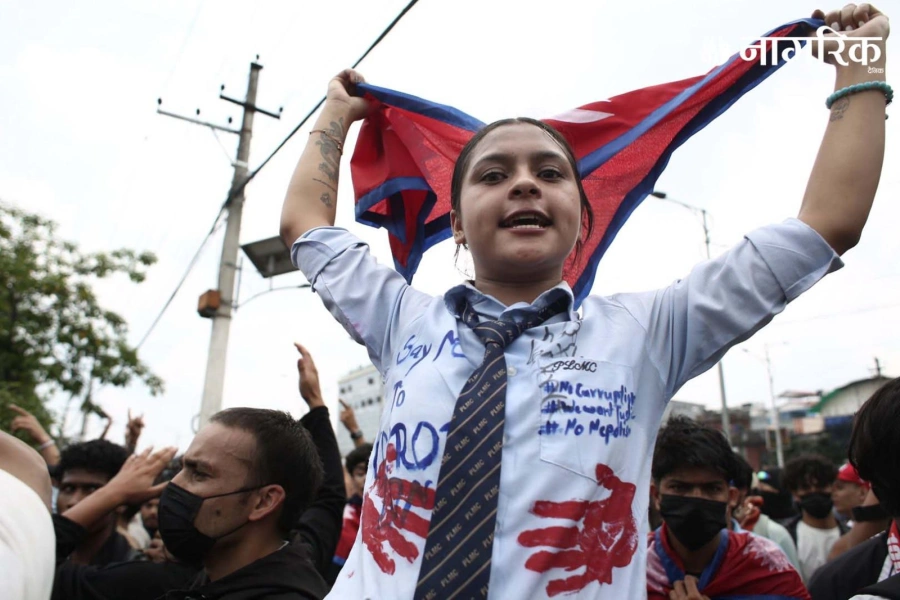
Consequently, the rise of the RSP under Rabi Lamichhane turned anti-establishment sentiment into a more organized national political force. Its success in the 2022 general election signaled that the alternative party was not just a hope; it was real. Later, online criticism of elite privilege and visible wealth among political families was trending online, and the social media restrictions under then Prime Minister KP Sharma Oli further intensified youth anger and gave rise to the Gen Z movement, leading to a decisive election that gave RSP a full majority. Also, the Balen factor played a huge role in bridging the gap between the Madhesi and Pahadi communities and therefore cannot be ignored.
Beyond the Election
My decision to return from Australia to vote must be seen within this larger shift intersecting at the right time, just after COVID-19 when migration peaked, social media use intensified, and the young population aged at the right time to become more politically aware. This was not merely an election about one party versus another. It was also an expression of accumulated frustration, sharpened by migration, empowered by digital access, and carried by a new generation of voters who have grown tired of political stagnation and the same old faces.
That shift has now helped produce an extraordinary outcome: a two-thirds majority for the RSP. But while this may mark the collapse of one political era, the challenge remains. Nepal’s history has shown that governments that rose on public frustration struggled once they entered power due to internal rivalry, weak party management, personality clashes, and the inability to maintain internal democracy.
That is now the real test before the RSP. Can it govern differently? Can it preserve internal discipline without reproducing the factionalism of the old parties? Can it remain accountable to the energy that brought it to power, rather than becoming sucked into the same political culture it promised to replace? Can it balance domestic reform with sensitive international diplomacy, made harder by the present global instability? That is yet to be seen.