KATHMANDU, March 31: Internal tensions within the Nepali Congress (NC) have escalated once again. A conflict that had subsided in recent months resurfaced following the government’s arrest of UML Chairman KP Sharma Oli and NC leader Ramesh Lekhak.
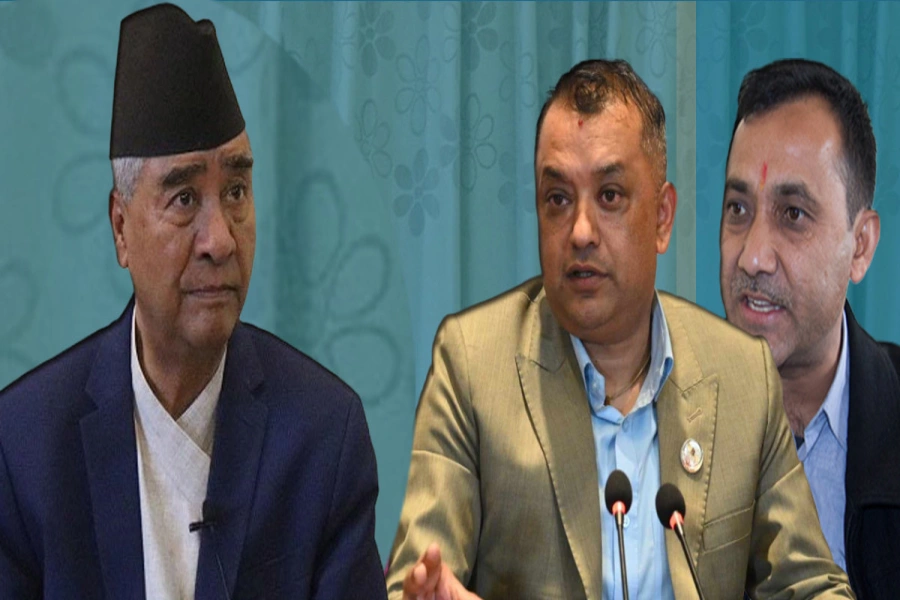
Former Prime Minister Oli and Home Minister Lekhak were arrested on Saturday for their alleged role during the Gen Z violence on September 8. The arrests have reignited divisions within the NC between the Gagan Thapa-led faction that assumed leadership through a special general convention held in January and the opposing faction led by Sher Bahadur Deuba that has challenged the convention’s legitimacy in court.
Although the Election Commission officially recognized the leadership elected at the special convention on January 16, the rival faction appealed the decision to the Supreme Court. With the court’s verdict still pending, the two sides have publicly expressed opposing views on the recent arrests, bringing the long-simmering dispute back to the forefront.
The faction that gained leadership through the special convention is now preparing disciplinary action against leaders such as Purna Bahadur Khadka. Meanwhile, the rival faction—which did not participate in the special convention—organized a congratulatory program in the federal parliament on Monday for newly elected lawmakers.
NC’s Poudel faction faces difficulty to choose a common candida...

A meeting of the central committee elected during the 14th general convention has been called for Tuesday, with members of the provincial leadership also invited, according to an insider. The same faction has scheduled a gathering of district chairs for April 2. Sources indicate the group is preparing to carry out parallel activities from the central to the local level.
Leaders from this faction argue they are moving forward with organizational work because the Supreme Court has not yet ruled on the party’s official leadership. They say these efforts began on Saturday and will continue on a regular basis. Monday’s parliamentary program, they noted, was meant to welcome newly elected lawmakers.
During the event, Khadka stressed that NC lawmakers in both the House of Representatives and the National Assembly should play exemplary and effective roles, working in the national and public interest. Recalling the party’s decades-long struggle for Nepali citizens’ rights, he called on leaders to ensure the democratic republican constitution and its guarantees are fully realized.
Leader Shekhar Koirala urged coordination within parliament and emphasized a focus on the country, the people, the constitution, and development issues.
Earlier, leader Prakash Sharan Mahat suggested in a video message that both factions—those aligned with the special convention and those opposed—should find common ground before proceeding with a general convention. He argued that forming a committee to organize a regular convention could help unite the party.
Meanwhile, the leadership that emerged from the special convention has announced plans to hold a general convention in the last week of September. The opposing faction has rejected this timeline and launched parallel activities, prompting internal discussions within the new leadership about how to proceed.