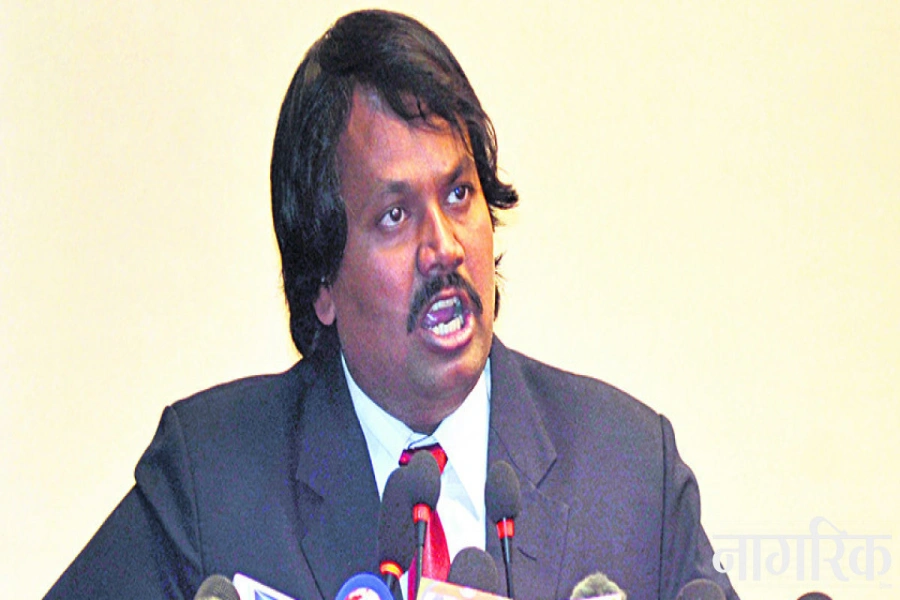
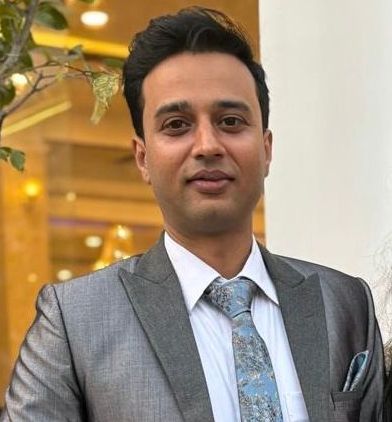
KATHMANDU, June 17: Foreign Minister Shishir Khanal's first official visit to China since the formation of the Rastriya Swatantra Party (RSP)-led government was never going to be a routine diplomatic engagement. The visit came at a sensitive moment in Nepal-China relations, marked by Beijing's lingering unease over last year's Gen Z movement, the emergence of a new political force in Kathmandu and Nepal's increasingly active engagement with Western partners.
Against this backdrop, Khanal's Beijing mission appears to have been driven by three interconnected objectives: rebuilding Chinese confidence in Nepal's strategic commitments, strengthening ties between the ruling RSP and the Communist Party of China (CPC), and convincing Chinese businesses that Nepal remains an attractive destination for investment.
The timing of the visit is significant. Since the political upheaval triggered by the Gen Z movement in last September and the subsequent rise of the RSP-led government, Beijing has been carefully assessing Nepal's evolving political landscape. China traditionally values political predictability in its neighborhood and has closely monitored whether Nepal's new leadership would maintain the country's long-standing diplomatic commitments.
That concern was subtly reflected in the message delivered by Chinese Foreign Minister Wang Yi during his meeting with Khanal in Beijing on Monday. According to the Chinese Foreign Ministry's readout, Wang remarked that "distant relatives are not as good as close neighbours" and stressed that China would always remain a reliable neighbour and development partner for Nepal.
While couched in the language of traditional diplomacy, the statement carried a broader strategic message. It appeared to reflect Beijing's concern over the growing activities of some Western countries in Nepal and the increasing prominence of Western-backed initiatives in recent years. Chinese officials have repeatedly expressed reservations about programs such as the Millennium Challenge Corporation (MCC) and the State Partnership Program (SPP), viewing them through the lens of regional strategic competition.
JC recommends 35 judges for district courts and six judges for...

Reportedly, discussions between the two sides touched upon Chinese concerns regarding Western influence in Nepal. For Beijing, the issue is not simply about individual projects but about the broader strategic orientation of Nepal's foreign relations. The rise of a new political leadership after the Gen Z movement has prompted Chinese policymakers to seek greater clarity about Kathmandu's future foreign policy direction.
FM Khanal's response was aimed at reassuring his hosts. Throughout the visit, he repeatedly reiterated Nepal's commitment to the One-China policy and emphasized that Nepali territory would not be allowed to be used against Chinese interests. He reaffirmed Nepal's position on issues relating to Taiwan and Tibet and stressed the government's commitment to maintaining friendly and stable relations with China.
Such statements are not new in Nepal-China diplomacy. However, their repetition during this visit carried additional significance. They were intended to signal continuity rather than change, assuring Beijing that a new government does not necessarily mean a departure from Nepal's traditional foreign policy framework.
Yet the visit was not solely about state-to-state diplomacy. It also carried a distinct political dimension. As an influential leader of the ruling RSP, Khanal used the visit to establish and deepen direct engagement with the CPC, a relationship Beijing considers an important pillar of its foreign policy.
His meeting with Liu Haixing, head of the International Department of the Communist Party of China (IDCPC), underscored Beijing's desire to build closer ties with Nepal's newest governing force. For decades, the CPC has cultivated relationships with Nepal's major political parties, particularly the Nepali Congress and various communist parties including CPN-UML and Nepali Communist Party formerly known as CPN (Maoist Center). The emergence of the RSP as a governing party has created a new political reality that China is keen to understand and engage with Nepal in the changed context.
The discussions went beyond ceremonial exchanges. According to both Nepali and Chinese accounts, the two sides explored ways to expand party-to-party relations, strengthen strategic communication, deepen political trust and share governance experiences. Liu explicitly stated that the CPC was willing to consolidate friendly exchanges with the RSP, strengthen communication at all levels and promote cooperation through party-to-party channels.
The agenda covered a wide range of sectors including infrastructure, connectivity, border management, trade, investment, agriculture, energy, technology transfer, digitalization, tourism and people-to-people exchanges. Both sides also stressed the need for expeditious implementation of previously agreed projects and greater cooperation in regional and multilateral forums.
The confidence-building effort extended beyond political and security concerns. Chinese officials also sought assurances on matters closer to their economic interests. Beijing has increasingly voiced frustration over bureaucratic obstacles, regulatory uncertainty and implementation delays affecting Chinese-funded projects in Nepal.
The controversy surrounding Pokhara International Airport has become a particular source of concern. During the talks, the Chinese side reportedly raised questions about corruption investigations involving a Chinese company associated with the airport project. FM Khanal responded by emphasizing that the matter was under judicial consideration and that the government remained committed to transparency and due process.
Recognizing the challenges faced by Chinese investors, Khanal devoted considerable attention to investment diplomacy during his visit. At an investment conference organized by the Nepali Embassy in Beijing, he actively courted Chinese investors and business leaders. Presenting Nepal as a country rich in economic opportunities and demographic potential, he invited Chinese companies to invest in infrastructure, energy, technology, tourism and other sectors.
He assured potential investors that the government is committed to creating a fair, transparent and business-friendly environment. Representatives of Nepal's Investment Board also highlighted opportunities for investment and sought to attract greater Chinese participation in Nepal's development efforts.
As Khanal returns to Kathmandu on Wednesday after a four-day visit to China, the real test will lie in translating diplomatic assurances into tangible results. For now, the visit appears to have achieved its immediate goal—signaling to Beijing that the new government remains committed to Nepal-China friendship and expanded economic cooperation.