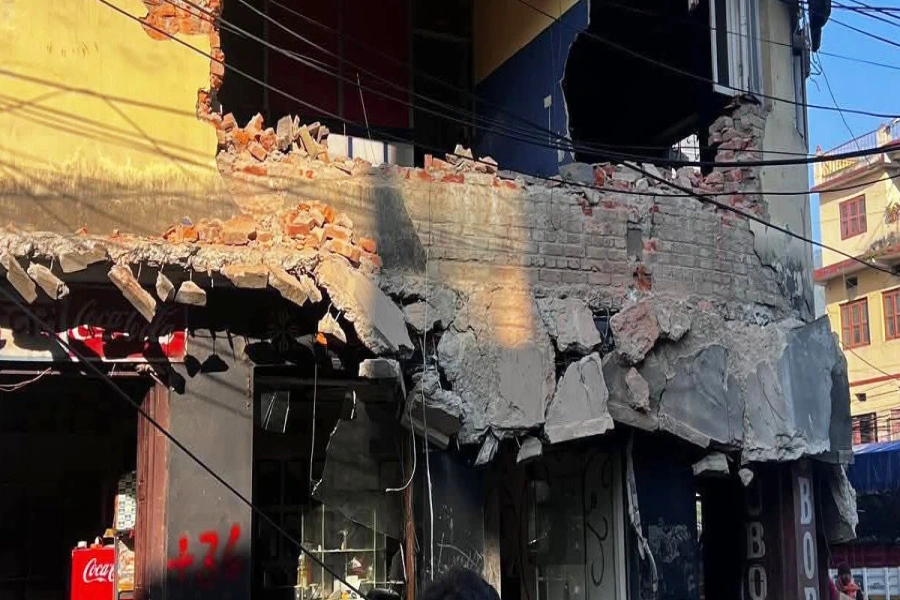
The government's decision to clear public land in the Kathmandu Valley of illegally settled squatter communities may have fulfilled a long-standing administrative responsibility. However, that effort loses much of its legitimacy if it is not accompanied by a humane and well-planned rehabilitation programme for the families displaced by the evictions. While the government acted with notable efficiency in removing informal settlements, it has shown far less urgency in addressing the plight of those left without homes. Families evicted from various parts of the Valley not only lost their shelters but have also been forced to live in temporary holding centres for months. At the time of the eviction, the government pledged to ensure their permanent resettlement within a short period. That promise, however, has remained largely unfulfilled. Adequate housing has not been provided, nor have the displaced been assured access to education, healthcare or livelihood opportunities. Even more troubling are reports that authorities are now pressuring these families to vacate the holding centres by offering only meagre financial assistance, leaving many with no option but to return to the streets. The displaced have accused the government of inhumane treatment and have warned of launching protests if their concerns continue to be ignored.
Vitality of Ethics and Dignity in Human Existence

This is more than an administrative lapse—it is a test of the state's commitment to human dignity. Evicting vulnerable and landless citizens, placing them in temporary shelters and then attempting to remove them again without a viable long-term solution reflects a serious failure of public responsibility. Had a comprehensive rehabilitation plan been prepared and implemented before the evictions, the current uncertainty and growing public discontent could have been avoided. There is no denying that the issue of landless squatters is rooted in decades of socio-economic inequality and cannot be resolved overnight. Nevertheless, the complexity of the problem cannot justify leaving affected families in prolonged uncertainty and hardship. The state has an obligation to protect the fundamental rights of its citizens, including the right to adequate housing and a dignified standard of living. Once families have been displaced, ensuring their proper rehabilitation becomes not merely a policy choice but a moral and constitutional responsibility. The government must therefore treat this issue not as a political contest or administrative burden but as a humanitarian imperative.
Working closely with relevant agencies, local governments and affected communities, it should immediately implement a realistic, time-bound and sustainable rehabilitation plan. At the same time, it must engage in meaningful dialogue with displaced families to rebuild trust and address their legitimate concerns. A durable solution requires an integrated policy encompassing proper identification, classification, rehabilitation and social reintegration of landless families. Such an approach would uphold human rights while reducing the risk of future social tensions and recurring disputes over public land. Failure to act promptly could allow today's grievances to evolve into a far more serious social conflict. Listening to the legitimate concerns of displaced squatter families and ensuring their dignified rehabilitation is both the humane and practical course of action. A nation's strength ultimately lies not in its land or infrastructure, but in the well-being and dignity of its people.