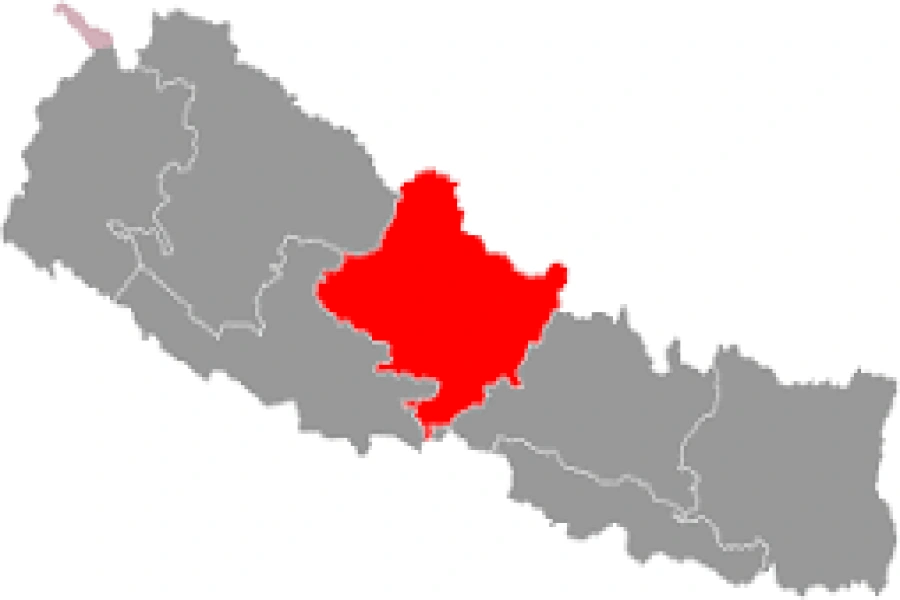
POKHARA, June 21: Gandaki Province has prioritized the tourism sector in its budget for the upcoming fiscal year, setting a target to double foreign tourist arrivals within the next five years. The provincial government has emphasized promotion and infrastructure development to achieve the goal of increasing tourist inflows.
Presenting the budget for fiscal year 2026/27, Minister for Economic Affairs Jit Bahadur Sherchan said the province will focus on expanding air connectivity, developing various religious and trekking routes, and promoting cross-border tourism to achieve the target of doubling foreign tourist arrivals in Gandaki Province. The provincial government has allocated Rs 2 billion for industry and tourism.
At present, there is no exact official data on the number of foreign tourists visiting the province. However, according to the Gandaki Province Office of the Nepal Tourism Board, at least 800,000 foreign visitors are estimated to enter the region annually. The Annapurna Conservation Area Project (ACAP) recorded 514,000 foreign visitors in 2025 alone within its protected area, while a significant number of foreign tourists also visit Pokhara briefly without entering the conservation area. Based on these figures, tourism officials estimate that at least 800,000 foreign visitors come to Gandaki Province each year.
According to Maniraj Lamichhane, senior director at the Nepal Tourism Board’s Gandaki office, the number of Indian tourists has increased significantly this year, pushing the total foreign arrivals in Pokhara close to one million. However, there is no official consolidated data. He said that apart from domestic tourists, all other visitors are counted as foreign tourists, and the recent surge is largely driven by Indian arrivals.
Increasing tourist arrival in Lumbini

He added that not all visitors travel to the Annapurna region or stay in Pokhara alone. “Looking at the current crowd and movement, it is estimated that Pokhara alone may have received close to one million foreign tourists this year,” he said. Based on this estimate of one million arrivals, the provincial government has incorporated the goal of doubling tourist arrivals in its budget.
“Given the current level of activity and improved accessibility, it is not very difficult to reach around two million tourists within five years,” Lamichhane said. “With proper management, doubling current arrivals will not be a major challenge, but the focus now must shift to management and distribution of tourists across new destinations.”
He also noted that while the increase in tourist numbers, particularly Indian arrivals, is positive for growth, it has also created management challenges. “With rising numbers, capacity management has become a concern. If arrivals exceed infrastructure capacity, proper management is essential,” he said, adding that promotion alone is not sufficient and tourists should be encouraged to visit new destinations.
Beyond increasing tourist arrivals, the provincial government has also emphasized infrastructure development in its budget. Minister Sherchan said the government aims to promote tourism-friendly development projects. The province has continued its “Home First, Then Abroad” policy, along with the “Lake to Lake” programme, which the government believes will help promote both domestic and international tourism.
The minister said that linking local art, culture, traditions, and products with tourism could significantly benefit the province. The government has also included plans to strengthen collaboration among the private sector, Nepal Tourism Board, and the provincial government under the campaign “Let’s Visit Gandaki, Enjoy Nature and Culture.”
Under this initiative, Pokhara is planned to be developed as a destination for MICE tourism (Meetings, Incentives, Conferences, and Exhibitions), as well as for health, sports, and adventure tourism.
The budget also includes infrastructure development in major tourist destinations, trekking route construction, and upgrades to existing trails. It has incorporated the development of a religious tourism circuit connecting Damodar Kund, Muktinath, Galeshwar, Panchkot, Ridi, Ramdi, Keladighat, Devghat, and Trivenidham. Basic infrastructure expansion along these routes, as well as the construction of trekking routes linking Modibeni Dham with Purkot and Bhairavsthan in Parbat, has also been planned.
Similarly, the budget prioritizes upgrading the Manaslu, Annapurna, Dhaulagiri, and Dhorpatan circuit trekking routes, along with identifying alternative trekking trails in these regions. Conservation of the Dhorpatan Bukee area and the construction of a reservoir to attract domestic tourists have also been included.
The government has once again prioritized “Round Fewa” and “View Fewa” projects in this year’s budget. Projects such as Fewa Horizon, a selfie bridge, and a glass bridge in Rupa Lake have been allocated funds. In partnership with Pokhara Metropolitan City, Rs 50 million has been allocated for beautification of the Fewa Lake buffer zone.
The budget also envisions developing one tourist destination in each district, while promoting local culture, homestays, farm stays, and branding of indigenous products.