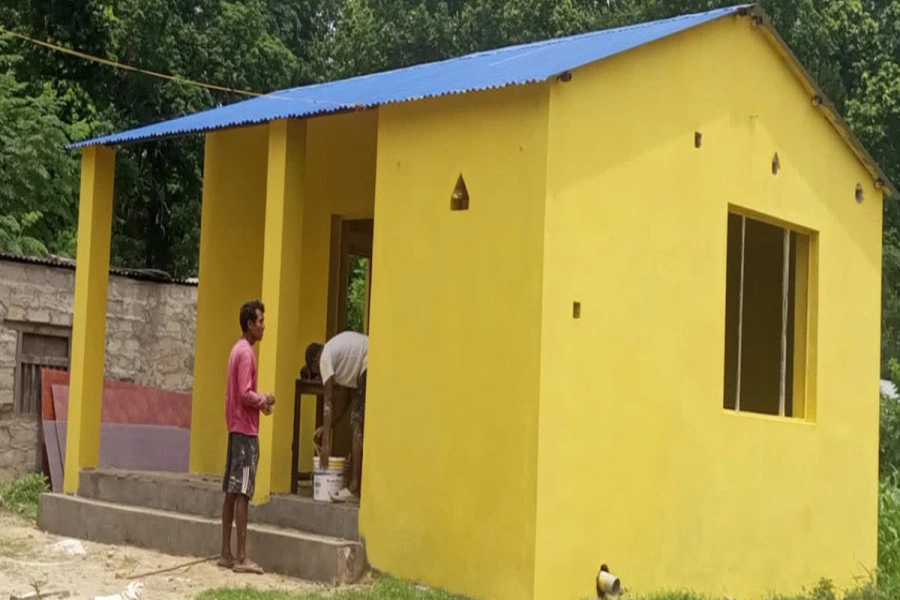
KATHMANDU, March 9: The government has begun a housing program aimed at improving living conditions for poor communities by replacing thatched roofs in about 5,000 houses with corrugated metal sheets and constructing 1,000 new homes. The initiative is being implemented through the Department of Urban Development and Building Construction.
Under the plan, the government has allocated Rs 750 million. The budget will support the construction of 1,000 houses through the Janata Housing Program and the replacement of thatched roofs in 5,000 homes under the Safe Citizen Housing Program.
According to Roshan Shrestha, deputy director general of the Department of Urban Development and Building Construction (DUBDC), the project specifically focuses on removing unsafe straw roofs and replacing them with metal roofing. “The program replaces thatched roofs with corrugated sheets,” Shrestha said, adding that the initiative has been carried out every year.
The Janata Housing Program, launched to provide secure housing to poor and homeless citizens, has been continued in the current Fiscal Year (FY) 2025/26. The government has been running the scheme targeting Dalits, marginalized groups, and low-income families living in huts or unsafe structures.
Through the program, the government aims to build permanent houses and provide a safer living environment that can help ensure social security and a more dignified life.
Nearly one million poor families identified nationwide
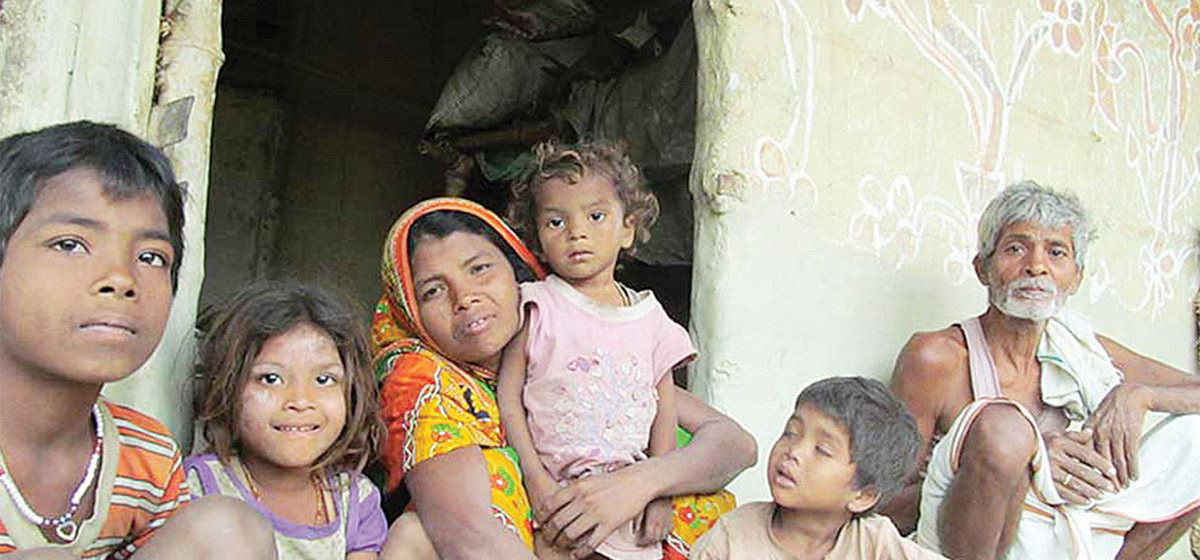
During the current FY, the housing initiative is being implemented in several districts across the country. According to the DUDBC, the program is mainly focused on districts with a higher population of extremely poor and homeless communities in Madhesh Province, Lumbini Province, Sudurpashchim Province, and Karnali Province.
Particularly in Madhesh Province, priority has been given to districts such as Saptari, Siraha, Dhanusha, Mahottari, Sarlahi, Rautahat, Bara, and Parsa. Similarly, houses will also be constructed under the program in districts including Kapilvastu, Rupandehi, and Dang in Lumbini Province; Kailali and Kanchanpur in Sudurpashchim Province; and Surkhet, Dailekh, and Jajarkot in Karnali Province.
According to the government, the process of selecting beneficiaries and constructing houses has been carried out in coordination with local governments. The Janata Housing Program has been operating in most districts of the country for more than a decade.
In the early phase, the initiative was mainly implemented in Madhesh region where Dalit and poor communities were concentrated. Gradually, the program expanded to districts such as Saptari, Siraha, Dhanusha, Mahottari, Sarlahi, Rautahat, Bara, Parsa, Kailali, Kanchanpur, Nawalparasi, Dang, and Kapilvastu. In some areas, cluster settlements have also been developed with the support of local governments.
However, complaints have also emerged from certain places where completed houses remain unused due to weak infrastructure, poor construction quality, or lack of basic services.
The Janata Housing Program mainly targets homeless, extremely poor, Dalit, endangered, and marginalized communities. Priority is given to families living in temporary huts, thatched-roof houses, or highly vulnerable structures.
Beneficiaries are selected based on factors such as recommendations from local governments, economic condition, availability of land, and social status.
Under the scheme, the government provides financial grants to beneficiary families to support the construction of permanent houses. In some areas, grants of up to Rs330,000 have been provided for building three-room houses.
The Janata Housing Program was launched by the Government of Nepal in the fiscal year 2066/67 through the Ministry of Urban Development with the aim of providing safe housing for homeless and poor communities. After the introduction of the federal governance system, the program has been implemented in coordination with provincial and local governments.
According to government data, since the program began, more than 20,000 families across the country have already received safe housing. However, various reports have pointed out challenges such as delays in implementation, weak budget utilization, and construction quality issues.
Although the housing program is considered important for improving the living standards of poor communities, several challenges remain during implementation. In some places, houses built for beneficiaries remain unused due to the absence of basic services such as roads, electricity, and drinking water.
Concerns have also been raised about lack of transparency in beneficiary selection, weak construction quality, and delays in spending allocated budgets.
Despite these challenges, the government considers the Janata Housing Program an important social protection initiative aimed at improving the living standards of disadvantaged citizens. Authorities have stated that the program will continue to expand in the coming years in order to gradually provide safe housing for homeless families across the country.