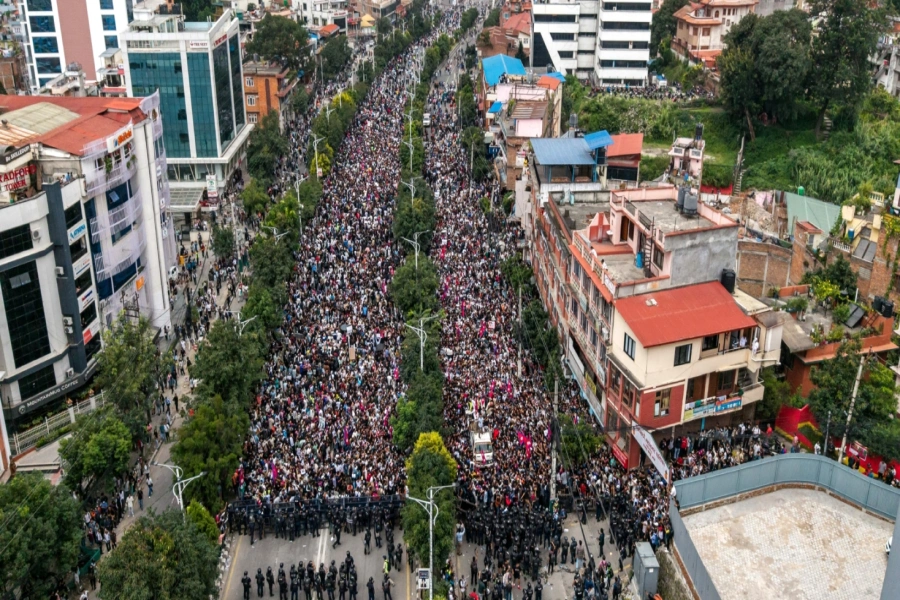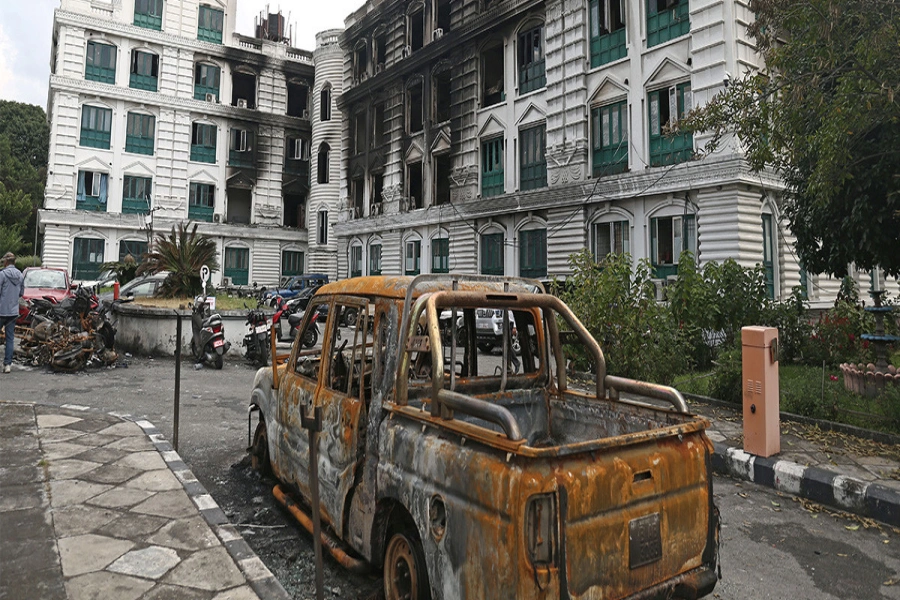
JHAPA, Feb 25: The interim government led by Sushila Karki is reportedly preparing to grant amnesty to individuals involved in vandalism during the Gen Z Movement, triggering sharp political and legal debate. The government is said to be considering withdrawing cases against more than 40 alleged perpetrators, even though the commission formed to investigate the Gen Z Movement has yet to submit its report and uncertainty remains over who will form the next government.
According to Achyut Mani Neupane, spokesperson for the Office of the Attorney General (OAG), there is currently no formal discussion on granting amnesty. “The Office of the Attorney General cannot intervene in cases pending at district government attorney offices; the cases have not been transferred here, and the statute of limitations is about to expire,” he said.
Neupane acknowledged that proposals could surface as the limitation period approaches. “Sometimes proposals may come, but the decision-making authority lies with the Office of the Attorney General,” he added.
Despite that clarification, sources claim the interim government has already initiated steps to withdraw cases against individuals accused of looting police weapons, torching government buildings — including Singha Durbar — and vandalising and setting fire to the homes of political and administrative leaders during the September 9 protests.
Granting amnesty to those guilty in criminal cases unconstituti...

Insiders allege that the OAG has instructed some district government attorney offices to begin the withdrawal process. Critics argue that the move is aimed at swaying emotional voters ahead of the upcoming election by offering impunity to those involved in the unrest.
Those accused of snatching police weapons at the west gate of Singha Durbar, setting fire to the building of the Commission for the Investigation of Abuse of Authority in Naxal, vandalising the residences of the then home minister, home secretary and Kathmandu’s chief district officer, and burning government vehicles were earlier released on bail.
Preparations are now reportedly underway to grant them permanent immunity. While many cases were registered, those that have proceeded to trial remain under judicial review. The CPN-UML has formally objected to the alleged move.
At a press conference on Tuesday, UML publicity department chief Min Bahadur Shahi said delays by the Supreme Court of Nepal in conducting a constitutional review of the House dissolution had already weakened constitutional supremacy. Granting amnesty to those directly involved in the Gen Z uprising, he argued, would further undermine the rule of law.
“The decision of the Office of the Attorney General to grant amnesty to individuals directly involved in criminal activity, including Gen Z violence, is against the rule of law and creates an environment for impunity,” Shahi said. “Using the attorney general’s office as a ‘washing machine’ to clean crimes before the commission’s report is made public is equivalent to killing justice. We urge the office to immediately halt this process.”
Earlier, during the festival season, individuals accused of burning key state institutions — including Singha Durbar, the Supreme Court and the Parliament building — were released following alleged pressure from the Ministry of Home Affairs (MoHA). Around 60 detainees held at the Metropolitan Police Range Kathmandu were freed during Dashain after authorities reportedly instructed police not to pursue arrests related to the Gen Z protests.
At the time, the MoHA stated that action would be taken only after the investigative commission submitted its findings. In a statement issued on September 25 and signed by MoHA spokesperson Anand Kafle, the government said it would proceed in accordance with the law upon receiving the commission’s recommendations.
Critics now argue that the same commission is being invoked to justify inaction — or worse, permanent immunity — raising renewed questions about accountability, justice and the credibility of state institutions.