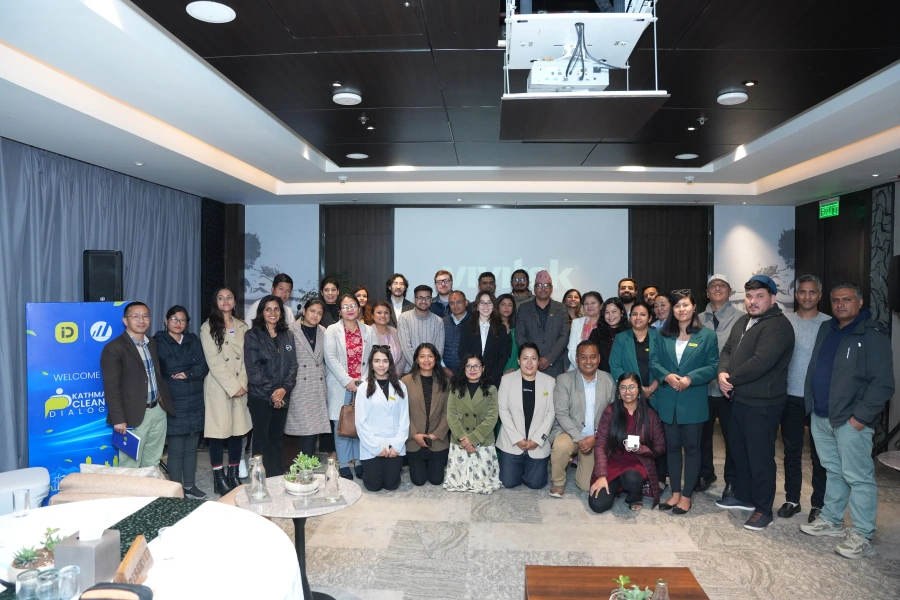
KATHMANDU, Feb 23: Ride-hailing platform inDrive convened the Kathmandu Clean Air Dialogue, bringing together government leaders, experts, civil society representatives and private sector actors to strengthen collaboration on air quality solutions in the capital.
The Dialogue was organised around four key objectives: ensuring high-level stakeholder alignment, mapping the current air quality landscape, identifying bottlenecks and strategic solutions, and catalysing stronger private sector engagement.
Delivery demand soars as small businesses turn to inDrive.Couri...

Government participation was described as particularly encouraging. The Minister for Forest and Environment attended as Chief Guest, delivered the keynote address and remained actively engaged throughout the programme. He highlighted progress made in addressing air pollution while stressing the need for intensified and coordinated action. The Minister also commended inDrive and the Almaty Air Initiative for convening stakeholders around a shared clean air agenda.
Kathmandu’s air pollution challenges are multifaceted. A significant proportion of emissions comes from biomass and household sources, while rapid expansion in the transport and industrial sectors has further compounded the problem. Winter smog is intensified by the Valley’s geographic and meteorological conditions. Participants emphasised that addressing these issues requires credible data systems, public trust and coordinated governance — particularly at a time when international support is declining and strong, locally owned mechanisms are more important than ever.
The Dialogue also marked the starting point for the Nepal Taza Initiative — “Taza” meaning “clean” in Kazakh — inspired by AAI’s proven Brain, Voice, Bridge framework. Under this approach, the “Brain” component focuses on building trusted, data-driven systems, including the development of independent monitoring networks, research capacity and advanced modelling. The “Voice” component seeks to translate scientific evidence into broader public understanding and generate informed demand for reform. Meanwhile, the “Bridge” component aims to convert science and public support into lasting policy reforms and institutional change.
Ms Zhuldyz Saulebekova, CEO of the Almaty Air Initiative, said that lasting improvements in air quality require strong local systems built on credible data, informed citizens and close cooperation with government. Drawing on experience from Almaty, she noted that when evidence, public engagement and policy come together, systemic change becomes possible. She added that the organisation is proud to support Kathmandu as it develops its own locally driven pathway towards cleaner air.
Organisers said the Kathmandu Clean Air Dialogue represents an important first step towards sustained, cross-sector collaboration aimed at delivering cleaner air and long-term public health benefits for Nepal.