


KATHMANDU, July 2: Investors had expected Nepal's stock market to reach new highs after the formation of a strong government led by the Rastriya Swatantra Party (RSP). Instead, the market has been on a steady decline, wiping out nearly Rs 350 billion in investor wealth over the past three months.
Since Prime Minister Balendra Shah and Finance Minister Swarnim Wagle took the oath of office on March 27, the Nepal Stock Exchange (NEPSE) index has fallen from 2,879 points to 2,652.93 as of Wednesday. During the same period, the market's total capitalization dropped from around Rs 4.894 trillion to Rs 4.543 trillion. After falling continuously for a week, however, the market rebounded by 44.51 points on Wednesday.
The stock market initially welcomed the new government with optimism, driven by hopes of political stability, policy clarity and private sector friendly economic reforms. That optimism quickly faded. Investors say the market has continued to slide because promised reforms have not materialized, the budget failed to introduce measures that directly support the capital market, and the broader economy has shown little improvement.
A former president of the Nepal Investors' Forum said the government's distrust of the private sector has also hurt market confidence.
"The government looks at the private sector with suspicion, despite the fact that it accounts for about 80 percent of total investment in the economy," he said. "It does not even listen to the concerns of private investors. Under such circumstances, it is impossible to build confidence."
He also said that many civil servants, police personnel and military employees who had invested in shares sold their holdings out of fear, adding further pressure to the market.
Lending slows as banks focus on recovery of loans at fiscal yea...

Investors base their decisions on the government's policies, implementation capacity, attitude toward the private sector and reforms in the financial system. Since they have seen few encouraging signs in these areas, confidence has weakened. Investors also accuse Finance Minister Wagle of failing to present a clear roadmap that could reassure the market.
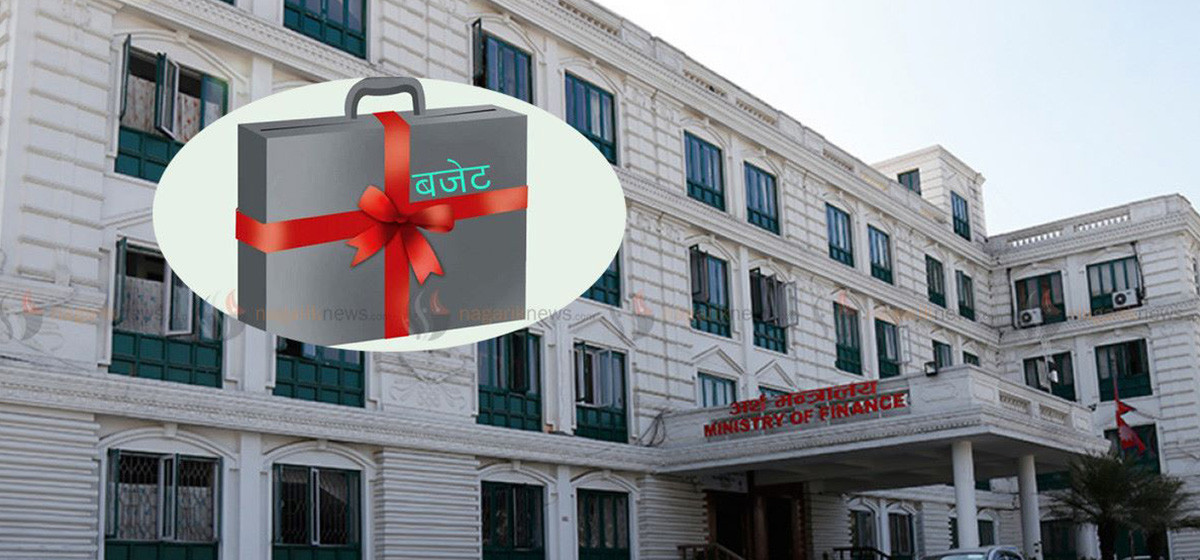
Confidence weakened further after the annual budget failed to announce meaningful reforms such as expanding institutional investors, reviewing tax policies or introducing new financial instruments.
Former Nepal Capital Market Investors' Association president Radha Pokharel said the government has shown little interest in addressing the market's problems.
"No government has seriously tried to understand investors' concerns," she said. "The absence of policy reforms has created the current situation."
Finance Minister Wagle, however, has defended the government's approach, saying it is focused on long term economic interests rather than short term market movements.
"Our priority is sustainable economic reform through result-oriented policies, not shortterm fluctuations in the stock market," Wagle said recently in the House of Representatives. "We do not monitor every hourly rise or fall in the stock market index."
Analysts also say the Nepal Rastra Bank's monetary policy failed to send a strong positive signal. Although banks have ample liquidity, lending to the private sector remains sluggish, economic activity has not expanded as expected, and the investment climate has yet to improve enough to attract fresh capital into the market.
Corporate earnings have also disappointed. Profit growth among listed companies during the fourth quarter has been weak. Slower profit growth in banks and financial institutions, pressure on manufacturing earnings and uncertainty over dividend prospects have encouraged investors to adopt a wait and see approach.
The impact of a falling stock market extends beyond investors. Lower market capitalization weakens company valuations, making it harder for firms to raise funds through initial public offerings and follow-on share issuances. Investors who have pledged shares as collateral for bank loans also come under greater pressure. Prolonged market declines can erode consumer and investor confidence, weighing on the broader economy.
Retail investors have become an increasingly important force in the market, making sentiment a key driver of price movements. As losses mount, many are selling shares to avoid deeper losses, while potential new investors remain hesitant. Existing investors are also reluctant to increase their exposure.
After falling for seven straight trading sessions, the market posted a modest recovery on Wednesday, with the NEPSE index gaining 44.59 points to close at 2,652.93.
Trading activity also improved. On Tuesday, shares worth Rs 3.25 billion changed hands. On Wednesday, 9.55 million shares of 362 listed companies were traded through 56,850 transactions, taking the total turnover to Rs 3.86 billion.
Shares of Snow Rivers hit the positive circuit limit, rising Rs 68.10 to close at Rs 522.30. Shares of CYC Microfinance Financial Institution gained more than 14 percent, while Bhujung Hydropower rose by nearly 14 percent.
The recovery was broad-based. All 13 sectoral indices ended higher, led by the trading sector, which climbed 2.6 percent. Hydropower, manufacturing and processing, and non-life insurance sectors each gained more than 2 percent. Banking, development banks, finance, hotels and tourism, investment, life insurance, microfinance and other sectors all rose by more than 1 percent.
Market analysts said Wednesday's rebound, following a week of uninterrupted losses, has offered investors some relief and modestly improved market sentiment.








-1782782519.webp)


