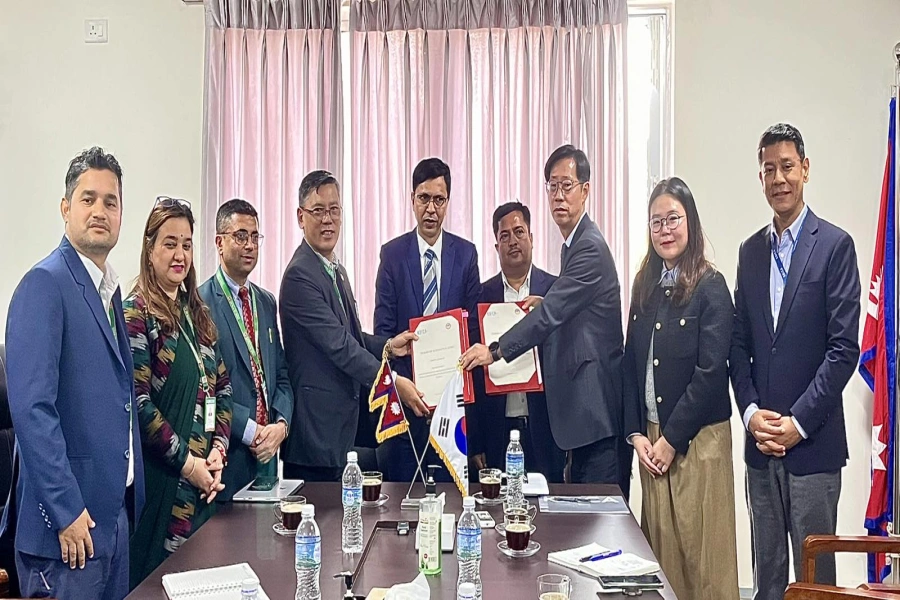
KATHMANDU, April 17: The Korea International Cooperation Agency (KOICA) and Agricultural Development Bank Limited (ADBL) have signed a strategic partnership to support the reintegration of Nepali migrant workers returning from the Republic of Korea, according to a KOICA press release.
The initiative, titled “Strengthening Stage-Wise Support System for the Stable Reintegration of Korea Returnee Migrants in Nepal,” aims to improve access to finance for returnees who have participated in the K-HaMi Project and completed entrepreneurship training. The program will run until 2028.
Under the initiative, KOICA will provide USD 2.5 million from a total project budget of USD 8 million, to be used exclusively for interest subsidies on loans. ADBL will allocate around Rs 1.2 billion (about USD 8 million) as loan capital.
KOICA provides $2.5 million interest subsidy for Nepal’s Korea...
The program is expected to promote entrepreneurship among returnees by easing financial barriers and helping them use skills gained in Korea for local economic growth.
KOICA Country Director Mooheon Kong said the program targets returnees who have completed the K-HaMi Project and entrepreneurship training, ensuring financial support is linked with business skills.
MoLESS Joint Secretary Krishna Sapkota said the K-HaMi Project has been effective in reintegration and financial literacy, adding that the access-to-finance component will be the most impactful. He also called for similar initiatives from other development partners, according to KOICA.
ADBL Deputy General Manager Sudip Dahal said the bank is committed to implementing the program and working in enterprise development and youth employment creation.
The collaboration marks a shift in Nepal–South Korea cooperation from labour migration support to economic reintegration, aiming to turn returnees into job creators.
KOICA, active in Nepal since 1991, has supported sectors including health, education, agriculture, vocational training, IT, rural development, and tourism. It has deployed over 2,921 volunteers and supported more than 2,230 Nepali officials through fellowship programs. By 2025, its total assistance to Nepal has exceeded USD 200 million.