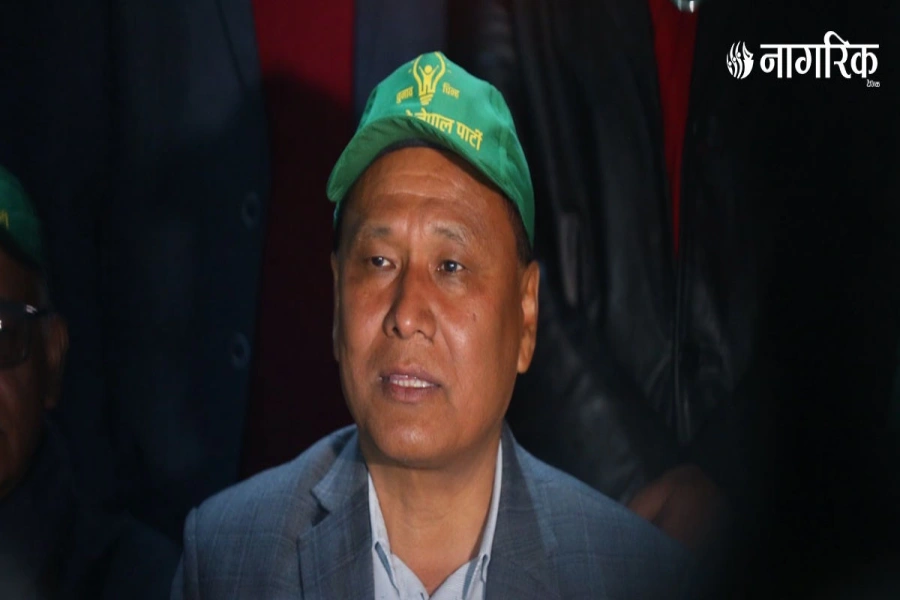
KATHMANDU, July 26: Ujyalo Nepal Party Chair Kulman Ghising has urged the government to immediately recover outstanding premium electricity charges from industries that consumed power through dedicated and trunk lines.
In a social media post, Ghising questioned why the government, which has made good governance its top commitment for its first year in office, has remained silent over the recovery of billions of rupees in unpaid electricity dues.
"The government must answer a serious question," Ghising wrote. "Why is it silent on collecting premium electricity dues from industries that used dedicated and trunk line facilities during the period of load shedding?"
Dedicated and trunk line dispute: Line disconnection for non-pa...

He also questioned why the Ministry of Energy, Water Resources and Irrigation and the Nepal Electricity Authority have failed to take effective steps to recover the remaining dues from industries that have already paid the first instalment.
According to Ghising, political interference had obstructed the recovery process in the past. However, he argued that with the current government enjoying nearly a two-thirds majority, there should be no obstacle to collecting the dues in accordance with the law.
He said attempts to reopen an administrative review process that has already been concluded only create confusion and undermine both good governance and the rule of law.
Ghising also criticized what he called a contradiction in the government's policy. He said the government has shown little interest in recovering billions of rupees from industries while imposing an additional 5 percent value added tax on household consumers using more than 50 units of electricity per month.
He argued that applying the law strictly to ordinary citizens while showing flexibility toward industrialists is unjustifiable and raises serious questions about the government's commitment to good governance.
Ghising called on the government to immediately begin recovering the outstanding dues in line with existing laws, saying the true measure of good governance lies not in speeches or declarations, but in the political will to enforce the law equally for everyone and protect state revenue.