

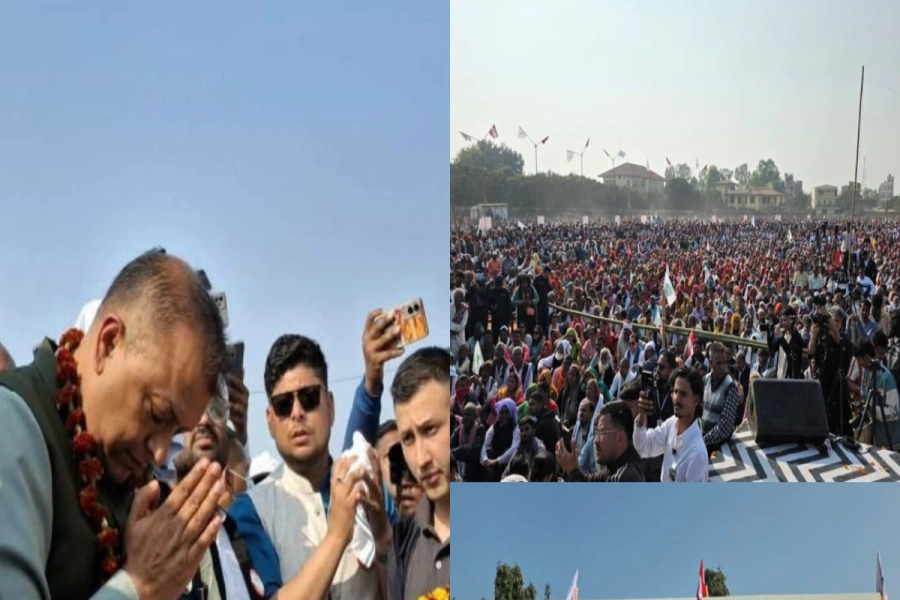
KATHMANDU, Feb 20: For years, Nepal’s political pulse seemed to fade from open public grounds to the closed comfort of party palaces. After the 2022 general elections, mass gatherings in large public spaces had all but disappeared. Even Tundikhel—once the beating heart of political mobilization—remained largely off-limits for party events. Street protests thinned, traffic disruptions eased, and parties appeared hesitant to measure their strength under the open sky.
Until 2017, major forces like the Nepali Congress (NC) and CPN-UML routinely flexed their muscles through massive rallies. By the 2022 polls, however, closed-door assemblies had replaced open-air spectacles. The September 8 Gen Z protest—and the vandalism that followed—further dampened enthusiasm for public gatherings.
That cautious phase may now be shifting.
After the UML launched its 11th General Convention with a grand show in Bhaktapur on December 13, the NC signaled its own return to open-ground politics. A special convention at Bhrikutimandap on January 11 hinted at internal consolidation. This week, the party stepped back into the public spotlight at Janakpur’s Tiruhutiya Gachhi—this time projecting renewed confidence.
We will show the power of the people: Oli

The turnout was striking. Many who had stayed away from earlier political programs gathered in significant numbers, challenging the narrative that public frustration had permanently emptied the streets. Youth presence was particularly visible, lending the rally an energy that had been missing from recent political events.
Led by party president Gagan Kumar Thapa, the Janakpur event marked the NC’s first major election gathering in Madhesh Province. Supporters streamed in from all eight districts and neighboring areas. The Tiruhutiya Gachhi grounds and surrounding streets were packed, buzzing with anticipation.
In his address, Thapa struck a forward-looking tone. He pledged that if the NC leads the government, the state would shoulder responsibility for every Nepali citizen. He spoke directly to families of migrant workers—an issue deeply personal to Madhesh—promising stronger protection and welfare mechanisms. With thousands of youths abroad and aging parents waiting at home, the message resonated deeply.
He also vowed to transform Madhesh into a knowledge hub and to push for effective federal implementation, calling the province decisive in shaping Nepal’s future. When Thapa described himself as a “son of Madhesh,” applause rippled across the ground.
Vice-President Bishwa Prakash Sharma also commanded attention, reinforcing the party’s message of unity and reform. With a limited roster of speakers, the program remained crisp and focused—avoiding the lengthy rhetoric that often dulls public enthusiasm.
Yet beneath the optimism lies a sobering reality. While the NC reiterated commitments to national unity, constitutional protection and good governance, specifics on pressing Madhesh issues—unemployment, agricultural stagnation, cross-border trade challenges, smuggling and youth migration—were less defined.
Madhesh’s political consciousness has evolved significantly over the past decade. Emotional appeals and historical legacy alone may no longer guarantee loyalty. Voters increasingly demand clarity on federalism, inclusive representation and the delicate balance between the center and the provinces.
The rally at Tiruhutiya Gachhi may mark a symbolic return to public mobilization. But symbolism must now give way to substance. If the NC can match its revived street presence with a credible roadmap and consistent leadership, its re-emergence in Madhesh could signal more than just a fleeting show of strength—it could mark the beginning of a renewed political foothold.


