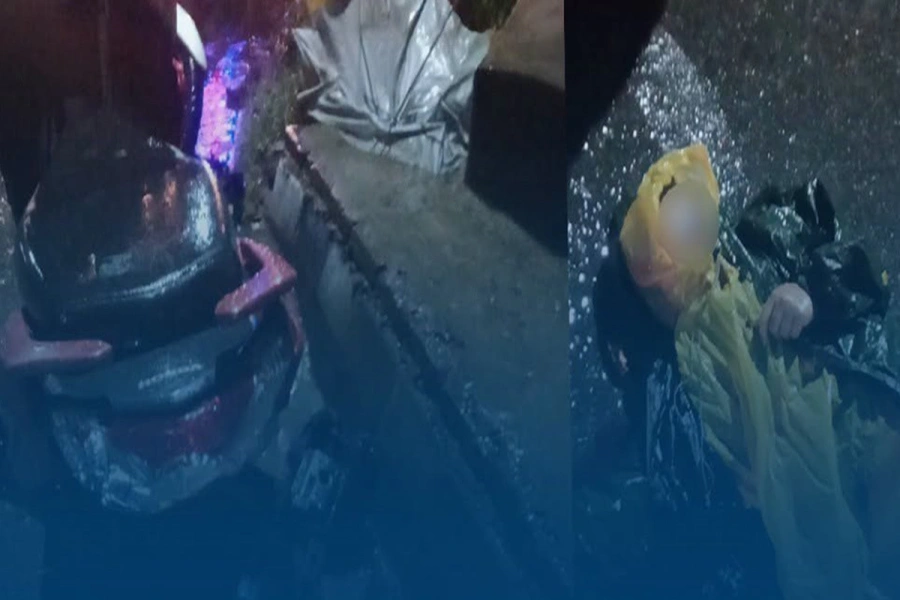
BHARATPUR, July 27: Twenty-five-year-old Ashika Bote of Belhattha in Bharatpur Metropolitan City-23 was asleep with her four-year-old son when tragedy struck on the night of July 4. A wild elephant named ‘Dhurbe’, which had entered the settlement from Chitwan National Park, killed both the mother and son while they were sleeping. Ashika’s husband, Purna, had lit a fire to drive away the elephant, but the flames also engulfed their thatched house.
In another incident in January, Ashok Bhattarai of Madi Municipality-23 was walking through his field when a rhinoceros suddenly emerged from the forest and attacked him, killing him on the spot. The incident took place on January 26.
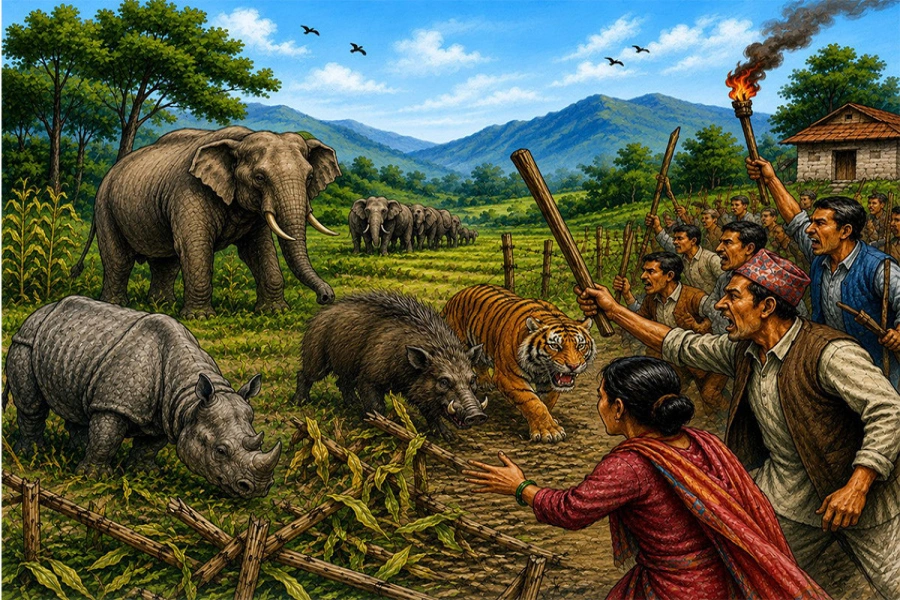
Such incidents have become increasingly common around protected areas, where human-wildlife conflict continues to claim human lives while also posing a threat to wildlife.
According to the Department of National Parks and Wildlife Conservation (DNPWC), 146 people have been killed in Nepal over the past five years due to attacks by wild animals, including elephants, tigers, rhinos, leopards, bears, and wild dogs. During the same period, 399 people sustained serious injuries, while 251 suffered minor injuries.
The government has spent Rs 585.82 million as compensation for losses caused by wildlife during the period.
Wild animals have also caused significant damage to crops, houses, and livestock sheds. Communities living around national parks and protected areas across the country continue to face conflicts with elephants, tigers, bears, rhinos, leopards, snow leopards, wolves, wild boars, wild buffaloes, crocodiles, and wild cows, among others.
According to the DNPWC, 15 people were killed, 48 were seriously injured, and 43 others sustained minor injuries due to wildlife attacks across the country in the fiscal year (FY) 2025/26. Of those killed, six died in elephant attacks, five in tiger attacks, two in rhino attacks, and one each in leopard and crocodile attacks. During the same period, five people were killed in attacks by animals from Chitwan National Park (CNP).
Ringling Bros. circus to close after 146 years

Senior Conservation Officer at the Department, Dr Ganesh Pant, said Rs 87.18 million was distributed as relief to wildlife victims during the FY.
Department data shows that there were 3,310 cases of livestock losses, 73 cases of stored grain damage, 20 cases of house and shed damage, seven cases of fish losses, 36 cases of poultry losses, and 1,127 cases of crop damage during the period.
The DNPWC’s five-year data shows that deaths caused by wildlife attacks have declined in recent years. In FY 2021/22, 58 people were killed and 116 others were seriously injured in wildlife attacks.
During that FY, the government distributed Rs 155.82 million in compensation for wildlife-related losses. Among those killed, 23 died in elephant attacks, 21 in tiger attacks, five in rhino attacks, three each in leopard and wild boar attacks, one in a gaur attack, and two in attacks by other wild animals.
According to the Department, 39 people were killed in wildlife attacks in FY 2022/23. The government distributed Rs 135.36 million in compensation for losses caused by wildlife during that period.
That year, elephants killed 14 people, tigers killed 12, rhinos killed four, leopards killed three, wild boars killed two, bears killed one, and other wild animals killed four. The Department recorded 72 cases of minor injuries and 124 cases of serious injuries caused by wildlife.
In FY 2023/24, 19 people were killed in wildlife attacks, while 53 people suffered serious injuries and 50 sustained minor injuries, according to the Department’s annual report. During the same period, Rs 136.31 million was distributed as compensation to wildlife victims.
Similarly, 15 people were killed in wildlife attacks across the country in FY 2024/25. A total of 57 people sustained serious injuries, and 14 suffered minor injuries. During that year, wildlife from CNP alone killed 10 people.
The Department’s data shows that two people were killed by wildlife from Bardiya National Park, while one person each died in attacks involving animals from Banke National Park, Shuklaphanta National Park, and Parsa National Park.
The Department distributed Rs 71.16 million in relief to wildlife victims during the fiscal year.
Relief is provided to victims under the Wildlife Damage Relief Guidelines, 2069 BS (Third Amendment, 2075 BS).
Former president of the Nature Guide Association Basu Bidari said awareness campaigns should be conducted to reduce human-wildlife conflict.
“Wild animals can attack humans even when they are provoked,” he said. “People must understand that wild animals are also a part of our ecosystem.”
He suggested installing informative posters in areas frequently visited by wild animals to educate local residents about animal behavior.
Bharatpur Metropolitan City-23 is among the areas frequently affected by wildlife from CNP. On July 4, two members of the same family were killed by an elephant in the ward.
Ward Chairperson Deepak Dawadi said reducing human-wildlife conflict requires both public awareness campaigns and better habitat management for wild animals inside national parks.
“We cannot carry out major interventions in areas listed as World Heritage Sites. To prevent wildlife from coming out, we need to ensure proper food sources and habitat management inside the park,” he said. “If we want a long-term solution, we need to construct RCC walls.”