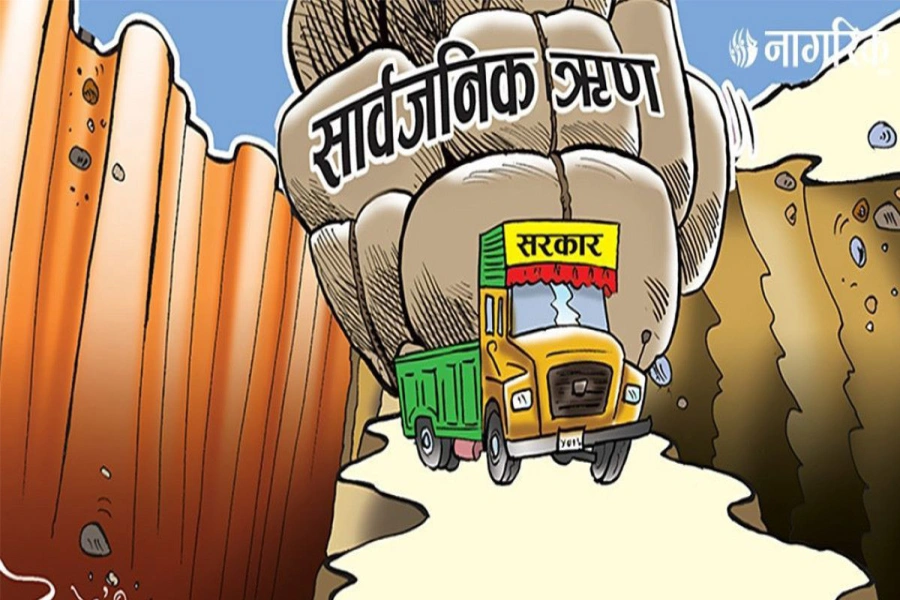
KATHMANDU, June 17: Nepal’s public debt has surged to Rs 2.961 trillion in the first 11 months of the current fiscal year, equivalent to 44.87 percent of the country’s gross domestic product (GDP), according to the Public Debt Management Office (PDMO).
The debt burden rose by Rs 287.14 billion between mid-July 2025 and mid-June 2026. Of the total, foreign debt accounts for 53.49 percent, while domestic debt makes up 46.51 percent.
Although the government has repeatedly stated that borrowing is mobilized for development purposes, much of it has been directed toward managing budget deficits and meeting rising debt servicing obligations. This fiscal year, the government targeted debt mobilization of Rs 595.66 billion. By mid-June, it had borrowed Rs 418.12 billion — 70.20 percent of the annual target.
Public debt exceeds Rs 2.434 trillion, increasing by over Rs 30...

Domestic borrowing has played a dominant role, reaching 93.55 percent of the target, while foreign loan mobilization has lagged at just 34.01 percent. Finance Ministry officials attribute the shortfall in external loans to lengthy agreement processes, delays in project implementation, and slow resource mobilization from development partners, forcing greater reliance on domestic borrowing.
Debt servicing has grown sharply alongside the rising debt stock. For the current fiscal year, Rs 411.1 billion was allocated for principal and interest payments, of which Rs 351.74 billion — 85.58 percent — has already been spent by mid-June. Debt service expenditure alone now represents 5.33 percent of GDP.
The PDMO noted that heavy depreciation of the Nepali currency against the US dollar has further inflated the debt burden. Net debt mobilization in the 11-month period stood at Rs 133.67 billion, covering only 46.55 percent of the increase in total debt, while the remaining 53.45 percent was driven by foreign exchange fluctuations.
Economists warn that the mounting debt burden could slow development projects, as an increasing share of financial resources is being diverted to repayment rather than investment.