


KATHMANDU, June 29: The government's newly approved Guideline on the Management of Ministers' Advisors and Secretariats, 2083 (2026) allows each minister to appoint between three and five advisers from outside the civil service, with positions equivalent to the rank of secretary.
Experts have raised concerns that the provision could create overlapping authority and conflict between ministry secretaries and the externally appointed secretary-level advisers over the division of responsibilities.
Under the guideline, the Ministry of Energy, Water Resources and Irrigation, the Ministry of Infrastructure Development, and the Ministry of Agriculture, Forests and Environment can each appoint up to five advisers, including one paid adviser with secretary-level status. All other ministries can appoint up to three advisers, including one paid secretary-level adviser, to the minister's secretariat. The guideline has already been endorsed by the Cabinet and is now in effect. It has also been circulated to all ministries.
According to the guideline, the aforementioned three ministries will appoint a total of 15 advisers at the rate of five each, while the remaining 14 ministries will appoint 42 advisers at the rate of three each, bringing the total number of externally appointed secretary-level advisers in ministers' secretariats to 57.
The government currently has 71 sanctioned secretary positions. According to sources, preparations are underway to reduce that number by 10. If implemented, the total number of secretary posts will fall to 61, bringing it almost on par with the 57 externally appointed secretary-level advisers.
New guideline issued for coronavirus test in Sudur Paschim

All ministries are currently conducting Organization and Management (O&M) surveys, which are expected to reduce the number of sanctioned posts across the bureaucracy, from secretaries to office assistants.
According to a source at the Office of the Prime Minister and Council of Ministers, the government's policy is to retain only one secretary in each ministry. Following the recent merger of ministries, secretaries rendered surplus have been placed in an additional pool at the Prime Minister's Office.
The provision allowing ministers to recruit secretary-level advisers from outside the civil service is expected to trigger unnecessary disputes, experts say. They argue that tensions could arise between career civil servants serving as ministry secretaries and externally appointed advisers.
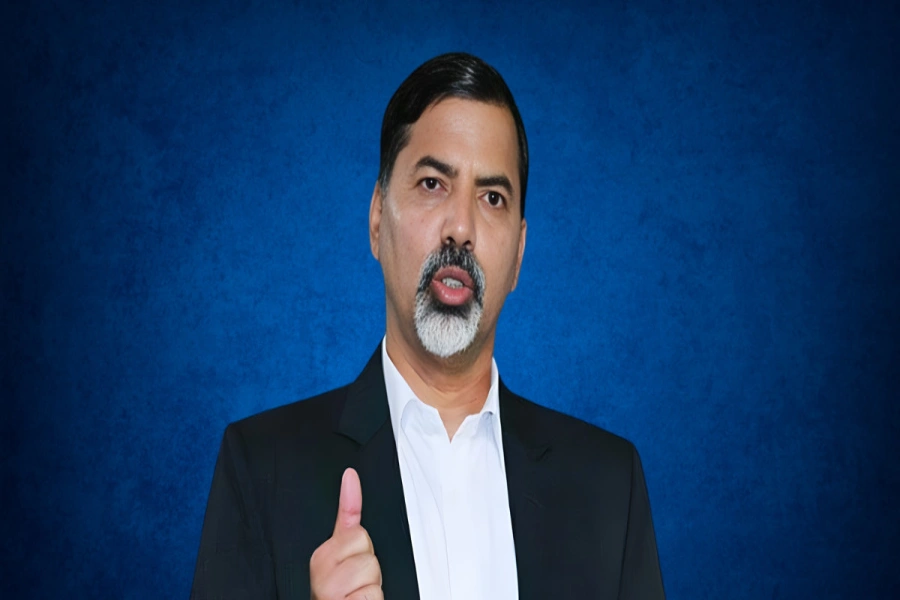
Former government secretary Gopinath Mainali warned that such appointments could weaken the existing accountability framework.
"This could affect the traditional relationship between the permanent civil administration and the political executive," he said, adding that conflicts over the division of responsibilities between career secretaries and externally appointed secretary-level advisers were likely.
Ministers' secretariats to have 210 personal staff
The guideline also significantly expands the size of ministers' personal secretariats, with the total number of personal staff expected to reach 210.
Apart from advisers, each minister will be allowed to appoint a chief personal secretary at the rank of under-secretary, a personal secretary at officer level, a coordination, implementation and monitoring officer at officer level, a communication and public relations assistant at non-gazetted first class level, and an assistant staff member at non-gazetted second class level.
In addition, ministers will be permitted to appoint two light vehicle drivers and two office assistants in their secretariats.
Although the number of ministries has been reduced, the new guideline is expected to significantly increase the size of ministers' personal secretariats. On May 13, the Cabinet approved the Government of Nepal (Allocation of Business) Rules, 2083, reducing the number of ministries to 17.
Before the new guideline was endorsed, deputy prime ministers were allowed to appoint one joint secretary, one under-secretary, one section officer, one non-gazetted first-class officer, one computer assistant and one driver in their secretariats. Ministers, meanwhile, were allowed one under-secretary, one section officer, one non-gazetted first-class officer, one computer assistant and one driver.


_20230226123652.jpg)




-1200x560-1774606010.webp)


