KATHMANDU, June 6: A long-awaited road safety law meant to curb rising accidents and strengthen emergency response has remained stuck in bureaucratic limbo for eight years, even as Nepal’s road network continues to expand rapidly.
In the absence of a dedicated legal framework, authorities are still relying on general transport regulations to manage road safety concerns ranging from speed control to traffic enforcement.
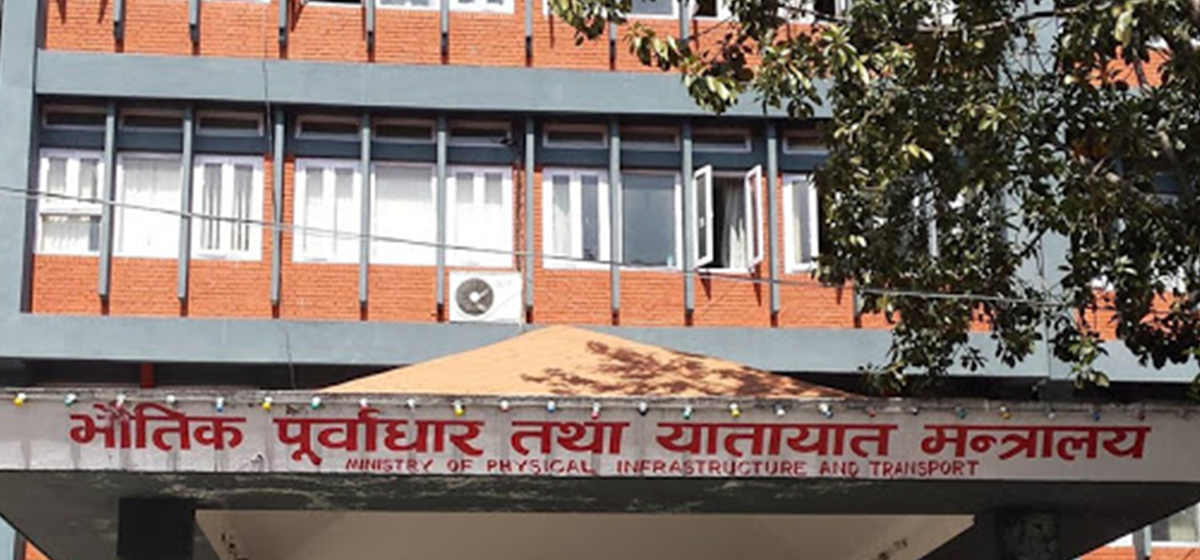
The proposed “Road Safety Act and National Road Safety Action Plan,” drafted by the then Ministry of Physical Infrastructure and Transport, was designed to address critical gaps, including accident prevention and rapid rescue of the injured. However, the bill has failed to move beyond the ministry for nearly a decade.
According to Krishna Raj Pant, Joint Secretary and Chief of the Infrastructure Development Division under the Ministry of Physical Infrastructure Development, the bill was derailed after Parliament was dissolved following the Gen-Z protests on September 8 and 9, pushing the process back to square one.
“Before Parliament was dissolved, the road safety law had already progressed and even received approval from the Ministry of Law. It was ready for parliamentary passage, but the dissolution reset everything,” Pant said. “With the formation of a new government, discussions have restarted.”
Road safety draft gathering dust at the Ministry of Transport f...
He added that a separate Urban and Transport Management Bill is also moving ahead and has reached the Ministry of Law, Justice and Parliamentary Affairs.
Officials say the absence of a dedicated law has forced authorities to depend on fragmented transport regulations covering issues such as horn use, speed limits, and traffic discipline—measures they admit are not enough to address the growing crisis.
A senior ministry official noted that most countries treat road safety as a standalone legal priority. “India’s Supreme Court has even set up a dedicated road safety committee. In our case, we do not even have a law in place. That is unfortunate,” the official said.
According to the ministry, delays also arose after the Ministry of Finance suggested merging the Road Safety Act and Public Roads Act into a single bill, slowing the legislative process. Officials say the two are fundamentally different in scope—one focusing on safety management and the other on infrastructure development.
The draft Road Safety Act was first prepared in 2018, while the national action plan followed three years ago. Although a Road Safety and Traffic Unit has been set up under the Department of Roads, officials say its impact remains limited without legal backing.
Road safety crisis persists
Nepal continues to witness a grim toll on its roads, with an average of seven deaths every day due to traffic accidents. Injuries are far higher, and risks typically spike during the monsoon season. Despite the scale of the crisis, experts say state response remains largely reactive rather than preventive.
A World Health Organization report has ranked Nepal among countries with poor road safety performance, estimating more than 1,800 annual deaths from road crashes.
Media reports of frequent accidents have become routine, with lower-income groups disproportionately affected. Experts attribute responsibility across multiple actors, including the Department of Roads, traffic police, and drivers.
A 2020 report of the parliamentary Development and Technology Committee identified nine major causes of road accidents, with driver negligence accounting for the highest share at 43.7 percent. Other factors include speeding (18.7 percent), reckless overtaking (9.8 percent), pedestrian negligence (9.5 percent), drunk driving (6.2 percent), mechanical failure (6.1 percent), overloading (5.2 percent), and other minor causes.
Transport entrepreneurs also point to poor road conditions, reckless driving, stray animals, inadequate enforcement, and lack of safety discipline on long routes as persistent contributors.
Can the crisis be reversed?
Experts say reducing road accidents requires coordinated action and stronger accountability from all stakeholders.
They stress improving road infrastructure, fixing potholes, enforcing traffic rules strictly, raising public awareness, and strengthening monitoring systems. Regular vehicle inspections and strict adherence to speed limits, they argue, could significantly reduce fatalities on Nepali roads.