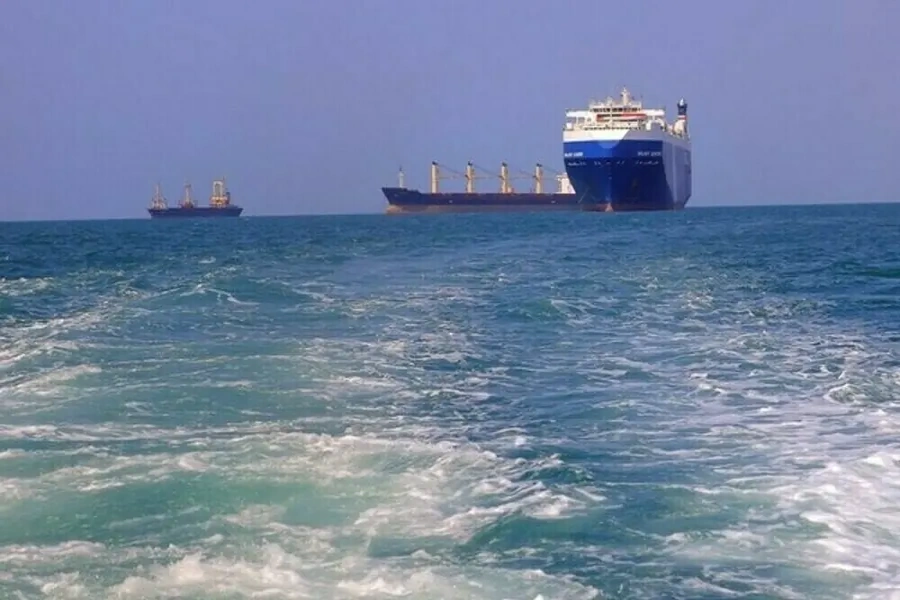
PARIS, July 14: Before the Middle East war, Iran's nuclear programme was at the heart of the dispute between Tehran and Washington. Now it is the strategic Strait of Hormuz that is igniting tensions.
The arch foes are battling for control of the waterway, a critical energy trade route, and the fight is threatening to derail efforts to permanently end the conflict.
"This strategic passage is more important than dozens of atomic bombs, and the Islamic Republic of Iran will protect it," said Mohsen Rezaee, an adviser to Iran's supreme leader.
On Monday, President Donald Trump said the United States would be "taking over" the strait and would be paid for guarding it. But Iran's military warned that it would not allow Washington to "interfere" in the waterway's management.
A fresh exchange of strikes between the US and Iran comes as negotiators struggle to reach a lasting peace deal following the ceasefire agreed in April.
- How Iran took control of the strait -
Before the war, which began with US-Israeli strikes on Iran in late February, vessels crossed the strait freely via the Traffic Separation Scheme, a two-way route through the centre of the waterway adopted by the International Maritime Organization (IMO) in 1968.
Iran defines boundaries of Strait of Hormuz, mandates coordinat...

These designated shipping lanes saw, on average, 120 daily transits in peacetime.
But Iran took control of the strait in retaliation for the US-Israeli strikes. Iran's Guards have also warned of a "danger zone" covering 1,400 square kilometres -- 14 times the size of Paris -- where mines may be present.
Traffic through the strait, which is located between Iran and Oman, has been heavily disrupted, and attacks on vessels have multiplied.
After Iran virtually shut the strait, through which a fifth of the world's oil and liquefied natural gas travel in normal times, the US imposed a rival blockade of Iranian ports.
The near paralysis in the waterway drove oil prices up to more than $120 -- its highest level since Russia invaded Ukraine in 2022.
- What the deal says -
Iran and the US signed a memorandum of understanding in June aimed at ending the war. It also reopened the strait and led to an increase in maritime traffic, until a series of ship attacks last week, which Washington has blamed on the Islamic republic.
According to the text, Iran had agreed "safe passage of commercial vessels with no charge, for 60 days only, from the Persian Gulf to the Sea of Oman, and vice versa" in the strait.
Iran has since announced plans to charge fees, saying there will be no return to the free navigation of the pre-war era, which Washington has rejected.
Iran has insisted ships transiting the strait pass through a corridor near its own shores, threatening to hit vessels that deviate from its authorised route.
But there is also an Omani route, a very narrow southern passage "constrained by the Omani coast on one side and mine-risk areas on the other", according to Ana Subasic, an analyst with maritime tracking firm Kpler.
- What about international law? -
The UN Convention on the Law of the Sea guarantees freedom of navigation for ships in straits used for international navigation.
Iran, however, never ratified this convention.
But "the transit passage regime is widely regarded as part of customary international law," Marco Roscini, international law professor at Westminster Law School, told AFP in March.
Tehran, seeking financial revenue after decades of international sanctions and a conflict that has further ravaged its infrastructure and economy, now refers to "service fees" or the payment of "insurance", rather than a toll.
This change in terminology "may be an attempt to frame the demand in a more legally defensible way," Kpler analyst Dimitris Ampatzidis said last month.
"Under international maritime law, there may be room for charges linked to specific services actually provided, such as pollution response, navigation assistance or emergency support."