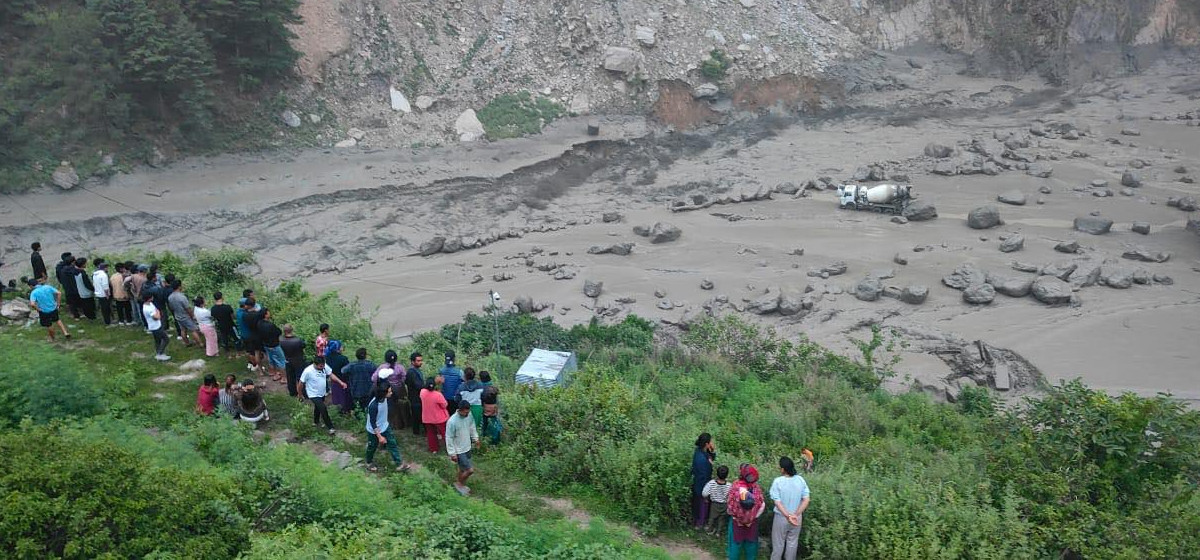
While the Federal Government is putting a huge effort into proving that the lessons learned during the 2015 earthquake and the natural calamities that have hit the country since then have not only been internalized but are also being put into practice, answering this question will require strategic and adaptive thinking, as well as a certain degree of openness on the part of policymakers.
The search-and-rescue phase, which, as daunting and sensitive as it is, is currently underway simultaneously with immediate post-disaster relief, will soon come to an end.
The way this initial stage of coping with and tackling the devastating floods in Rasuwa and its surrounding districts transitions into and paves the way for post-disaster reconstruction is paramount.
So far, Prime Minister Balendra Shah and his administration have maintained a firm grip on the overall management of the disaster.
All in all, this is a very good thing.
Donations from the public and the corporate sector have been channeled through the Prime Minister Disaster Relief Fund, while there is a clear protocol for nonprofit organizations, both NGOs and INGOs, to follow in order to gain direct access to the affected areas.
There is even a procedure in place for journalists who want to report directly from communities most affected by the disaster.
This is a measure aimed at guaranteeing a reliable flow of information without stifling or imposing undue and unreasonable limitations on the important role that the media can play in providing vital information.
Nepali citizens must be proud of how their democratic and fully elected authorities are balancing the difficult-to-navigate thread between freedom of expression and responsible and ethical journalism.
In all cases, foreign citizens, including reporters and international aid workers, have been subjected to a degree of scrutiny.
This approach should be viewed positively, but at the end of the day, as the focus shifts to longer-term relief and reconstruction, the authorities need to have a strong framework for how non-state actors can play a role in the upcoming phases.
The nonprofit sector can unquestionably play an important role in the months and years ahead, but it will be indispensable to have clarity on roles and responsibilities.
Difficult questions must be tackled and common sense must prevail.
For example, should local NGOs, together with their international partners, have a direct role in reconstruction?
Common wisdom would say that these actors could contribute and be involved, but the tricky part is how to ensure their participation without undermining, even unintentionally, the authorities at the federal, provincial and local levels.
Finding an answer not only to the “who” question but also to the “how” question—in short, how to formulate a precise framework that enables non-state actors to support the reconstruction phase—will require an open and frank discussion among all stakeholders.
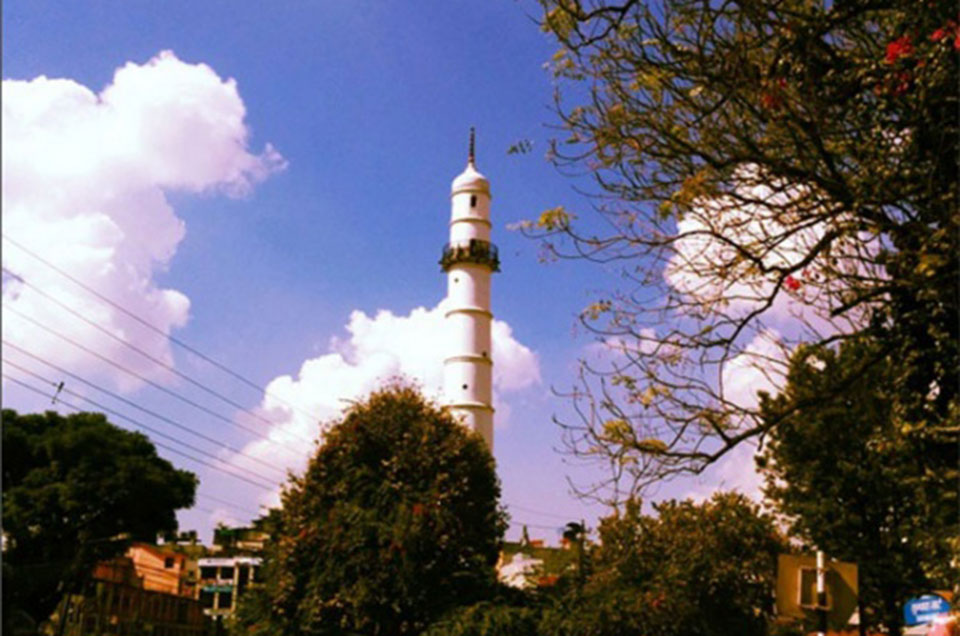
Authorities, local communities pledge to help in Dharahara reco...
For example, should I/NGOs be allowed, as occurred during the earthquake, to be directly involved in the construction of new schools or other infrastructure?
What tangible benefits could such an approach bring?
Would it be faster and nimbler, with a more immediate impact on local communities, than having the state initiate a national or even international tender?
What about the contributions of UN agencies and programs, as well as bilateral and multilateral donors?
It would be interesting not only to draw conclusions from past experiences with the 2015 earthquake but also from international experiences of post-disaster reconstruction.
The immediate post-2015 earthquake relief work saw, on the upside, the mobilization of thousands of volunteers and members of the general public.
Their contributions made a huge difference and saved many lives.
Yet the context was very different from the current situation.
Then, the central government was utterly unprepared and totally incapable of providing even minimum levels of coordination.
This is not the case this time.
The reconstruction phase, by contrast, was more of a mixed picture and probably more negative in terms of its impact and the way money was spent.
Way too many international NGOs, even those without any connection to the country, jumped into Nepal with large-scale operations that inevitably also implied high administrative costs.
I am definitely convinced that nothing similar will happen in dealing with the longer-term relief and reconstruction work in the communities of Rasuwa and neighboring districts.
The Federal Government will maintain strong and strict coordination and supervision of the entire process, but it is worth asking what the state institutions can realistically do and how they can harness the resources and expertise of non-state actors without losing overall control of the process.
There is a high probability that international nonprofits are already working to prepare concept notes for possible fundraising back home.
Done ethically, this is not necessarily a bad thing in principle, but where will the funds that might be raised end up? Who will manage them?
It can make sense to channel all these resources into the Prime Minister Disaster Relief Fund, but at the same time, international NGOs will already have incurred some costs in preparing their proposals or promoting their fundraising campaigns.
Again, if this backstage work, often happening far from Nepal, is done properly and follows certain principles and standards, then these efforts are justified.
Finding the appropriate way to welcome these non-state contributions can be tricky, but through open dialogue, a win-win situation can be found, even if there are no easy or quick solutions.
Will the Prime Minister Disaster Relief Fund be effective in disbursing funds?
Previous experiences with the same tool are not exactly encouraging, with unused funds lying dormant for long periods.
For example, it can be imagined that more holding centers for people who are now homeless will be created.
Can the state, at the federal, provincial and local levels, manage them directly and effectively, or could non-state actors have a role in the day-to-day management of these facilities?
The way the Prime Minister Disaster Relief Fund is organized and administered can make the difference, and different answers, depending on how the Fund performs, could be offered to this question.
It is one thing if this fund is going to be used only for the reconstruction of infrastructure.
In this case, all donations, including those from international communities (external development partners), private citizens and nonprofit organizations, both national and international, could feed into the Fund, which would probably be managed by the National Disaster Risk Reduction and Management Authority (NDRRMA) under strict supervision from the Office of the Prime Minister.
But if the resources from the Prime Minister Disaster Relief Fund are also going to be used to support immediate relief, then procedures must be in place for quick disbursements.
Otherwise, without a fast-tracked working modality capable of responding quickly and effectively to unpredictable local needs, including small needs requiring small amounts of money, space will open up for other actors to step in.
If it ends up this way, relying again on non-state actors that can operate faster and more nimbly will not be the end of the world.
Actually, it should be a welcome move because a state system unable to work quickly at the small, granular level should not only allow but also facilitate local nonprofits and their international partners to do the job better.
Yet clear procedures must be in place.
As I am writing this piece, I have no doubt that key personnel within the Federal Government are pondering all these questions and trying to find some answers in what is really an attempt at squaring the circle.
There is no doubt that the state, at all levels, must be fully in charge of the reconstruction phase.
Any level of centralization of funding and physical rebuilding is justifiable, but the approach will nevertheless require some flexibility and space for non-state actors to contribute.
Total control of all stages of the difficult reconstruction process can be the right way to rebuild better, and it is the Federal Executive’s duty and responsibility to ensure that not a single rupee goes to waste.
Prime Minister Shah and his team must be in charge but must also realize the daunting complexities of the months ahead.
Recognizing the areas where the state can be fully operational and lead the operations, while acknowledging that its institutions might not be able to do everything perfectly, and openly and transparently identifying the domains where others, especially non-state actors, can do better, will make the difference.
Difficult times lie ahead.
Such times will require difficult conversations about who is going to do what and how state institutions, including the Social Welfare Council, which is supposed to be dismantled but is still in charge of coordinating the work of national and international nonprofits, can operate effectively over the next months and years.
The framing of a National Compact for a Safe and Sustainable Reconstruction could offer a framework where everyone is welcomed to step in—a mechanism where responsibilities and different levels of ownership of the process are clearly spelled out, and where pragmatism and common sense prevail over rigidity and ideology.
The Compact could also foresee the creation of a Citizens’ Independent Reconstruction Oversight Commission, made up of members of civil society, academia and the business sector acting voluntarily and in their personal capacities.
This body would act as an independent watchdog that would not only assess how the money is spent but also provide independent feedback and recommendations to the state.
Let’s remember that being in control does not mean closing the doors to the whole of society.
Rebuilding is and should be a shared responsibility.
“Control, coordinate, collaborate and facilitate” should become the new mantra for leading this difficult reconstruction phase.