


KATHMANDU, June 28: Nepal's major left leaders on Sunday renewed calls for communist unity and internal reform, saying the country's evolving political landscape requires greater cooperation among leftist forces following their electoral setback in the March 5 general election.
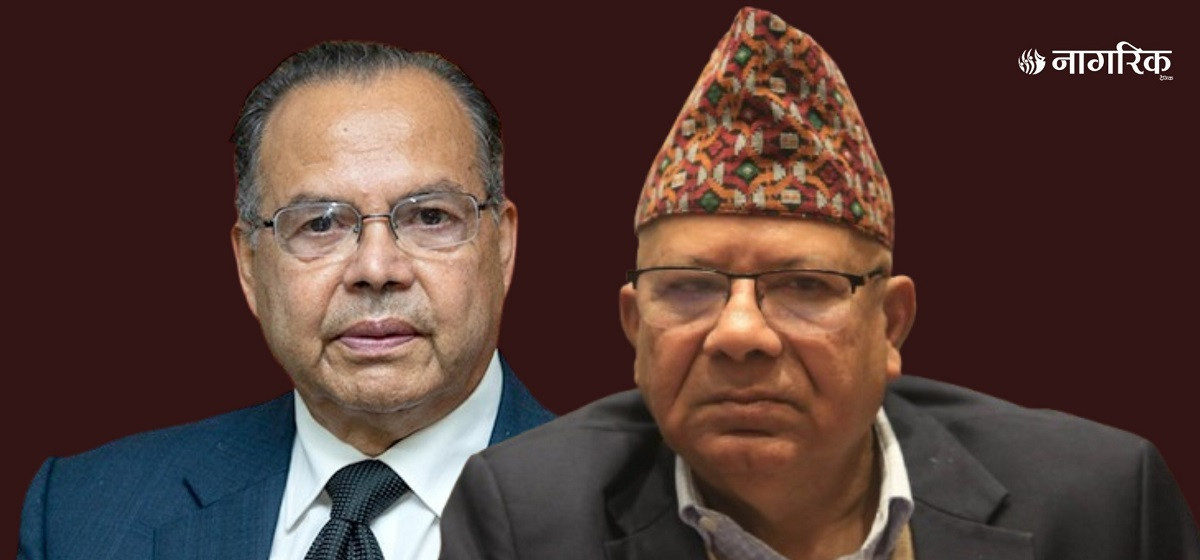
The message came during a programme organised in Kathmandu to mark the 75th birth anniversary of late communist leader Madan Bhandari, where former prime ministers KP Sharma Oli, Pushpa Kamal Dahal, Madhav Kumar Nepal and Jhala Nath Khanal appeared together on the same stage after a long gap, reigniting speculation over closer cooperation among left parties.
The event also comes as opposition parties continue discussions on forming a broader front against the Rastriya Swatantra Party (RSP)-led government.
Addressing the gathering, Nepali Communist Party (NCP) Coordinator Pushpa Kamal Dahal said political parties cannot remain confined to old ideas and slogans if they expect to remain relevant. He argued that adapting to changing political realities is essential, citing Nepal's transition from the armed insurgency to the peace process as an example of political transformation.
Desperate search for missing girls as nearly 80 dead in Texas f...

Dahal also reiterated that discussions are underway with the Nepali Congress (NC), CPN-UML and Madhes-based parties on building a common platform against the government. He recently held talks with NC leader Dr Shekhar Koirala in Biratnagar and said consultations were continuing with other opposition leaders.
NCP leader Jhala Nath Khanal said there was no alternative to communist unity under the current political circumstances. Calling the joint appearance of senior left leaders a positive development, he urged communist parties to learn from past mistakes and unite to safeguard national interests and pursue what he described as scientific socialism.
He also claimed the recent election results would have been different had the communist parties remained united.
CPN-UML Chairman and former prime minister KP Sharma Oli also stressed the need for greater cooperation among leftist forces, describing recent political developments as a challenge to both democracy and Nepal's communist movement.
While acknowledging that the UML had suffered electoral setbacks, Oli maintained that the party remained capable of regaining public confidence. He also accused emerging political forces of using digital platforms and technology to undermine traditional political parties and defended his government's record on infrastructure development and policy reforms.
Former President Bidya Devi Bhandari, the chief guest at the programme, warned against proposals to replace Nepal's parliamentary system with a directly elected executive, saying such a model would not suit the country's multi-ethnic, multilingual and multicultural character.
She also urged communist parties not to draw hasty conclusions about the future of the movement based on a single election, but instead treat the results as an opportunity for self-review and organisational reform. Calling for greater innovation and stronger engagement with younger generations, she said communist parties must adapt to changing public aspirations, particularly on employment, quality education, governance and the digital economy.
NCP Co-coordinator Madhav Kumar Nepal, however, cautioned that communist unity could not be achieved through emotional appeals alone. He said all communist parties must first undertake serious self-assessment and address weaknesses within the movement.
"Unity requires not only emotion but also common thinking and practical commitments," Nepal said, adding that broad dialogue and consensus would be essential before any meaningful reunification could take place. He also acknowledged that immediate communist unity remained unlikely.
The renewed calls for left unity come months after the RSP secured a near two-thirds majority in the general election, ending the long dominance of Nepal's traditional parties and reshaping the country's political landscape. Opposition leaders have since intensified consultations on possible cooperation as the government presses ahead with corruption, governance and money-laundering investigations involving leaders and figures linked to established political parties.






-1200x560-1774606010.webp)


