

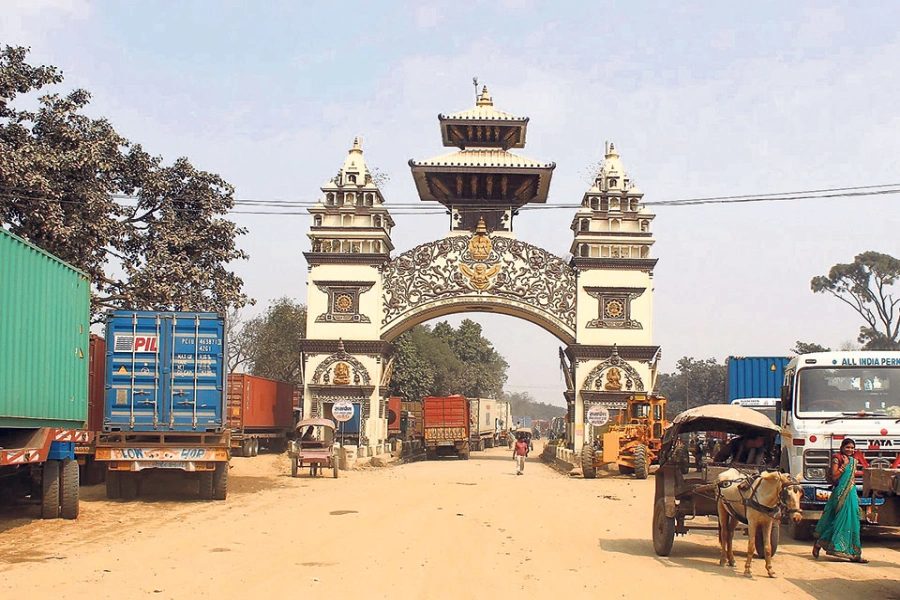
Nepal’s relationship with India is often narrated through big, familiar frames: open borders, Gurkha legacy, trade routes, and hydropower. But in early February 2026, Nepali social media signalled something more contemporary and, frankly, more useful for the next decade: a grassroots appetite for cooperation that is practical, opportunity-driven, and security-conscious at the same time.
Two bilateral events stood out in online conversation. First, the Nepal–India Startup Sambad, where Nepali founders discussed market access and cross-border innovation after nine Nepali startups secured investment and incubation offers linked to major Indian incubation platforms. Second, the Nepal–India Think Tank Forum on Regional Resilience, where experts from both sides argued for tighter security cooperation, youth engagement, and policy alignment to meet shared threats such as terrorism, trafficking, and smuggling.
Read together, these moments suggest a blueprint for Nepal–India ties that goes beyond ceremony: build prosperity through innovation corridors, and protect that prosperity through coordinated resilience.
Startups as the New People-to-People Bridge
The Startup Sambad matters because it speaks the language of a generation that has grown up on mobile payments, global platforms, and cross-border work. It is not an abstraction. The Government of India’s Embassy in Kathmandu noted that nine startups from Nepal received incubation and investment offers from IIT Madras Incubation Cell and IIT Madras Pravartak, describing the incubator ecosystem as a flagship deep-tech platform with a large portfolio valuation. Reports on the residency-style programme at IIT Madras also underline the basics that founders actually need: mentorship, product guidance, and exposure to the Indian market at scale.
Equally important is who convened and amplified the conversation. The Nepal–India Chamber of Commerce and Industry (NICCI) has been associated with organising the “Startup Sambad” style engagement and broadcasting its outcomes, including the fact of nine startups securing offers. That kind of institutional glue is underrated. In South Asia, governments can initiate, but chambers and incubators sustain the pipeline when headlines move on.
United States pursuing emerging partnerships with South Asian c...

If Nepal wants to convert this energy into a durable economic track with India, three cooperation areas stand out.
Market access and compliance pathways. Nepali startups do not just need introductions; they need predictable pathways into Indian procurement, fintech partnerships, and consumer markets. This means clearer cross-recognition of standards where feasible, faster dispute resolution for cross-border contracts, and startup-friendly rules for data protection and payments interoperability. The online positivity around “greater market access” is not a slogan; it is a demand for friction reduction.
Co-investment, not only incubation. Incubation helps early, but Nepal’s founders will measure success in follow-on capital and revenue. Joint demo days, India–Nepal seed funds anchored by credible institutions, and a structured mechanism for Indian venture networks to scout in Kathmandu, Pokhara, and Biratnagar could turn one-off offers into an annual deal flow.
Talent circulation. The greatest regional advantage is the open-border ecosystem and cultural familiarity. A short-term founder visa is not the point; the point is easier internships, fellowships, and accelerator exchanges so Nepal’s builders can learn in Indian hubs and return with networks, not just notes.
Regional Resilience: Securing the Open Border Without Closing It
The second event, hosted by the Nepal Institute of International Cooperation and Engagement (NIICE), brings the security conversation into the same modern register: transnational threats that exploit openness. Accounts of the forum highlight recurring concerns: cross-border terrorism, human trafficking, narcotics smuggling, and counterfeit currency. This is not fearmongering; it is the reality of a porous frontier that is also a lifeline for trade and families.
What is notable is the mix of institutional voices. Former Indian NSA Ambassador Pankaj Saran emphasised youth engagement as central to the future of bilateral ties. Alok Bansal of India Foundation flagged cross-border terrorism as a shared concern. Retired Vice Admiral Sanjay Jasjit Singh, Director General of the United Service Institution of India, spoke about Nepal’s long military linkage with India and the strategic significance of Nepali citizens serving in Indian forces, including references to recruitment frameworks. And Nepal-based strategic researchers pointed to counterfeit currency seizures and other examples as indicators of shared vulnerabilities.
The policy direction here should be clear: keep the border open, but make cooperation smarter.
Real-time information sharing. Radio Nepal’s coverage emphasised coordination and timely exchange of information to tackle cross-border terrorism and illegal trade, and even mentioned the spread of disinformation as a security factor. A joint fusion cell model for specific threats such as trafficking routes or counterfeit networks would make enforcement targeted rather than disruptive.
Joint capacity against trafficking and narcotics. Human trafficking is not a “law and order” footnote; it is a human security emergency. A shared protocol for victim identification, repatriation support, and coordinated prosecutions would turn statements into outcomes.
Youth as a resilience asset. If young people can be recruited into extremist ecosystems or criminal logistics, they can also be recruited into resilience: civic technology, border livelihoods, cyber hygiene, and community reporting networks. That is why the forum’s emphasis on youth is strategically wise, not merely symbolic.
One Story, Two Tracks
The deeper point is that startups and security are not separate agendas. Innovation corridors attract investment and jobs, which reduce the social space for criminal recruitment. Security cooperation, when precise and accountable, protects the trust that entrepreneurs require to scale across borders. The same open border that enables family life and commerce can also be exploited by trafficking and counterfeit networks. The answer is not closure; it is calibrated coordination.
Nepali social media’s positive tone around both events should be read as a democratic cue. People are not asking for grandstanding. They are asking for outcomes: easier market entry for Nepali talent, and safer communities on both sides of the border. The institutions are already in place to deliver this agenda: NIICE convening strategic dialogue, NICCI mobilising business networks, and Indian incubation platforms such as IIT Madras Incubation Cell and IIT Madras Pravartak building a pipeline for Nepali innovation.
Now the task is to stitch these threads into a single bilateral rhythm: quarterly startup and investor engagements, annual policy alignment on cross-border digital commerce, and a standing resilience mechanism focused on trafficking, smuggling, and terror financing. When cooperation looks like that, it stops being a headline and becomes a habit.
The author is Editor at The Daily Milap, India











