KATHMANDU, Dec 1: For the first time, Nepal’s sexual and gender minority community has formed a political party under its own leadership, saying they can no longer rely on the state or traditional political forces to secure their rights.
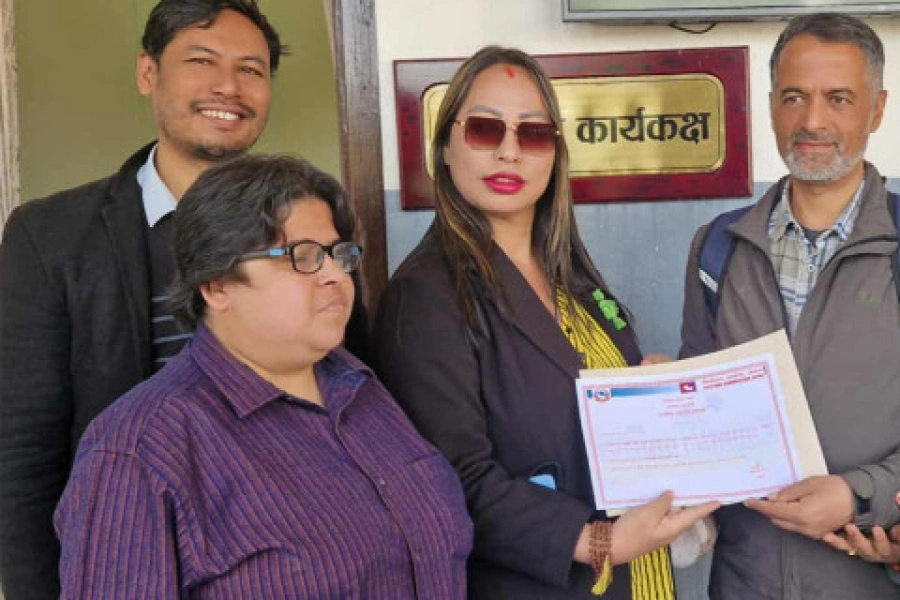
The newly formed Samabesi Samajbadi Party has already been registered with the Election Commission (EC), which handed over the party’s registration certificate on Sunday.
Sandhya Lama, secretary of the party, said the historic step marks a moment of empowerment for the community. “We are proud to create our own political platform to fight for the constitutional rights that have long been ignored,” she said. Lama added that mainstream political parties have used gender minorities merely as a “vote bank,” offering promises but delivering little.
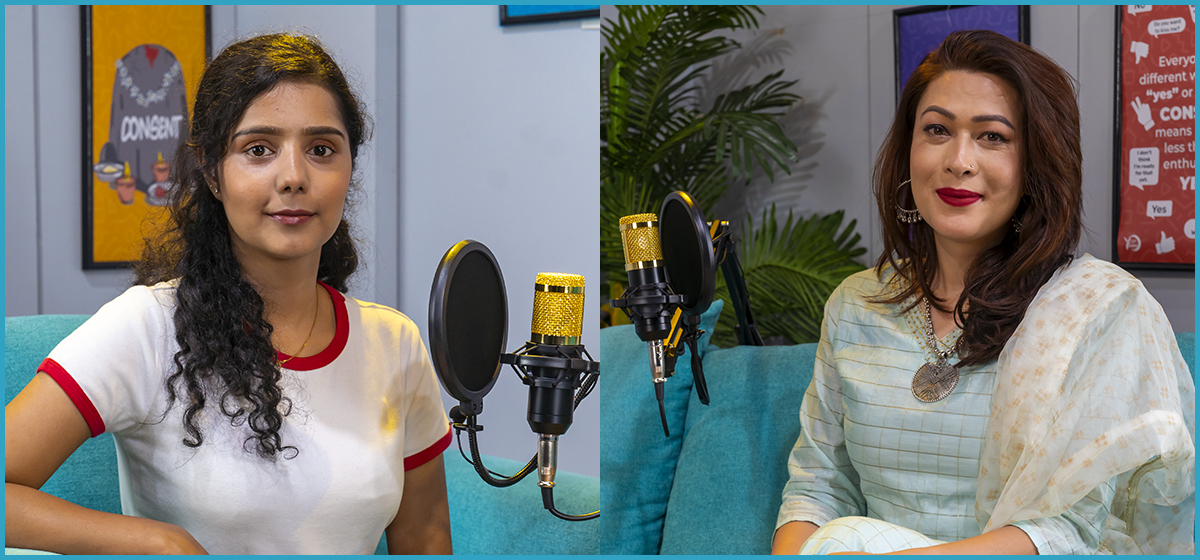
#Sexploration Episode 3 Discussion on Gender Markers
“In the past, we received only assurances but never guaranteed rights. Now, we will reach the parliament and government ourselves to raise our voice. That is why we formed this party,” she said.
The community hopes to see its concerns represented in parliament alongside those of marginalized Dalits, Madheshis, Indigenous groups, women and Muslims. “Relying on others hasn’t worked. So we have stepped forward ourselves,” Lama said.
Despite being included in proportional representation lists in previous elections, gender minority candidates were often placed at the bottom of closed lists, ultimately excluding them from selection. Their long-standing demands have centered on identity, recognition and a dignified life.
According to the 2021 census, Nepal recorded only 2,928 individuals who identify as gender minorities—just 0.01 per cent of the population. Gender minorities were enumerated as a separate cluster only starting from the 12th census. Experts, however, say the actual number is far higher, as many remain hidden due to fear of social stigma. Former Constituent Assembly member and party adviser Sunil Babu Pant stated that vague census categories, such as “male,” “female,” and “other,” have also contributed to the low count.
Pant, who helped establish the party, said the move was prompted by the non-inclusive behavior of traditional parties and the failure to implement Article 42 of the constitution. “Article 42 guarantees proportional inclusion for sexual and gender minorities and persons with disabilities, but political parties have not implemented it,” he said.
However, young political analyst Nabin Tiwari cautions that forming separate political parties may not offer a long-term solution. “Sending a few lawmakers to parliament through a separate party won’t solve the issue,” he said. “This is not just a community concern but a national one. The solution must come through national consensus and mainstream politics.”
Denying rights to any community reflects the nation’s failure, Tiwari added. “Mainstream political parties must prioritize minority issues as national concerns. Only then will the vision of an inclusive nation hold real meaning,” he said.