

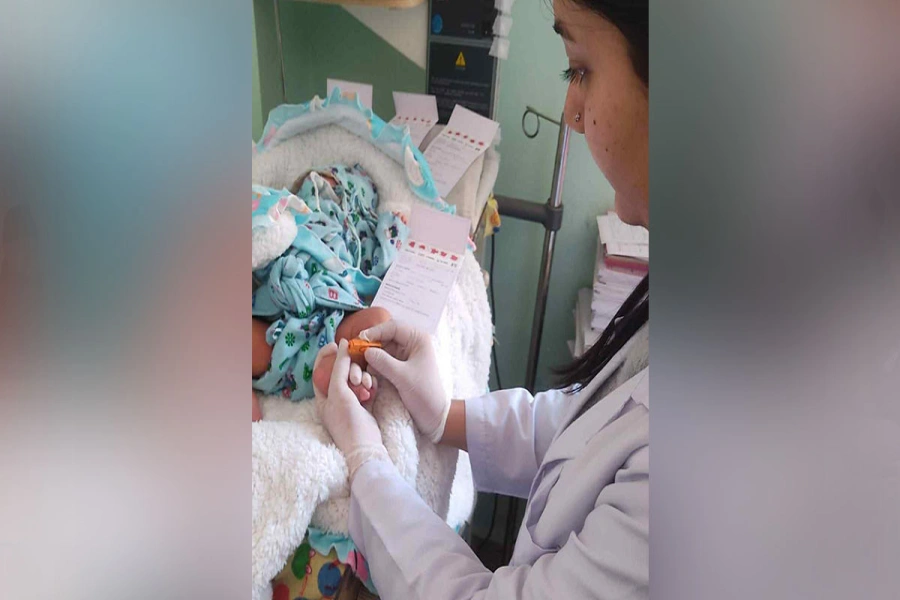
KATHMANDU, Jan 7: Newborns at Thapathali Maternity Hospital were earlier treated only if a health problem was observed at birth. Now, newborns undergo seven types of health tests within 24 hours of birth before being discharged. Follow-ups are scheduled even after they go home. However, many people are unaware of this service.
The service, known as Neonatal Screening, was introduced in late 2024. Under the programme, a small blood sample is collected from a newborn’s heel, placed on special paper using a standard technique, and tested for genetic and congenital disorders, according to neonatal specialist Dr Prajwal Paudel.
He said the screening detects seven congenital conditions, including thyroid hormone disorders, adrenal gland dysfunction, red blood cell abnormalities, galactosemia, phenylalanine metabolism disorders, cystic fibrosis affecting the lungs and digestive system, and other related conditions.
Paropakar Maternity starts 'NewBorn Screening' and mental healt...

Hospital records show that 600 newborns have undergone neonatal screening over the past 14 months. Of them, 60 were diagnosed with various congenital disorders, while eight of the affected infants died.
Dr Shailendra Karmacharya said early detection and treatment could significantly reduce congenital disorders nationwide. “These tests mainly identify genetic and hormone- or gland-related conditions which, if detected and treated in time, can save newborns’ lives,” he said.
However, not all newborns at the hospital have been screened. Dr Karmacharya attributed this to limited public awareness, staff shortages, and difficulties in counselling parents. “Earlier, only one staff member was assigned to collect blood samples. Some parents also refuse to allow blood collection from their babies,” he said.
Dr Paudel noted that despite improvements in prenatal care and maternity services over the past decade, progress in newborn health outcomes has remained limited due to the lack of widespread genetic and neonatal screening. He said the service would be more effective if samples could be collected from nearby hospitals and transported— including by air—for analysis at maternity laboratories.
Hospital Director Dr Shriprasad Adhikari said expanding the programme remains challenging due to shortages of trained staff, laboratories, and budget for reagents, as well as difficulties in follow-up care and public awareness. “On one hand, parents lack awareness; on the other, resources are limited,” he said.











