

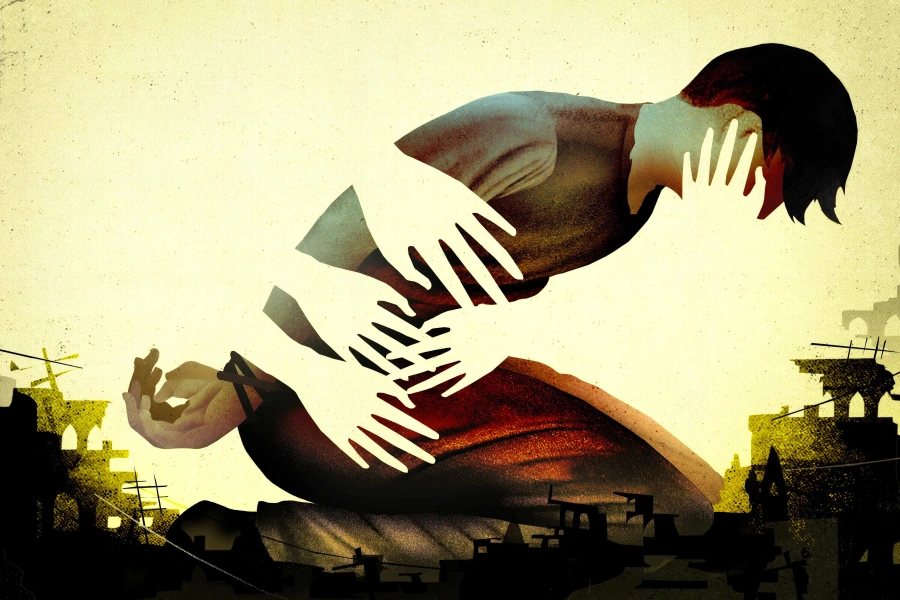
Over the past several years, I have worked closely with survivors of conflict-related sexual violence in Nepal. Through my conversations and project activities with both men and women, I have had the opportunity to listen to survivors and observe how the impact of violence continues long after the conflict itself.
I still remember my first interview with a male survivor. Until then, most of my work had been with women survivors, and I had seen how many of them faced blame, stigma, or rejection after returning to their communities. So, when I asked him how his family and society treated him after he came back from custody, I expected a difficult answer. Instead, he replied casually that life returned to normal. His family was happy he was alive, and people acknowledged his contribution to the war and what had to suffer.
His response surprised me.
Conflict-related sexual violence affects women and men in different ways, not only because of the violence itself, but because of how society understands gender, honour, masculinity, and victimhood. These differences influence how survivors live, heal, and seek justice. They also raise important questions for Nepal’s transitional justice process.
Women survivors: honour, stigma, and fear of disclosure
For women, sexual violence is closely linked to the idea of family honour. When a woman is raped, the violence is not seen only as a crime against her, but as one that brings shame against her whole family. The burden of protecting that honour is placed entirely on the woman.
Many have never told their husbands about the violence they experienced. Some were very young and unmarried at the time. Later, they chose to marry outside their village or far from their family, hoping to ensure that their past would not be discovered. Even years later, many women live with constant fear that their husbands or in-laws might find out.
I work with the Global Survivors Fund (GSF), which aims to help survivors of conflict-related sexual violence realise their right to reparation. Over the course of my visits to survivors in Nepal, the sheer scale of fear and stigma that women face became clear.
In cases where husbands do learn about the violence, most relationships do not survive. Women are blamed, taunted, and in many cases abandoned by both their family and community. Even where husbands appear supportive, alcohol often changes the situation. Some men brought up the past trauma during arguments, using it to insult or control their wives. In our interactions, when we gently asked women whether their husbands knew about what they had suffered and how they reacted, several women described a similar pattern. They said their husbands were generally supportive in daily life, but when they consumed alcohol, the violence resurfaced in conversations. Some husbands taunted them. These moments created tension in the relationship and renewed fear for survivors. Even years later, the aftermath of sexual violence weighed on their married lives.
Sexploration season 2 Episode 1:Sex and porn education for youn...

There were only a few cases where husbands were fully accepting. In those situations, women described feeling freer and more secure. This became clearer during our follow-up field visits after providing financial support to survivors. Women whose husbands were aware and supportive were more open in welcoming us into their homes and sharing how they were using the support. Some were running small businesses that were progressing well, and they spoke more confidently about their plans and future.
In contrast, survivors whose husbands did not know about their experiences often asked us to visit only when their husbands were not at home. They remained cautious and worried about being exposed as survivors. Over time, it was visible that women whose husbands knew and accepted their past were mentally more at ease.They were not constantly afraid of exposure or judgment. Some women said that justice for them would mean being able to speak openly about what happened and still be accepted by their husbands. For them, that acceptance would be a form of reparation.
Women who were detained during the conflict faced additional harm. It was often automatically assumed that they had been sexually violated. They were questioned and judged by family and society, with comments such as, “How many people did you sleep with?” Sexual violence against women was treated as expected and normal, rather than as a serious crime.
Men survivors: silence, masculinity, and lack of recognition
The experiences of male survivors are different.
In many cases, their wives are aware of the sexual violence and provide support; some referred their husbands to our project. In some situations, wives had long sensed that something was wrong, especially when their husbands avoided physical intimacy or showed emotional distress, but they did not understand the reason. Through family counselling, when they learned what their husbands had gone through, most responded with empathy and patience. Some became careful not to put additional stress on their husbands and were supportive of their psychosocial treatment. Wives also encouraged their husbands to participate in livelihood activities, motivating them when they doubted their own capacity due to health or emotional struggles. In most cases, this understanding improved family relationships, as it helped explain behaviours that were previously misunderstood.
As a result of what they suffered, some men experience sexual dysfunction as a result, fear that their masculinity will be questioned. Because of this, men rarely speak openly about what they went through. Nepal’s legal framework also leaves men affected by sexual violence in a grey area.
The 2017 National Criminal Code defines rape as ‘a situation where a man has sexual intercourse with a woman without her consent, or with a girl child below the age of eighteen, even with consent.’ The law does not recognise sexual violence against men. This legal definition reinforces the belief that men do not experience sexual violence at all.
During the conflict, when men returned from detention or custody, however, they were often welcomed as heroes. Families were relieved that they were alive. No one questioned their honour or character. Unlike women, men were not blamed or shamed for what they may have experienced.
When we began working with men, we initially assumed that the stigma they faced would be very high. Over time, I realised that the bigger issue was not stigma alone, but silence and lack of space for dialogue. Men did not talk about sexual violence because there was no language or social setting to do so.
During collective therapy workshops, men referred to themselves as torture victims. They did not use the term sexual violence. Interestingly, many men said they were more comfortable speaking with women counsellors than with men; sharing these experiences with other men felt threatening. Admitting sexual violence or “sexual weakness” to another man was not acceptable for them.
In this situation, patriarchy does not protect men. It leaves them isolated and unable to speak, even when they are suffering.
Sympathy, normalisation, and unequal responses
Sexual violence against women has become so normalised that it no longer shocks society. In contrast, sexual violence against men still creates strong emotional reactions.
Even the women psychosocial counsellors on our teams shared with us that they were deeply affected for days after hearing men’s stories. They struggled to understand how men could suffer such violence. This level of shock and sympathy is rarely extended to women survivors.
This does not mean that men suffer more than women. It shows how violence against women has been normalised, while violence against men is treated as unthinkable.
Reflections for transitional justice
These differences have important implications for transitional justice in Nepal. Survivor-centred justice cannot be gender-neutral. Women survivors need protection from stigma, safe spaces for disclosure, and recognition that social acceptance can be as important as material reparations. Men survivors need legal recognition, acknowledgment within transitional justice mechanisms, and spaces where they can speak without fear of their masculinity being questioned.
If transitional justice processes fail to recognise how gender shapes survivors’ experiences, they risk excluding both women and men in different ways.
Conclusion
Conflict-related sexual violence is not only about the violence that occurred during the conflict. It is also about how survivors continue to live with that violence in their families, communities, and in the justice system. What I have seen in my work is that women are often made to carry shame, while men are pushed into silence. Both suffer, but in different ways shaped by gender norms.
If transitional justice mechanisms are to be truly survivor-centred, they must recognise these gendered realities. A one-size-fits-all approach cannot address the different forms of stigma, fear, and silence that survivors face. Understanding how gender shapes survivors’ lives is necessary for justice to be meaningful.
(The author is Global Survivors Fund (GSF) Project Coordinator for Nepal.)





