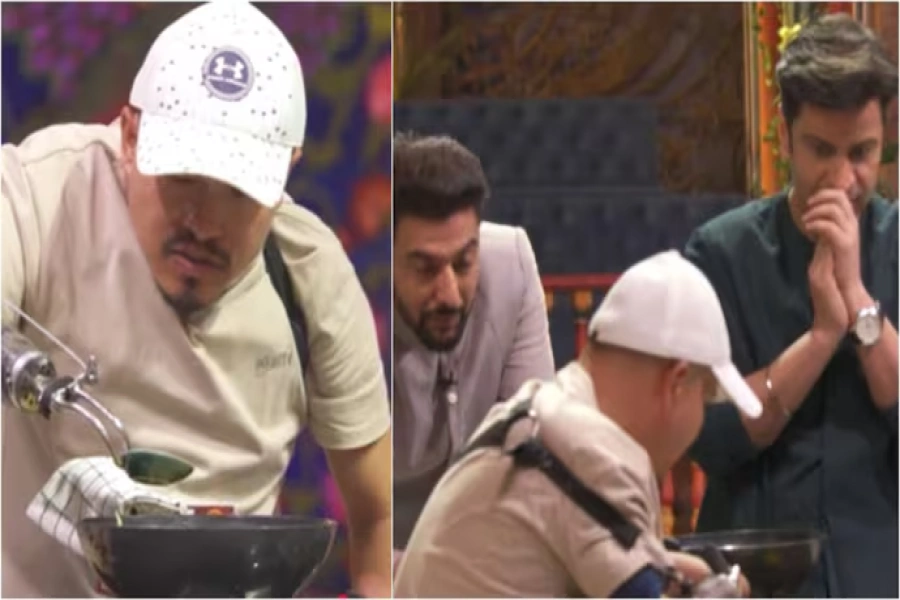
Relations between nations are often judged by treaties, summits, or official statements. But the real strength of a relationship is revealed far from conference halls in everyday lives, shared emotions, and quiet human connection. Few recent moments have captured the depth of India and Nepal people to people bonds as powerfully as the appearance of Nepali chef Ratna Tamang on the new season of MasterChef India.
Ratna Tamang’s journey is extraordinary, but what is equally striking is how naturally India embraced him.
After losing both his hands in a devastating electric shock incident, Ratna could have been forgiven for stepping away from the kitchen forever. Cooking, after all, is a craft built on touch, precision, and muscle memory. Yet Ratna refused to surrender his passion. Through sheer willpower, adaptation, and years of practice, he relearned how to cook, developing techniques that allowed him to continue doing what he loved most. His story is one of resilience, dignity, and quiet courage.
When Ratna entered the MasterChef kitchen, he did not arrive as a symbol of tragedy. He arrived as a chef. The judges welcomed him with respect, warmth, and genuine admiration for his skill. There was no performative sympathy, only appreciation for his food, discipline, and determination. Viewers across India responded in the same spirit. Social media was filled with messages of encouragement, pride, and affection. For many Indians, Ratna was not seen as a foreign contestant but as someone deeply familiar.
Santosh Shah wins BBC’s ‘MasterChef The Professionals Rematch 2...

This response tells us something essential about India and Nepal relations. The bond between the two societies is not constructed by policy. It is inherited through centuries of shared civilisation, faith, language, and lived experience. Ratna Tamang’s acceptance felt instinctive because Nepal has never felt distant to India at a human level.
Food sits at the heart of this closeness. Nepali dishes such as momos, thukpa, and dal bhat are part of everyday Indian life, from street corners in Delhi to hill towns across the north and northeast. They are not treated as exotic imports but as comfort food. When Ratna cooked on MasterChef India, he was not introducing something unfamiliar. He was celebrating flavours that already belong to the Indian palate. That shared culinary memory allowed audiences to connect with him instantly.
The connection goes far beyond food.
India and Nepal share one of the most open borders in the world, not only physically but socially and emotionally. Millions of Nepalis live and work in India as teachers, hospitality professionals, caregivers, entrepreneurs, and skilled workers, contributing quietly but meaningfully to Indian society. At the same time, Indian traders, students, pilgrims, and professionals have long been part of Nepal’s social and economic life. Marriages across the border are common, creating family ties that make political disagreements feel distant and abstract.
Faith remains another powerful bridge. From Pashupatinath in Kathmandu to Varanasi, Ayodhya, and Haridwar, sacred geography binds the two peoples into a single civilisational continuum. Indian pilgrims in Nepal and Nepali devotees in India travel with a sense of spiritual homecoming rather than foreignness. These journeys reinforce a shared identity that long predates modern nation states.
Cultural exchange is equally organic. Nepali singers, artists, and sportspersons find enthusiastic audiences in India, while Indian cinema, television, and music enjoy immense popularity in Nepal. Languages blend seamlessly along the border, and festivals are celebrated with equal enthusiasm on both sides. These connections are not outcomes of formal diplomacy. They are outcomes of proximity, memory, and mutual affection.
In this context, Ratna Tamang’s moment on MasterChef India becomes more than a television storyline. It becomes a symbol. It shows how people to people ties act as a stabilising force even when official relations face strain. Governments may disagree and headlines may sharpen, but the emotional bond between Indians and Nepalis remains intact.
Popular culture plays a crucial role here. When Indian audiences watch a Nepalese chef being celebrated purely for his skill and resilience, it quietly reinforces the idea that borders do not limit belonging. For younger viewers especially, it normalises empathy, inclusiveness, and shared pride. It shows that identity can be layered, proud of its roots and yet deeply connected.
Ratna Tamang’s story also speaks to something universal, the triumph of the human spirit. But the reason it resonated so strongly in India is because it arrived on fertile ground shaped by centuries of coexistence and trust between two peoples.
In an age marked by sharper nationalism and growing divisions, the India and Nepal relationship offers a gentler lesson. It shows how sovereignty and closeness can coexist, how national identities can remain strong while human bonds flourish. Sometimes the strongest diplomacy is not spoken at all. It is felt.
And sometimes, it is expressed best through applause for a chef whose journey reminds two nations that they are, at heart, family.