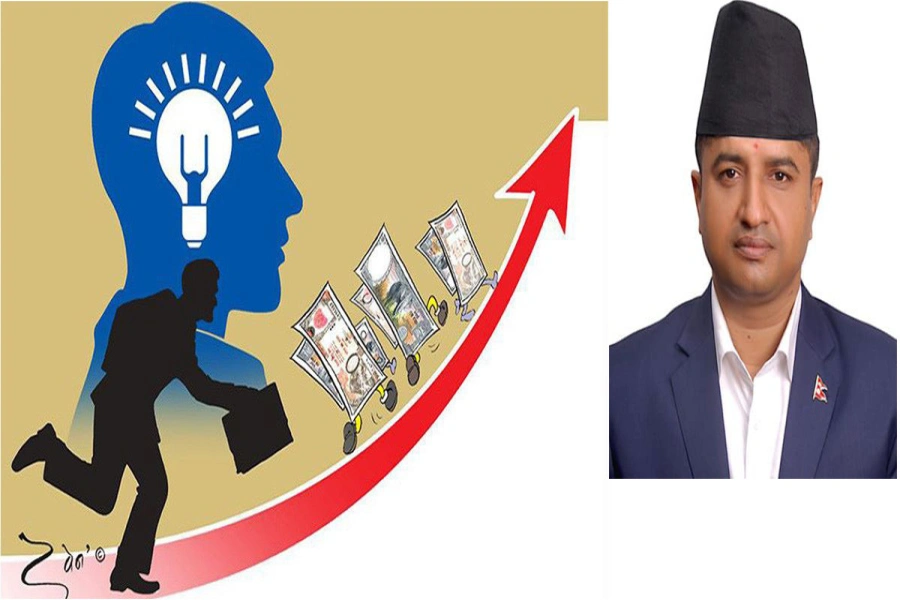
KATHMANDU, Dec 3: The government’s concessional loan scheme for innovative startups has ignited massive interest, drawing an unexpected flood of applications from across the country. The Industrial Enterprise Development Institute (IEDI) received 10,244 project proposals after opening the call, far exceeding expectations.
For the Fiscal Year (FY) 2025/26, the government has earmarked Rs 730 million to support innovation through low-interest loans. The scheme’s 3 percent interest rate has proven to be a major attraction for aspiring entrepreneurs. From the more than 10,000 applications, the IEDI plans to shortlist around 500 eligible projects for funding.
The surge in applications shows just how strongly the startup culture is taking root, said IEDI Executive Director Umesh Kumar Gupta. “There has been a remarkable attraction toward the loan scheme,” he said. “From 10,000 applications, we will select the best projects for concessional loans.”
Govt allocates Rs 730 million for concessional loans to startup...
He added that around 500 proposals are expected to qualify. “The overwhelming interest reflects the rising enthusiasm for innovation,” he noted.
The government introduced the concessional loan policy to support individuals who are engaged in research and innovation but lack the capital to turn their ideas into businesses. The scheme aims to build new knowledge, skills and capacity by providing loans at a subsidized rate. Entrepreneurs must repay the loan within five years, with repayment beginning in the second year. Loans range from Rs 500,000 to Rs 2.5 million at a 3 percent interest rate. Eligible applicants include private firms, partnerships, companies, and cooperatives registered for less than 10 years with annual turnover below Rs 150 million.
The government has been promoting startups under the Startup Enterprise Loan Fund Procedure, which encourages entrepreneurs who bring creative and innovative ideas to the development, production, operation and distribution of goods, services, and processes. Priority sectors identified under the procedure include forestry and herbs, agriculture and livestock, tourism and entertainment, and science, technology, communication and information.
Other focus areas include public health services, education, accessible transportation, infrastructure development, and automobile-related ventures. Startups involved in mining and mineral research, initiatives aimed at improving daily life, food production and processing, waste management, and traditional technology and service-oriented enterprises are also eligible for the concessional loan facility.
Amid rising unemployment in the country, the startup sector has increasingly drawn the attention of young people. Many have already launched ventures by securing concessional loans. The government’s broader policy aims to support entrepreneurship by providing both financial and non-financial assistance, mobilizing capital, attracting domestic and foreign investment, facilitating management, developing human resources, and promoting collaboration within the startup ecosystem.
Both the Federation of Nepalese Chambers of Commerce and Industry (FNCCI) and the Confederation of Nepalese Industries (CNI) have also continued supporting startup and MSME entrepreneurs. CNI has stated that it promotes startups that contribute to the digital economy, create employment based on local knowledge, help stem talent migration, boost exports, and attract foreign direct investment. The CNI has also adopted a policy to expand programs that help startup founders with skill development, business expansion, market access, and value-chain integration.

-1200x560-1774606010.webp)


-1200x560-1783685616.webp)