


MUSTANG, Jan 7: Import–export activities through the Korala border point have declined after the reopening of the Tatopani and Rasuwagadhi checkpoints, according to the Mustang Customs Office.
With trade resuming at Rasuwagadhi and Tatopani, the number of cargo containers entering Nepal through the Chinese customs at Korala has dropped. Information Officer Nimendra Singh said only eight to ten cargo containers are currently pending customs clearance at the Korala customs office.
Apart from those pending containers, no additional cargo has arrived through Korala in recent days, Singh said. Earlier, when Tatopani and Rasuwagadhi were closed, 15–20 cargo containers used to be cleared daily. That number has now almost fallen to zero.
Trading via Tatopani and Rasuwagadhi still closed despite gover...

Since Korala was fully brought into operation on September 16, customs clearance has generated more than Rs 5.5 billion in revenue. So far, goods worth over Rs 11 billion have been imported through the border, while handicrafts and Nepali products worth more than Rs 190 million have been exported to China.
More than 2,100 electric vehicles have entered Nepal through Korala to date. Recently, BYD alone imported nearly 500 electric vehicles via the border. Korala had been used as an alternative trade route after floods and landslides disrupted movement at Rasuwagadhi.
With Tatopani and Rasuwagadhi now operational, import–export volumes at Korala have declined, leaving customs staff relatively idle. Higher transportation costs via Korala have also reduced traders’ interest.
However, Singh said trade through Korala would not drop to zero except during adverse weather. “Trade may not be at the level seen when other checkpoints were closed, but Korala remains convenient for some traders,” he said.
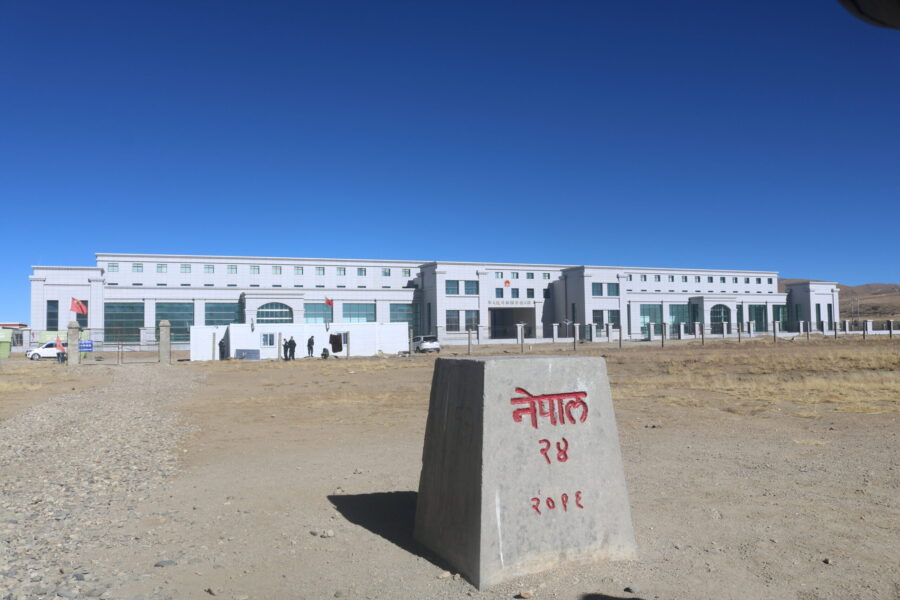
Activity at the Korala border and customs office has visibly decreased. Despite harsh weather, some staff remain stationed at the post. Located at an altitude of 4,610 meters above sea level, the border has also seen traders, Chinese cargo operators, and local youths involved in vehicle transport move down to lower areas to escape the cold.




_20200706125809.jpg)





