

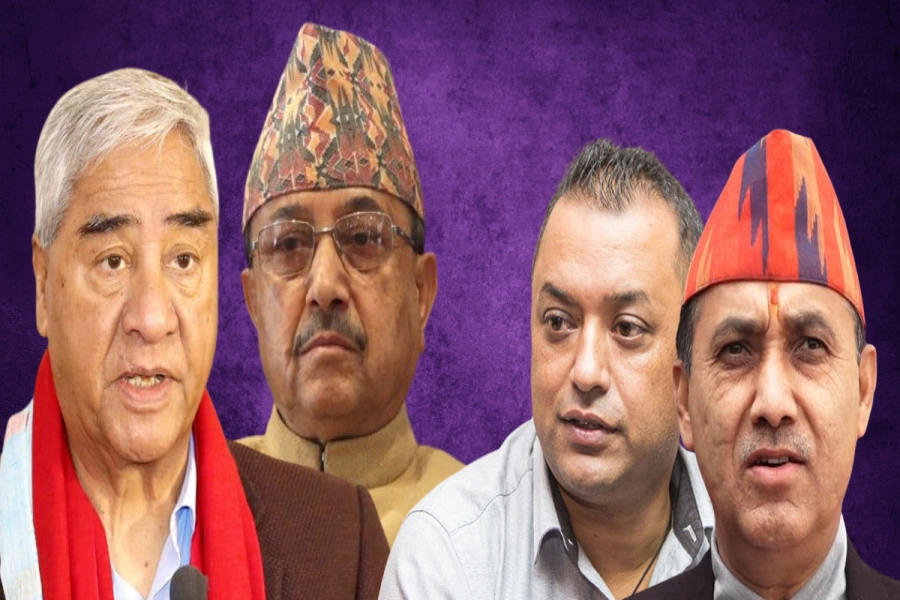
The simmering unease between the establishment side and the rival group finally led to a split in the country’s oldest democratic party, the Nepali Congress. The Special General Convention, which elected its central working body under NC General Secretary Gagan Thapa and the suspension of two general secretaries by the party’s establishment hastened the split. With the March 5 general election approaching and the party required to file the names of candidates for the election at the Election Commission by January 20, the timing of the split could be particularly unfavorable for the grand old party that once took pride in holding together during challenging times.
At its core, this split happened for leadership change and gaining new political direction. After the September 8-9 Gen Z movement that shook the nation, the NC youth leaders, led by two general secretaries, sought reform in the party by changing leadership with a view to keep the party relevant in the changed political climate. The gathering at Bhrikutimandap was partly due to the changed circumstances brought by the Gen Z movement. The gathering was preceded by several rounds of dialogues within the party’s different layers.
When complaints and grudges went unanswered, the two general secretaries, backed by the members who were sidelined by the establishment side, took an extreme step to collect signatures demanding a Special General Convention that finally took the party towards a formal split. The special convention happened on Jan 11 after 54 percent of general convention representatives signed in favor of the special, which the establishment could not stop despite repeated dialogues with the rival group.
Great Leadership: A Road Less Traveled

The talks between party President Sher Bahadur Deuba and the two general secretaries on January 12, which was the last-ditch effort to stave off the split, failed after the president turned down Thapa and Sharma’s demand of giving up his post and allowing a committee to nominate NC candidates for the March 5 election. While the special convention was taking place, the NC expelled two general secretaries from its central committee. Meanwhile, the special convention side said more than 63 percent of elected delegates were present, enough to give their decisions legitimacy, both from the Election Commission and the court. Deuba and the establishment, however, flatly rejected that claim and refused to own the convention. Once that refusal became public, room for compromise vanished. Elections went ahead inside the hall, a new leadership body was announced, and the party effectively split into two, one headed by Deuba and another by Gagan Thapa.
Those backing the special convention said they had reached the end of the road. Waiting for another regular convention, scheduled for May, felt like surrendering themselves to the same cycle again. They stated that the Deuba-led committee would overlook many of them while distributing party tickets for the March poll. But Thapa and Bishwa Prakash Sharma presented their movement as a push for internal democracy, not for tickets or posts. Their firm line that any deal must be approved by delegates strengthened their bond with party workers who had already taken risks by standing with them. Accepting the establishment side’s demand at that stage would be a betrayal to these workers and well-wishers.
Meanwhile, the endorsement of resolutions has given viability to the special convention. Term limits for party presidents, prime ministers, open membership, primary elections, youth inclusion, and asset disclosure are provisions that convinced members that their leaders have made a serious effort to reconnect the party with voters, whose expectations towards the party have changed in recent years.
Following the split, choices for Deuba appear to be slim. Accepting the convention would mean giving up executive control and signaling the end of his active leadership phase. Rejecting it carries legal risk if the Election Commission or courts recognize the special convention based on delegate strength. Letting the split continue may offer short-term control, but it will weaken the party’s moral authority and electoral base.
As March 5 approaches, the damage of division becomes clearer. A divided Congress will struggle to mobilize voters, finalize candidates, and speak with one voice. Confusion over the party name, symbol, and official recognition could waste valuable campaign time. Opponents will not miss the chance to portray the Congress as unable to manage itself, let alone the state. As such, the future of the establishment side looks uncertain. Deuba still has loyalists among senior leaders and within power circles. Such support matters inside parliament and government. Yet his pull among younger voters and ground-level workers has faded, especially after he suffered a humiliating physical attack during the Gen Z movement. In case the Election Commission recognizes the special convention group after January 20, the establishment could be left defending a structure that many no longer see as legitimate.
The rival faction is not free from risk either. Leading a breakaway force just before a national election is a gamble. Public support for reform may not garner votes in elections. Building organization, managing funds, and selecting candidates for a national-level election will test the new leadership quickly. Poor results would invite criticism that their revolt weakened the party without delivering real gains.
The next few weeks are crucial for the NC. A negotiated transition is still possible. If leaders of both sides keep treating this as a fight for authority, the Nepali Congress will head into the March 5 election divided. Both sides will suffer an unfavorable poll outcome, which will shape the future of Nepal’s oldest democratic party.





