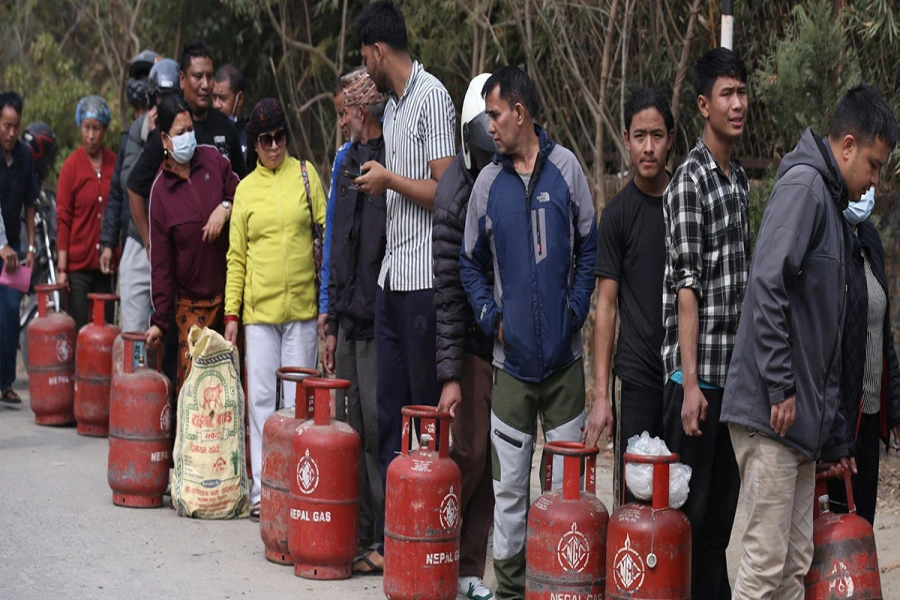
The appeal from the Nepal Oil Corporation asking people not to stockpile LPG cylinders comes at a time when many households are concerned about the supply of cooking gas. Long lines at gas depots, rumours about supply disruption, and reports of empty gas stores have caused worry in many parts of the country. For families that rely on LPG for daily cooking, even a brief disruption can create serious difficulties. The government's message is clear, yet the situation also reveals a deeper weakness in Nepal's market system. Officials from the state-owned petroleum supplier say there is no actual shortage of LPG in the country. Gas imports from India continue normally and supply has not stopped. The federation of gas sellers has repeated the same claim. District authorities and local chambers of commerce have also said that stock is sufficient nationwide. Still, many households say they are struggling to find cylinders in several places. This gap between official claims and the experience of consumers needs attention from the authorities. Part of the problem comes from panic buying. This behaviour quickly upsets the balance between supply and demand. In simple terms, panic buying and consumers’ tendency to stockpile can itself create shortages. Nepal’s traders often create serious problems as they frequently display opportunistic behaviour. Whenever a crisis or uncertainty appears, some traders and merchants try to exploit the situation.
KMC removes digital hoarding boards

The same tendency is frequently observed during wars in the Middle East or other regions, natural disasters, transport strikes, political agitation, or even election periods. Rumours spread quickly that supplies will be disrupted, and panic buying begins due to fears that stocks of daily commodities, including gas, will soon run out. Prices begin to rise while consumers become panic-stricken. Recent consumer complaints suggest that some sellers have refused to supply gas despite having stock because they want to profit from artificial shortages. Some traders, on the other hand, falsely tell customers that gas will soon run out so that they can charge higher prices. Such behaviour from traders not only creates panic among consumers but also disrupts daily life. The response from Kathmandu Metropolitan City is therefore welcome. City officials have warned traders against creating artificial shortages or engaging in black marketing of gas and fuel. Monitoring teams have begun checking depots and petrol pumps after reports that some outlets turned away customers even while holding adequate fuel. Meanwhile, the city has also opened a hotline to collect information from the public.
However, such action from the authorities must not remain limited to statements. Authorities need a coordinated approach, and market inspections must be increased during periods of uncertainty. Sellers should be required to maintain transparent records of stock and daily sales. Digital reporting systems could help authorities track supply in real time. Strict penalties should apply to businesses found hoarding or spreading false information. Consumer awareness is equally important. One of the surest ways to stop the current crisis is for households to buy gas only when needed and avoid unnecessary storage. Meanwhile, hotels, restaurants, cafés and other eateries should be monitored as they have a greater tendency to hoard cylinders, sometimes by bribing officials or paying higher prices. Purchasing LPG in a responsible way protects the entire supply system. Although Nepal’s energy supply chain is fragile, panic and manipulation make it even weaker. If authorities enforce rules strictly and traders act responsibly, the country can avoid artificial shortages. Cooking gas is a daily necessity, but turning it into a tool for profit during moments of fear and crisis is unacceptable.