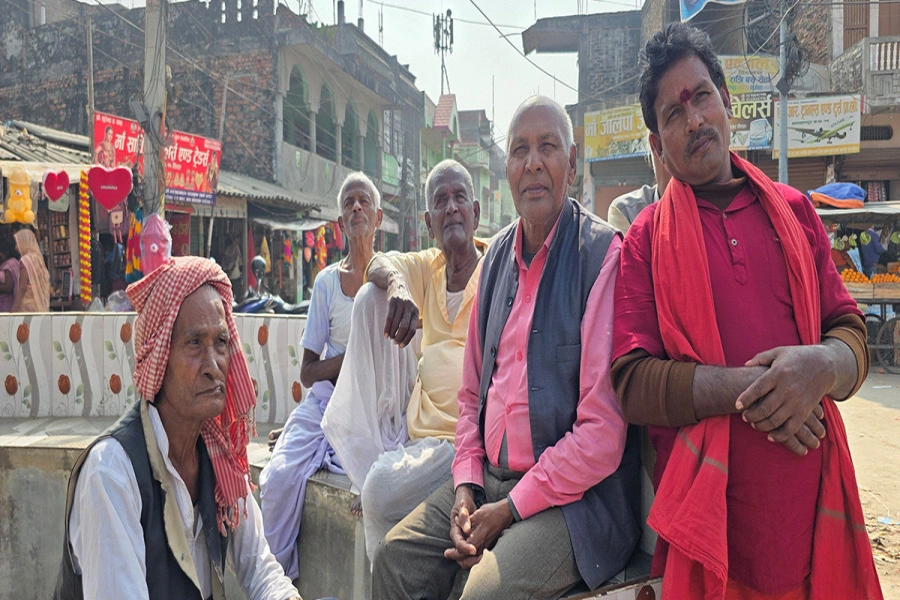
SIRAHA, Feb 7: For Ramnarayan Sah of Siraha-4, the five former ministers contesting the upcoming House of Representatives election are nothing new. He has seen countless leaders arrive with promises and commitments, and he has even helped some of them win. Though he cannot count how many times he has voted, he remembers every candidate he has supported. Every time a new candidate arrives with fresh slogans, hope sparks—but that hope fades when the winners fail to return until the next election. Sah has seen this pattern repeat for years, and now only time will tell if things will change.
Sah is unconcerned about the old faces contesting under new party banners in the March 5 election. According to him, leaders who witness people’s struggles but fail to return after winning do little to change ordinary families’ lives. “I’ve grown old voting. Leaders who come asking for votes only return by the next election,” he said at Chautara in Kalyanpur Bazaar, Siraha-4. “Elections come and go. Everyone does it for themselves; no one really works for the poor.”
In Karjanha village, at the western entrance, a small settlement of about ten families of the Malik (Dom) community struggles along a dusty road. Apart from raising livestock and making bamboo products to sell, the community has no means to sustain their lives. Living in makeshift shelters on public land, they battle poverty, lack of education, and awareness. Despite their votes influencing many politicians, their own conditions remain grim.
When asked about the election, Panodevi Malik paused and said, “What election? Elections matter to the rich. Leaders only promise things to us poor voters. We living on public land don’t even dare bargain with them. Leaders came last election, made promises, but nothing has happened.”
Having voted with hope for a better life, she says that even after these leaders became ministers, hardships remained unchanged. “My son wanders in search of work. We barely survive selling bamboo products. In hard times, there is no one to turn to.”
Voters' list rises in Mugu

Most families in this settlement, inhabited largely by Dalit Madhesi groups like Dom and Musahar, do not own land. “Our homes are also on public land,” Malik said. “We’ve lived here for generations without any land certificates. Leaders promise to improve our lives, but they never act.”
Innairdevi Malik added, “There is no reason to trust leaders. They make big promises during elections, but our situation stays the same.”
Local resident Jayprakash Thakur said the community is often used as a “voting machine.” “Leaders exploit us during elections and then abandon us,” he said. The enthusiasm for voting has declined among the poor because leaders take votes and disappear. “Some have turned elections into a business. If they don’t get a ticket from one party, they switch to another. This time, votes will be based not on greed, but on psychology,” he added.
The election heat is rising in Siraha-4. Thirty-six candidates, including five former ministers, are contesting from parties and as independents, campaigning across villages. Old candidates are busy convincing voters they will correct past mistakes; new candidates are saying, “The old ones did not deliver, give us a chance.” About half a dozen influential leaders are in the race.
With five former ministers contesting against each other, analysts find predicting the outcome challenging. In Siraha, a hub of Madheshi politics, the mix of experienced leaders and emerging forces has made the race more thrilling.
The battle is becoming more than just about victory—it is turning into a “prestige fight.” Former Minister Rajkishor Yadav contests from Janata Samajbadi Party (JSP) Nepal, while former Minister Ajayshankar Nayak represents the Nepali Communist Party (NCP). Nayak seeks to protect his old reputation. Dr. Birendra Prasad Mahato, who won from JSP Nepal in 2079 BS, now contests under Janamat Party. Former Minister Dharmanath Sah, denied a ticket by NCP, switched to CPN-UML, using personal influence to sway results.
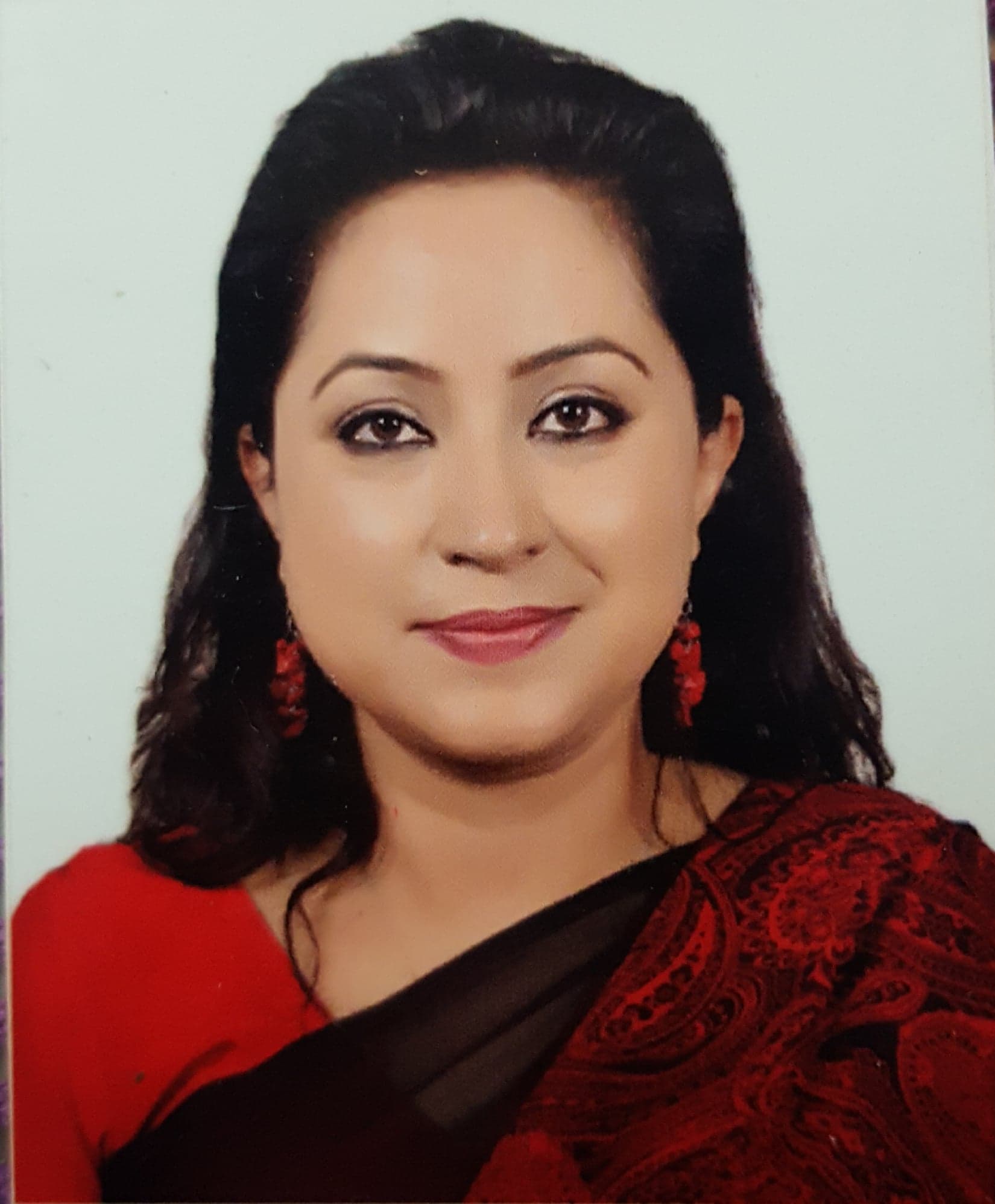
Former Minister and Bahujan Shakti Party chairman Bisendra Paswan is also in the fray, targeting Dalit and marginalized votes. Nepali Congress (NC) has fielded female candidate Chandrakala Devi Yadav, while RSP’s Tapeshwar Yadav aims to capitalize on voters’ disillusionment with old parties.
Tapeshwar Yadav leverages the “Balendra factor” and new political waves to challenge veterans. The region, covering Karjanha and Mirchaiya municipalities and parts of Naraha and Bishnupur rural municipalities, is significant both geographically and demographically.
With 106,686 voters—56,717 men and 49,969 women—and 129 polling centers, the area has historically not favored a single party or candidate consistently. Past election results show fluctuating victories across NC, UML, Rastriya Prajatantra Party, and others.
In the 2074 BS elections post-Madhes movement, Rajkishor Yadav of JSP Nepal won with 21,144 votes, Ajayshankar Nayak of CPN (Maoist Centre) received 17,575, and NC’s Mukhtar Ahmed 10,088. In 2079 BS, Birendra Prasad Mahato of JSP Nepal won with 24,102 votes, defeating nearest rivals Birendra Prasad Sah (16,294 votes) and Dharmanath Prasad Sah (14,653 votes).
Local elections also reveal mixed political influence. In Karjanha Municipality, Bhola Prasad Pokhrel (UML) won mayor with 3,839 votes, Keshav Prasad Sah (JSP) received 3,223, and Ganga Paswan (Maoist Centre) got 2,482 votes. In Mirchaiya Municipality, Shravan Kumar Yadav (Maoist Centre) was elected mayor with 5,233 votes; NC’s Sitaram Yadav got 4,710, and UML’s Pradeep Mahaseth 3,704.
Across wards in Naraha and Bishnupur, no single party has a clear advantage, making this parliamentary election highly competitive.
Veteran ministers Dharmanath Sah and Dr. Birendra Mahato rely on party structure and personal credibility, while Rajkishor Yadav depends on the legacy of JSP Nepal and the Madhesh movement. Ajayshankar Nayak and Chandrakala Yadav are strong contenders, while Tapeshwar Yadav is the potential “dark horse,” energized by the ‘Balendra factor’.
All eyes are now on March 5, when voters will finally decide the outcome of this electrifying contest.


-1778465739.webp)