

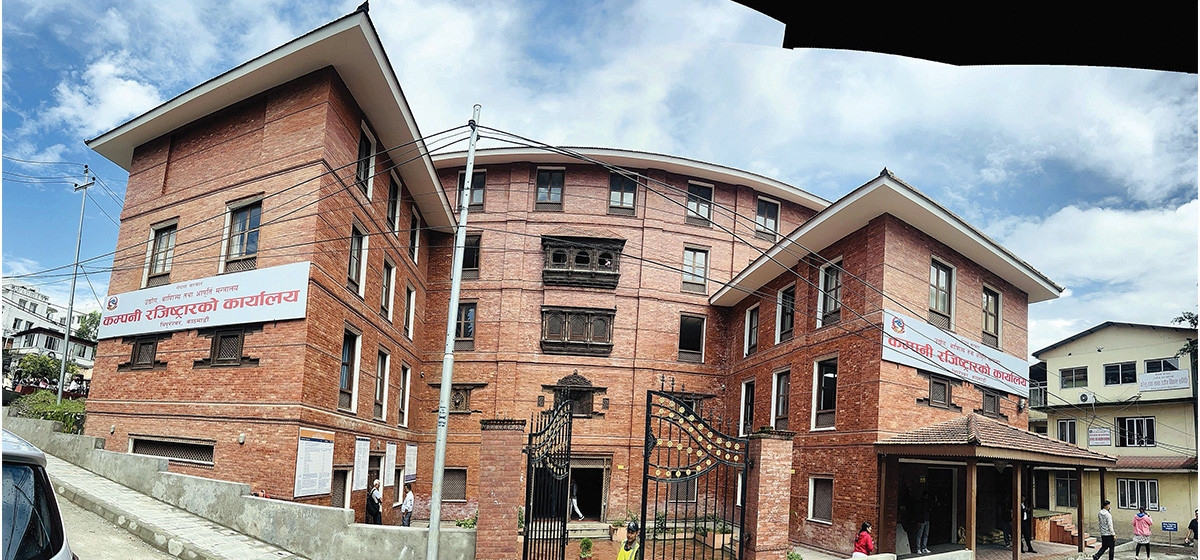
KATHMANDU, Jun 1: The Department of Industry has registered nearly 10,000 industries across the country, while the Office of the Company Registrar has registered around 350,000 companies.
Experts stress that the country must develop and expand the industrial sector to boost production, income, and employment and achieve economic prosperity. They also emphasize the need to create an investment-friendly environment and enhance the competitiveness of industrial production.
The Ministry of Finance (MoF) reported in the Economic Survey for Fiscal Year (FY) 2081/82 (2024/25) that, as of Falgun 2081 (mid-February to mid-March 2025), the Department of Industry had registered a total of 9,963 industries. Among these, large industries made up 15 percent, medium industries 22 percent, and small industries 63 percent.
By this period, the government had approved a total investment of Rs 3.2487 trillion in these industries. Large industries received 83 percent of the approved investment, while medium and small industries received 10 percent and 7 percent, respectively. The MoF estimated that these industries would generate employment for 731,560 individuals by mid-March 2025.
Cement, steel industries in trouble as demand stagnates

The government implemented the Trade Policy 2081 (2024) last year to create an investment-friendly environment and enhance the competitiveness of industrial production. The MoF stated that the policy promotes exports, strengthens the supply system, and coordinates across sectors to boost the country's Gross Domestic Product (GDP).
The Ministry of Industry, Commerce, and Supplies (MoICS) said the government introduced a loan provision for startup enterprises to encourage the launch of new ventures in the country. Senior ministry officials reported that this provision has delivered positive results and proved effective.
A MoICS official said the government provided loans totaling Rs 173 million to 165 out of the 1,658 startup projects selected by Asar 2081 (mid-June to mid-July 2024). These startup enterprises have created new employment opportunities.
The MoICS estimates each project has generated an average of five jobs, resulting in approximately 825 jobs from the 165 projects. By Poush 2081 (mid-December to mid-January 2024), the ministry had collected Rs 12 million in principal and interest repayments from the loan recipients.
According to the MoICS, manufacturing accounted for 35.84 percent, service-based industries 25.79 percent, and tourism-related industries 23.10 percent of the registered industries as of Falgun 2081 (mid-February to mid-March 2025). Infrastructure-related industries made up the smallest share at only 0.76 percent.
The MoICS selected 1,314 projects out of 5,158 startup project proposals submitted for loans in FY 2081/82 (2024/25). The government has allocated Rs 1 billion for this program in the current FY 2082/83 (2025/26).
Out of 1,658 startup projects selected by Asar 2081 (mid-June to mid-July 2024), the government granted loans totaling Rs 173 million to 165 projects. Each project creates an average of five jobs, generating approximately 825 jobs from these 165 projects. As of Poush 2081 (mid-December to mid-January 2024), the government has collected Rs 12 million in principal and interest repayments from these loan recipients.
In FY 2081/82 (2024/25), the government selected 1,314 projects from 5,158 startup loan proposals. The government has allocated Rs 1 billion for this program in the current fiscal year.
As of Asar 2081 (mid-June to mid-July 2024), the Office of the Company Registrar registered a total of 356,160 companies. Private limited companies accounted for the largest share at 96.56 percent, while other types made up 3.44 percent. During the same period in the previous fiscal year, the office registered 332,806 companies. By Falgun 2081 (mid-February to mid-March 2025), it registered an additional 14,130 companies in the current FY.





