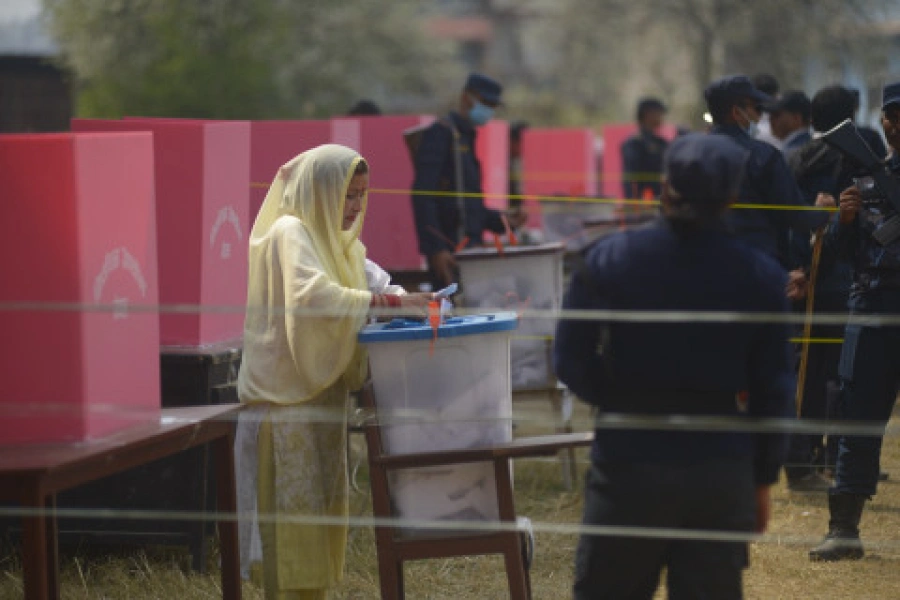
KATHMANDU, March 13: The newly-elected House of Representatives (HoR) will be composed of six parties after the Election Commission (EC) officially finalized the distribution of 110 Proportional Representation (PR) seats, with the Rastriya Swatantra Party (RSP) emerging as the clear frontrunner, bagging 57 seats—more than half of the total.
Based on nationwide PR votes, 51 political parties that failed to cross the three percent threshold were excluded from seat allocation, leaving 110 seats for the six qualifying parties. Leading the tally, the RSP, which received over 5.18 million votes, far outpaced all others. The Nepali Congress (NC) came in second with 1.75 million votes, winning 20 PR seats, while the CPN-UML, with 1.45 million votes, secured 16. The Nepali Communist Party (NCP) claimed nine proportional seats, maintaining a modest yet notable presence in the HoR.
Ruling parties reach agreement to share 19 seats in the upcomin...

Newer entrants also made their mark. The Shram Sanskriti Party-led by Harka Sampang, participating for the first time, won four PR seats after securing 385,000 votes, and the Rastriya Prajatantra Party (RPP), which just crossed the three percent threshold with 330,000 votes, also obtained four PR seats.
When combined with First Past the Post (FPTP) results, the composition of the HoR shows the RSP with a total of 182 seats, NC with 38, UML with 25, NCP with 17, Shram Sanskriti Party with seven and RPP with five. There will also be one independent lawmaker, Mahabir Pun from Myagdi, who is expected to side with the RSP.
A party requires 184 seats in the 275-member HoR to secure a two-thirds majority, and with the likely inclusion of Pun and the recent Supreme Court (SC) order removing Kishori Shah from the Credit Information Center blacklist, the RSP is positioned to achieve this milestone.
The results highlight a shift in Nepal’s political landscape, with voters endorsing newer parties while still giving traditional players a foothold. As political parties prepare for government formation and key parliament committees, the PR outcomes will play a critical role in balancing power, negotiating alliances and shaping policy priorities in the months ahead.