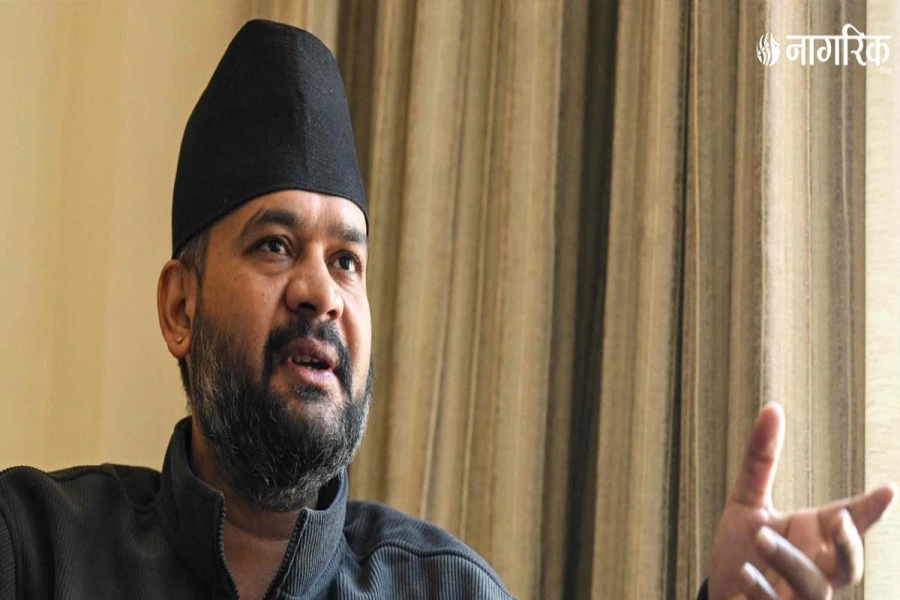
KATHMANDU, Feb 18: A growing controversy over the surname of Rastriya Swatantra Party (RSP) senior leader Balendra Shah — widely known as Balen — has triggered legal scrutiny and political debate, with questions emerging over whether his official surname is “Sah” or “Shah.”
The issue surfaced after discrepancies were found in his citizenship documents, placing the popular political figure under unexpected public examination.
Both “Sah” and “Shah” are common surnames in Nepal, yet they carry distinct historical and social meanings. “Shah” is traditionally associated with Nepal’s former royal lineage, while “Sah” is widely used among Madheshi communities in the Tarai and is generally linked to merchant or business groups.
Remarks that sparked a debate
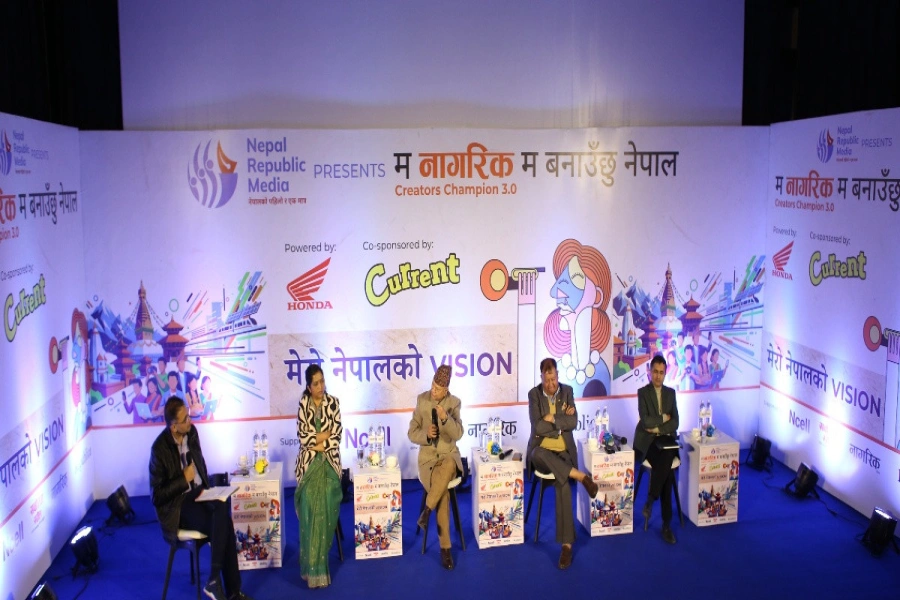
The debate gained momentum following comments Shah made during a recent public address.
“I am neither a Teli Sah from Madhesh nor a Thakuri Shah from Jumla. I am not a Shah like former King Gyanendra. I am a descendant of the Suryavanshi royal lineage,” he said.
RSP will make provinces strong, prosperous: Balen
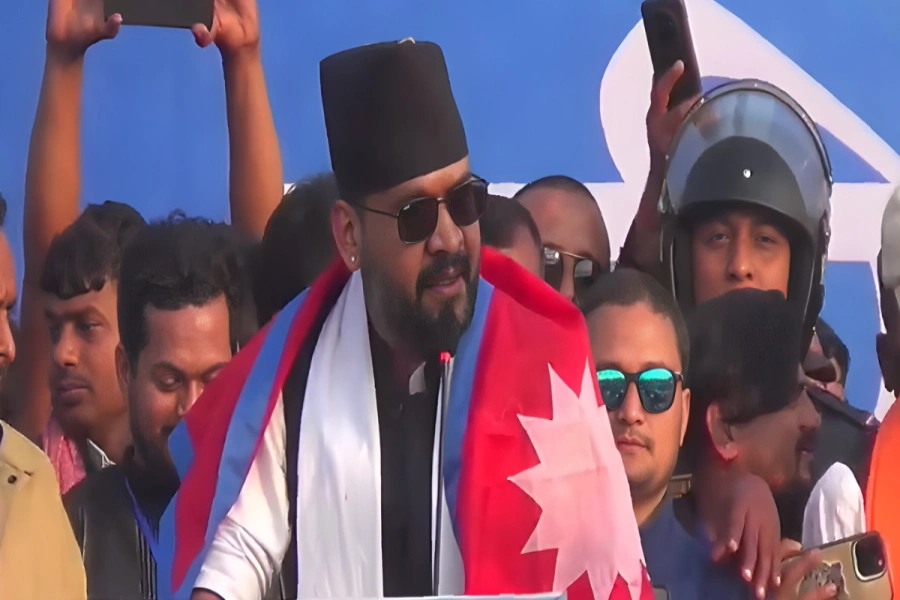
After identifying himself as Madheshi at a public gathering in Janakpur on January 19, 2026, discussions began circulating nationwide about the surname recorded on his citizenship certificate — turning what might have been a minor clerical matter into a political talking point.
Documents tell two stories
Official records show that Shah obtained his original citizenship certificate (No. 5192) from the District Administration Office (DAO), Mahottari, on December 21, 2006. In that document, his surname appears as “Sah.”
However, a copy issued by the District Administration Office, Kathmandu, on July 3, 2022, lists his surname as “Shah.”
The same copy reportedly reflects a change in his late father Ramnarayan Sah’s surname to “Shah.” It remains unclear whether this alteration was formally requested by Shah or resulted from an administrative oversight.
Meanwhile, the citizenship certificate of his elder brother, Kaushalendra Sah — originally issued in 2006 and reissued in 2021 — continues to list the family surname as “Sah.” The discrepancy between the brothers’ documents has further intensified public discussion.
Legal questions emerge
Under Section 17 of the Nepal Citizenship (Second Amendment) Act, 2006, corrections to citizenship details require valid grounds and supporting documentation. The law permits minor technical corrections, such as typographical adjustments or additions like “Kumari,” “Devi,” “Bahadur,” or “Prasad.”
Section 12 further states that if citizenship is proven to have been obtained through false information, it may be revoked.
Legal observers say the central question is whether the shift from “Sah” to “Shah” qualifies as a permissible correction or amounts to a substantive alteration with legal consequences.
Chief District Officer of Kathmandu, Ishwar Paudel, said no formal complaint has been filed so far. “No complaint or grievance has been registered at the Kathmandu District Administration Office,” Paudel stated.
Political Undercurrents
The controversy comes at a politically sensitive moment. The RSP has projected Shah as a potential prime ministerial candidate, and he is currently touring the country. Observers note that the timing has inevitably added a political dimension to what might otherwise have remained a bureaucratic matter.
Efforts to reach his secretariat for comment were unsuccessful, and messages seeking clarification received no response.
For now, what began as a single-letter difference — “S” or “Sh” — has evolved into a wider debate blending identity, law, and politics. Whether it proves to be a simple technical correction or a matter of deeper consequence remains to be seen.