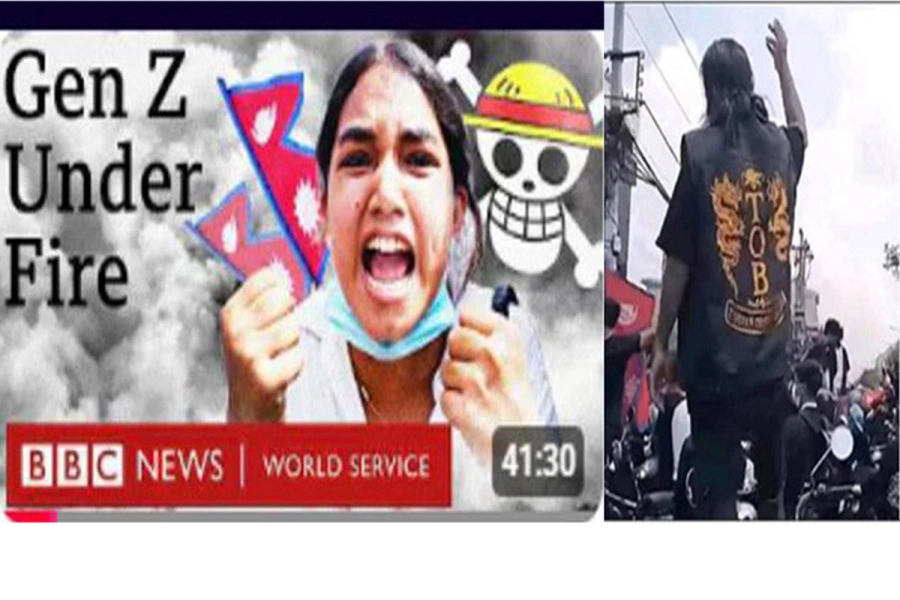
KATHMANDU, Feb 28: A documentary produced by BBC has sparked controversy after its release ahead of the House of Representatives elections, with critics alleging that it selectively portrays emotional scenes from the Gen Z movement in an attempt to influence both the investigation commission and public opinion.
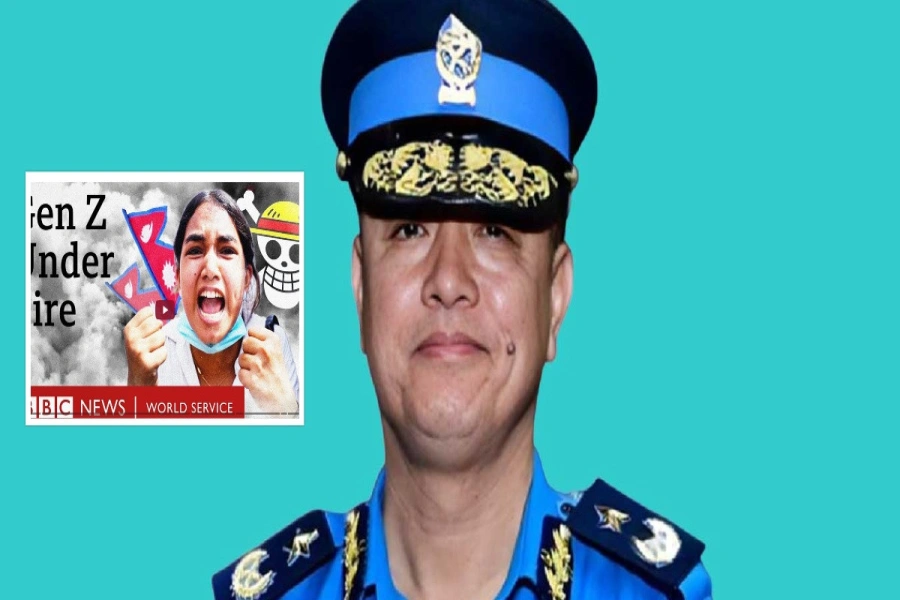
The government had formed a commission to investigate the incidents that occurred during the Gen Z protests on September 8–9 in Kathmandu. Although the probe commission itself has faced criticism for allegedly being one-sided, its report has yet to be made public. Even before its findings were released, the BBC aired a documentary holding the Nepal Police solely responsible for the violence that unfolded during the protests.
Observers argue that releasing the documentary at such a sensitive political moment suggests an intention by Western actors to influence not only the investigation but also the electoral process. The BBC, operating under the UK’s public broadcasting framework and representing one of Nepal’s oldest diplomatic partners, broadcast the documentary in both English and Nepali, raising concerns that it seeks to shape Nepal’s political narrative. The Election Commission reportedly objected and requested Press Council Nepal on Thursday to have the video removed, but it remains online.
Critics say the documentary presents the Gen Z movement in a one-sided manner, allowing a foreign media outlet to intervene in issues of national dignity. They recall that during the promulgation of the Constitution of Nepal in 2015, international outlets such as Al Jazeera were accused of portraying the blockade as a people’s uprising. Now, once again, questions are being raised about whether foreign media are attempting to mislead audiences ahead of elections.
The documentary largely focuses on selected incidents from September 8. Many commentators believe its timing is intended to make it easier for certain political parties to attract votes.
At a time when the country is immersed in election campaigning, the documentary alleges that after a curfew was imposed, the former Inspector General of Police ordered live fire—an accusation critics say is aimed at lowering the morale of the police organisation. Those who attacked police during the protests “as if confronting an enemy nation,” they argue, are now trying once again to weaken the force and fulfil their objectives.
The film is silent about biker groups accused of infiltrating what was initially described as a peaceful protest. It does not address allegations of sensitive geopolitical dimensions, including attempts to provoke Nepal’s northern neighbour, China. Nor does it explore claims that protesters breached Parliament’s compound wall, set fire to Parliament, Singha Durbar and the Supreme Court of Nepal, looted police firearms, killed officers, roamed with visible weapons in videos, coordinated through Discord, and intensified unrest under the pretext of distributing water. Suspicious activities attributed to Sudan Gurung, who had obtained permission from the District Administration Office in Kathmandu to distribute water, are also not examined.
Questions have also been raised about why the documentary does not address reports that some groups wore T-shirts reading “Tibetan Original Blood” while allegedly attempting to incite students between Maitighar and Baneshwor. Critics further question why, although 19 people reportedly died on September 8, the documentary does not explore how 53 more were killed the following day after Prime Minister K P Sharma Oli resigned.
Trust-Building Ahead of HoR Polls
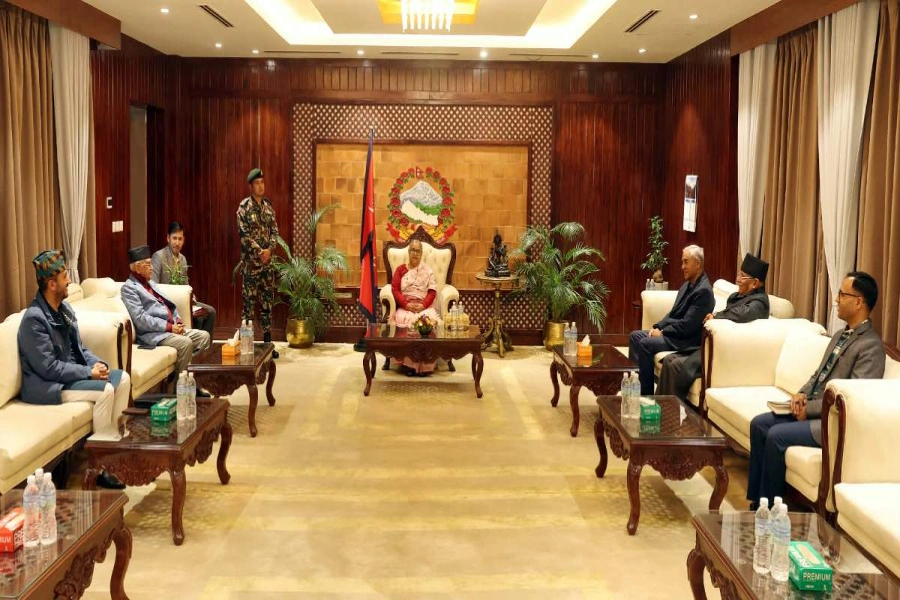
Permission had been granted by the Kathmandu District Administration Office for a peaceful protest that morning. Among the campaigners were Miraj Dhungana and Purushottam Yadav, who had urged students to participate in college uniforms, promising a peaceful rally. The protest, however, did not remain peaceful. Those same campaigners now claim the movement was “hijacked”. Critics ask why the documentary did not examine their role.
Several domestic media outlets—including Nagarik, Kantipur, Onlinekhabar, Nepal Press, Ratopati and Nepalkhabar—provided continuous reporting that day. Security-affairs journalist KP Dhungana also published a video report titled *A Peaceful Protest Trapped in Conspiracy*. Critics argue that even a documentary reportedly prepared over six months appears to overlook key dimensions of the events.
Security forces reportedly used force only after protesters entered the Parliament building and set fire to the guard room. Scenes showing security personnel urging protesters with folded hands not to advance or enter restricted zones have allegedly been omitted. According to critics, the documentary downplays the sequence in which police action followed acts of arson and vandalism.
Questions are also being asked about why the documentary does not address the use of Discord for coordination among protesters, including claims that QR codes shared via Instagram and Facebook led users to a “Discord Server of Youth Against Corruption”. Many of those channels have since been shut down.
Gen Z activist Tanuja Pandey has publicly questioned the infiltration narrative, alleging that around 11 am on September 8, warnings were issued about infiltration but leadership figures with access to microphones did not heed calls to disperse. She has demanded clarity over who changed the direction of what was meant to be a peaceful demonstration, who spread the belief that police would not act against students in school uniforms, and who incited coordinated attacks, including the burning of Singha Durbar.
Pandey also expressed suspicion that the investigation report led by Gauri Bahadur Karki has been delayed to influence the election outcome. She described any election conducted without full disclosure of the truth as a “managed illusion”, arguing that both those who ordered firing and those who incited arson must be exposed for the public to make a fair judgment.
The BBC, critics note, did not address how authorities at Capitol Hill in the United States or the UK Parliament would respond to similar attacks. Nor did it emphasise the restraint shown by Nepal’s security forces even after historic buildings were set ablaze.
It may be noted that the BBC had faced controversy a few months ago involving US President Donald Trump. In November 2025, Director-General Tim Davie and News Chief Deborah Turness resigned after a leaked memo accused a Panorama edit of misrepresenting a Trump speech about the January 2021 Capitol riot and raised wider bias concerns, including coverage of the Israel–Gaza war.
Taking strong exception to the documentary, former Inspector General of Police Chandra Kuber Khapung questioned how sensitive police communication details could have been accessed. He dismissed claims that any explicit “shoot” order was given, stating that once a curfew is imposed, actions are governed by law and operational necessity in the field.
Police officials are now investigating who may have leaked internal call signs and operational details, suggesting that elements within institutions could be attempting to demoralise the organisation.
The ongoing controversy surrounding the documentary has thus deepened debate over media responsibility, national sovereignty and the delicate balance between accountability and political influence at a crucial electoral moment in Nepal.
Timeline of events on September 8
9:00 AM: Youth and students gather at Maitighar Mandala, chanting slogans against the government.
10:22 AM: Protesters march toward New Baneshwor; security forces block them near the area.
11:20 AM: Protesters breach security lines and enter restricted zones; groups of bikers arrive from Babar Mahal.
12:30 PM.: Protesters attack police.
12:45 PM: Police fire tear gas.
12:50 PM: Vandalism outside Parliament building.
1:05 PM: Protesters enter Parliament premises.
1:30 PM: Curfew imposed in New Baneshwor area.
1:35 PM: Police fire shots within Parliament premises.
1:45 PM: Further vandalism and reported casualties.





_20230205122050.jpg)