


POKHARA, Feb 22: Voters aged 18-40 make up the largest demographic block in all three constituencies of Kaski, accounting for 37% to 41% of the electorate—a segment analysts say is likely to shift allegiance based on candidate merit rather than party loyalty. However, experts warn that numerical superiority does not guarantee electoral impact due to the high mobility of young people for work and education.
According to the Election Commission (EC), Kaski–1 constituency has 116,878 registered voters, of whom 39% fall within the 18–40 age group. Voters aged 41–60 account for 35%, while those over 60 make up 24% of the electorate.
In Kaski–2, the constituency has 84,134 registered voters, with 37% in the 18–40 age bracket. Voters aged 41–60 represent 36%, and those above 60 comprise 25% of the total.
Similarly, Kaski–3 has 107,560 voters, of which 41% are between 18 and 40 years old. Voters aged 41–60 make up 34%, and those over 60 account for 23%. The Commission has clarified that these numbers are based on nationwide voter demographics segmented by age.
Voters' list rises in Mugu

The data shows that the largest share of voters falls within the 18–40 age group, followed by 41–60, with the smallest proportion being above 60. Analysts argue that in the context of the first election after the Jana Andolan (People’s Movement), the youth electorate could prove decisive for any political party. Young voters tend to be more flexible compared to older age groups, they note.
Experts say youth voters are capable of evaluating candidates’ competence, assessing suitability for future leadership, and choosing candidates based on merit rather than party loyalty. Focusing specifically on the 18–25 age group, which makes up roughly 7% of the electorate, analysts highlight that this segment is particularly dynamic and could influence outcomes disproportionately.
Kapil Mani Dahal, a political science professor at Prithvi Narayan Campus, observes: “Although the total number of new voters is not huge, the age distribution and prevailing political environment could significantly affect the results. The post-Jana Andolan election climate has made voters more active, particularly first-time voters.”
He adds, “Students pursuing postgraduate studies, for instance, are thinking differently than before. Their outlook has shifted. With a greater proportion of voters under 40, young voters could play a decisive role.”
Unlike younger voters, older generations tend to remain loyal to their established parties. “Senior voters generally support the same party consistently,” Dahal notes. “However, new and young voters may shift their preferences. The under-40 electorate currently represents a larger share.”
Even voters aged 41–60, who constitute around 35%, may exhibit a level of volatility similar to younger voters, while most voters above 60 are expected to stick to their habitual party choices. “Older voters are typically aligned with a party for a long term. They do not change their allegiance quickly,” he explains.
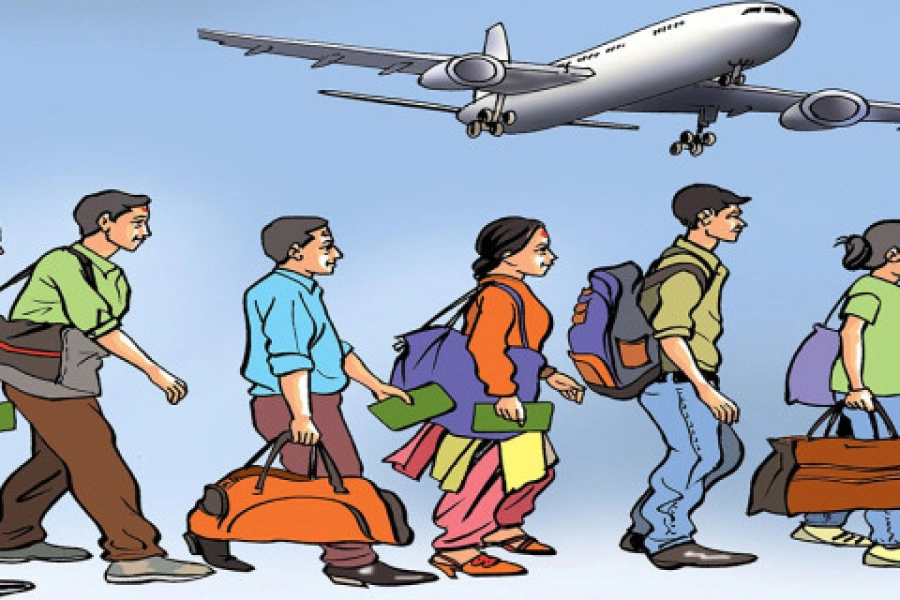
Anthropologist Amrit Kumar Bhandari points out that while statistical data suggests youth dominate numerically, actual voting behavior depends on those physically present at their registered addresses. Older voters are generally more stable because they reside in their home constituencies, whereas young voters—especially those working or studying abroad—may not always be available to cast their votes.
He further notes that historically, voter turnout in Nepal averages around 55%, with older rural voters making up the majority. “Young voters may not always vote; they may be away for work or education,” Bhandari says. “Even though they are numerically significant, turnout may differ, limiting their immediate impact on results.”
However, he emphasizes that young voters are highly engaged in political discussions, both formally and informally, and their opinions are more fluid. “While young voters are flexible and open to change, a large portion of their numbers are currently outside the country. Yet, when they participate, their choices could shift results, especially because their decisions are based more on individual candidate merit than party ideology,” he says.

















-1200x560-1779450784.webp)

