

Nepal’s recent general election has created a crucial opportunity. With the Rastriya Swatantra Party (RSP), led by Rabi Lamichhane, earning a strong mandate and its senior leader Balen Shah declared as the prime ministerial candidate, political stability seems within reach after years of fragile coalitions. This moment brings renewed urgency to unresolved national issues, particularly the longstanding Bhutanese refugee crisis, which now stands before a rare chance for progress.
The crisis originated in the early 1990s, when more than 100,000 Bhutanese people, mostly of Nepali origin, were forced to leave Bhutan and eventually sought refuge in Nepal after traveling through India. Refugee camps were established in eastern Nepal, particularly in the districts of Jhapa and Morang. At its peak, more than 100,000 Bhutanese refugees lived in seven camps, making it one of South Asia’s longest‑running refugee situations.
Nepal and Bhutan previously held over 15 rounds of bilateral talks but failed to resolve the crisis. Negotiations stalled as Bhutan cited Nepal’s political instability and frequent government changes.
With no clear solution emerging from the dialogue process, the international community stepped in. Beginning in 2007, a large third‑country resettlement programme helped relocate the majority of Bhutanese refugees to countries such as the United States, Canada, Australia, and several European nations. The programme provided new opportunities for thousands of families who had spent many years in the camps. However, while it addressed the humanitarian needs of those resettled, it did not resolve the crisis's core political issues.
MoHA proposes to remove 30-year term of service in new Police A...

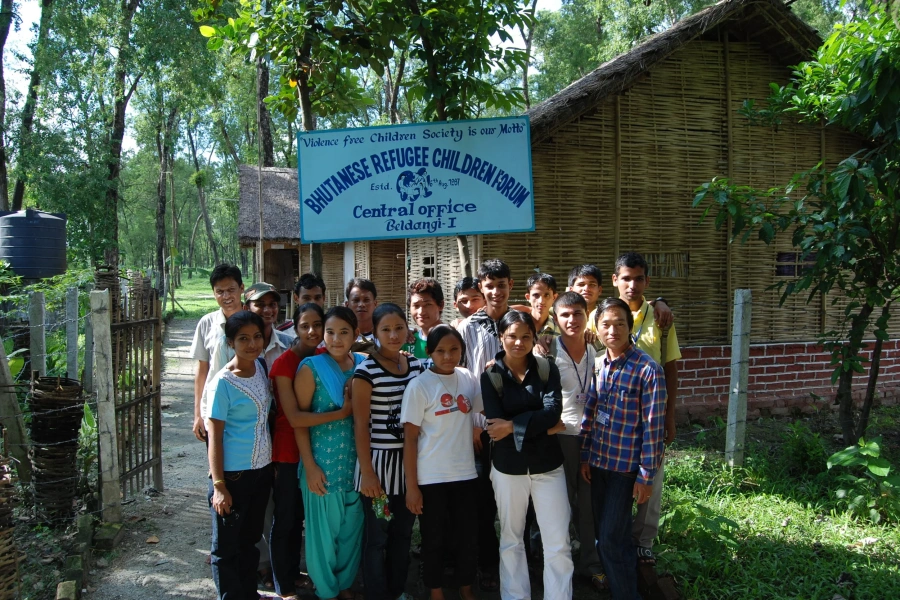
Today, about 6,500 Bhutanese refugees remain in two camps in eastern Nepal—Beldangi in Jhapa and Pathari‑Sanischare in Morang. Many are elderly, some are families who declined resettlement abroad, and many still hope to return to their original homes in Bhutan. For them, the issues of justice, recognition, and dignity remain unresolved.
Despite this long history of hardship, many refugees in the camps are cautiously optimistic. The emergence of a stable government in Kathmandu has given them renewed hope that their issue will finally receive serious attention. For more than thirty years, they have lived with uncertainty; now they believe Nepal’s new leadership may pursue their cause with the seriousness it deserves.
The current political leadership is closely connected to the region these refugees inhabit. Prime ministerial candidate Balen Shah won Jhapa-5, home to the largest Bhutanese refugee camp, Beldangi. The second camp, Sanischare, is in the neighbouring Morang constituency. This proximity makes the realities of refugee camps immediate concerns for the communities that elected the new leadership.
Recently, the refugee issue has been overshadowed by a major corruption scandal. Investigations into a fake Bhutanese refugee scheme revealed that officials and intermediaries allegedly took money from Nepali citizens by promising to secure them refugee status for U.S. resettlement. This led to charges against about 30 people, including former deputy prime minister Top Bahadur Rayamajhi and former home minister Bal Krishna Khand, for treason, organised crime, fraud, and forgery. Some have been placed in judicial custody by the Kathmandu District Court.
Police found that racketeers collected tens of millions of rupees from hundreds of victims who were misled by false resettlement promises. Such incidents have harmed citizens, undermined public trust, and diverted attention from the genuine refugee crisis.
For decades, Bhutan has maintained before the international community that the refugee issue should be addressed through bilateral dialogue with Nepal. At the same time, Nepal’s political instability has made it difficult to sustain consistent diplomatic engagement. As governments in Kathmandu changed repeatedly, negotiations gradually faded from the agenda, even as thousands of refugees remained uncertain about their future.
Nepal’s political shift now offers a rare chance. A stable government with a strong mandate can pursue sustained diplomacy. Issues as complex as the Bhutanese refugee crisis require long-term commitment and consistent high-level dialogue—not occasional meetings.
There are encouraging signs. Bhutan’s prime minister, Tshering Tobgay, recently congratulated Nepal’s new leaders, Balen Shah and Rabi Lamichhane, and expressed hope for stronger ties. Prime minister‑elect Balen Shah responded warmly. While routine, such exchanges keep communication open and set a tone of goodwill.
Nepal and Bhutan share geographic proximity, strong cultural ties, and a mutual interest in regional stability. A sincere, committed approach to the refugee issue could transform a painful past into an opportunity for reconciliation and cooperation.
History sometimes creates moments when politics align for progress. With a stable government emerging in Kathmandu and goodwill expressed between both sides, this may be such a moment. Nepal’s new leadership stands at a crossroads: it can seize this rare moment to engage Bhutan with renewed seriousness in resolving the refugee crisis and addressing the freedom of dozens of political prisoners in Bhutan. For thousands of Bhutanese refugees who have waited over three decades, the main hope is clear—justice, dignity, and closure must now replace the uncertainty of the past.
The author is Bhutanese human rights activist based in Hague, Netherlands.







_20191222200001.jpg)



-1200x560-1779450784.webp)


