KATHMANDU, Feb 26: In a bid to steer credit towards productive industries, Nepal Rastra Bank (NRB) has announced plans to increase lending to the production sector and expand credit limits for agriculture, energy, and micro, cottage, and small enterprises.
Presenting the mid-term review of the Monetary Policy for 2025/26 on Tuesday, the central bank introduced revisions to the mandatory minimum credit ratio that Banks and Financial Institutions (BFIs) must maintain for priority sectors. The new credit extension limits will also apply to tourism, information technology, and export-oriented businesses that utilize locally produced raw materials.
Revised interest rate corridor system introduced
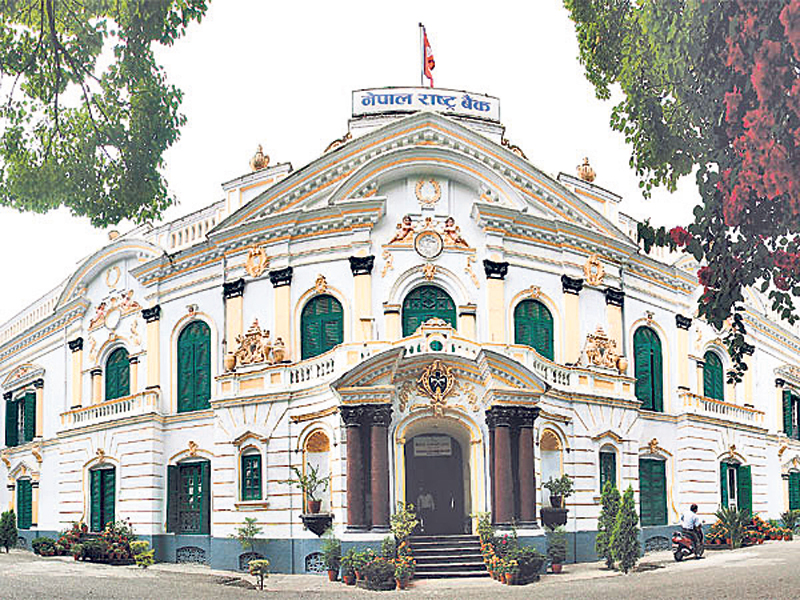
This policy shift comes at a time when BFIs have been favoring consumer lending over production-related financing. According to an NRB report, BFIs had disbursed a staggering Rs 1.261 trillion in consumption loans by mid-January of the current fiscal year. In contrast, loans to agriculture, forestry, and production-related activities stood at only Rs 965.25 billion.
Despite a significant drop in interest rates due to excess liquidity within the banking system, the NRB has chosen to maintain its key monetary instruments. The revised policy leaves the interest rate corridor, bank rate, cash reserve ratio, and standing liquidity ratio unchanged.
The updated policy also outlines plans to facilitate foreign direct investment in emerging sectors such as data centers, cloud computing, robotics labs, and artificial intelligence. It will promote credit flow to such projects, particularly those established under a co-financing model. Furthermore, the central bank has raised the ceiling for primary capital on BFIs' non-derivable forward transactions, which include short-term foreign exchange derivatives for non-convertible currencies.
In a move to provide greater flexibility, the NRB has relaxed regulations for working capital loans. BFIs can now determine repayment periods for these loans independently. Additionally, borrowers are now permitted to maintain a sanction limit of up to 30% of the outstanding loan amount, a significant increase from the previous 10% cap.
Kamlesh Kumar Agrawal, president of the Nepal Chamber of Commerce, welcomed the central bank's revised policy. He described it as a positive step, stating, "In the post-election period, it could help attract investment in production businesses." Agrawal further noted that the focus on infrastructure for data centers, cloud computing, and AI could draw more foreign investment. He also praised the provisions for restructuring and rescheduling loans for businesses impacted by infrastructure projects as a particularly welcome move.