KATHMANDU, March 2: Nearly six months after flames engulfed the heart of Nepal’s administrative headquarters, the government has stepped forward with a reconstruction plan. The main building of Singha Durbar, damaged in a fire during the Gen-Z movement on September 9, will require an estimated Rs 150 million for rebuilding.
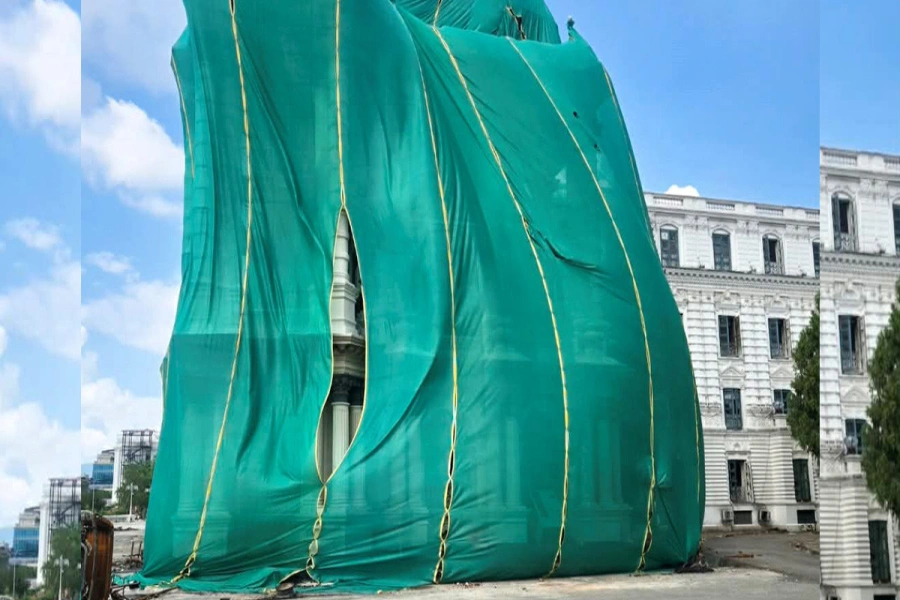
Today, the historic structure, which serves as the principal government secretariat, stands concealed behind a green curtain, its scarred walls hidden from public view. Engineers have placed a red sticker on the building, formally declaring it unsafe for use.
The Federal Secretariat Construction and Management Office under the Ministry of Urban Development (MoUD) published a tender notice on February 24, initiating the process to rebuild the main building and other damaged structures within the complex. Contractors have been given until 12:30 PM on March 3 to submit their bids. According to Information Officer Arun Bhujel, technical proposals will be opened at 1:30 PM the same day. Authorities aim to complete reconstruction by mid-July, although officials acknowledge that the timeline could shift slightly.
PHOTOS: Singha Durbar rebuilt 70 months after 2015 Gorkha Earth...

The bidding process follows a detailed damage assessment carried out by Pulchowk Engineering College. Only after receiving the technical report did the government move ahead with the tender. A senior official at the ministry said the total loss from the fire — including furniture, equipment and other materials — is estimated at around Rs 1 billion. Of that amount, Rs 150 million is projected specifically for structural reconstruction.
Officials say the building will be restored to its original form. According to engineers, the western wing of the C-shaped structure suffered more severe damage than the eastern side. Even now, parts of the premises remain too risky to enter, with burnt debris scattered across the compound.
Among the most devastating losses was the complete destruction of the 120-year-old “State Hall.” The hall held immense historical and archaeological value. During the Rana era, distinguished foreign dignitaries were welcomed there, and priceless gifts presented by visiting guests were displayed inside. Historic paintings, intricate decorations and carefully preserved artifacts were reduced to ashes in the blaze.
MoUD officials report that sofas, carpets, IT infrastructure, electrical and security systems, telephones, computers, CCTV cameras and important historical documents were destroyed. Copies of treaties and international agreements are also believed to have been lost. Wooden structures and interior elements bore the brunt of the fire.
The destruction at Singha Durbar forms only a fraction of the wider national damage caused during the September 8–9 protests. A government-formed committee has estimated that at least Rs 36.30 billion will be required to reconstruct all affected public buildings and structures. The committee, formed on September 21 under the coordination of National Planning Commission Secretary Rabilal Panth, submitted its report to Prime Minister Sushila Karki. It found that damage occurred across all seven provinces, affecting physical structures and property in 54 districts and 262 local levels.
According to the report, government property worth Rs 84.45 billion was damaged. Of this, 68 percent falls under the federal government, while provincial and local levels account for 10 percent and 22 percent respectively. In total, 2,168 agencies and institutions were affected, and 2,671 buildings sustained damage. Losses to buildings alone have been estimated at Rs 39.31 billion. Additionally, 12,659 vehicles were damaged, causing losses worth Rs 12.09 billion. The private sector suffered Rs 33.54 billion in damages, while community and other sectors incurred losses of Rs 5.97 billion.
Authorities have categorized damaged buildings into three groups based on their condition. Some have been marked unsafe and require full reconstruction, while others need retrofitting or minor repairs. Under the jurisdiction of the Federal Secretariat Construction and Management Office alone fall 51 key structures, including the Office of the President, the Prime Minister’s residence, ministers’ residences and the Parliament building.
For now, the green curtain draped over Singha Durbar remains a visible reminder of both destruction and the enormous financial and institutional cost the unrest has left behind.