


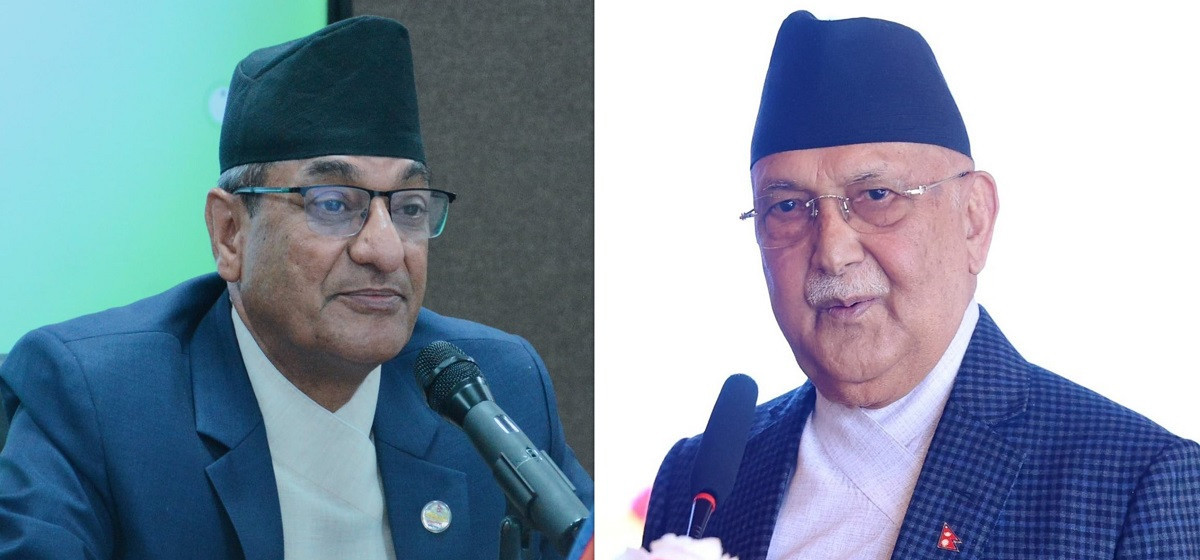
KATHMANDU, March 29: Political tensions have escalated after the government arrested former Prime Minister KP Sharma Oli and former Home Minister Ramesh Lekhak, citing implementation of a probe commission report into the Gen Z movement. The arrests came within 24 hours of Balen Shah assuming office as prime minister, prompting accusations that the government acted hastily and without due process.
The Communist Party of Nepal (UML) has condemned the move as politically motivated, while the government has yet to issue a detailed official statement. Home Minister Sudhan Gurung confirmed the arrests via social media, framing them as the “beginning of justice,” though critics argue that procedural lapses could weaken the government’s position.
The decision followed the first Cabinet meeting under Shah, which endorsed immediate implementation of the report submitted by the Gauri Bahadur Karki Commission, formed to investigate casualties and damage during the youth protests. The commission recommended action against several figures, including Oli and Lekhak, as well as administrative and security officials. However, the government chose to act swiftly against political figures while deferring action against security agencies for further study, raising concerns over selective enforcement.
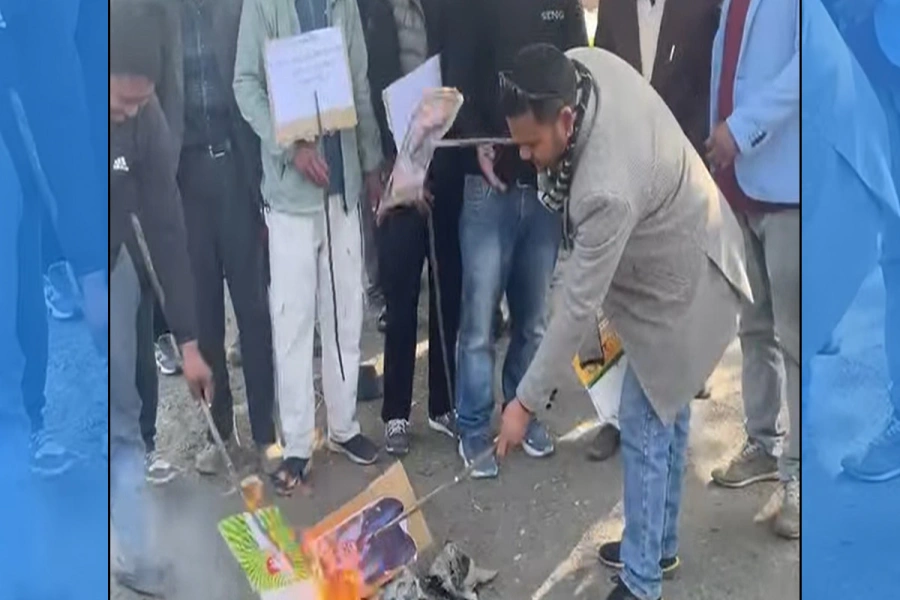
UML has responded by launching protests nationwide, demanding the immediate release of its chairman. Demonstrations in Kathmandu and elsewhere on Saturday left at least two injured and seven arrested. The party has vowed to challenge the arrests through political, legal, and parliamentary means, assigning key leaders to coordinate its response.
Legal challenges are also underway. Lawyers are preparing to file a habeas corpus petition at the Supreme Court, while both Oli and Lekhak are expected to be presented before the Kathmandu District Court. Oli has been admitted to Tribhuvan University Teaching Hospital due to health concerns, while Lekhak remains in police custody.
Police face political heat over the prospect of arresting Oli,...
Questions Over Motive and Legal Grounds
Despite the government’s justification, the legal basis for the arrests appears weak. The commission report primarily accuses Oli and Lekhak of failing to prevent violence during the protests, including a deadly shooting incident in New Baneshwor. Critics argue that such findings imply moral rather than criminal liability, making prosecution difficult.
Observers have also questioned why security agencies, including the Nepal Army, Nepal Police, Armed Police Force, and National Investigation Department, were not subjected to immediate action. The focus on political leaders, particularly those from UML and the Nepali Congress, has fueled allegations of bias and potential long-term political fallout.
Home Minister Gurung reportedly pushed for immediate arrests despite concerns raised by security officials about insufficient legal grounds. Discussions among senior officials, including the Home Secretary and police chiefs, explored options such as issuing arrest warrants, but consensus on legal justification remained unclear.
How the Arrests Unfolded
Following the Cabinet decision, Gurung held a series of late-night meetings with security officials, insisting on immediate action. Police and armed forces were placed on high alert across Kathmandu Valley, and surveillance was increased at the residences of both leaders.
Oli was arrested early Saturday morning from his residence in Budhanilkantha after being served an arrest warrant, which he accepted without resistance. Lekhak was detained shortly before Oli. The operations were led by senior police officials, including teams from the Kathmandu Valley Crime Investigation Office.
Due Process Concerns
Legal experts argue that the government bypassed established procedures for implementing commission recommendations. Under prevailing law, such reports must first be reviewed and forwarded to the Attorney General’s Office, which then directs police to investigate. Only after evidence is gathered can charges be filed in court.
The Supreme Court has previously ruled that commission reports alone are insufficient to establish criminal liability. Critics warn that ignoring these procedures risks undermining the rule of law and could weaken any case against the accused.
Historical Context
Nepal’s past experience with similar commissions shows a pattern of limited implementation. Following the 1990 movement, a probe led by Janardan Lal Mallik failed to result in prosecutions after legal review. Likewise, after the 2006 movement, a commission led by Krishna Jung Rayamajhi faced legal challenges, with the Supreme Court ruling that its findings could not be the sole basis for criminal charges.
The Gen Z protests themselves were among the deadliest in recent years, leaving 76 people dead and hundreds injured. Significant public and private property damage was also reported. The commission, formed in October, submitted its report after multiple extensions.
Political Reactions Intensify
Former President Bidya Devi Bhandari has criticized the arrests as “undemocratic and immature,” urging the government to reconsider its decision and adhere to established legal processes. She warned that hasty actions could erode public trust and increase the risk of instability.
The Nepali Congress has also accused the government of acting selectively, noting that while political figures were targeted immediately, action against security agencies was deferred. The party has called for a fair, transparent, and comprehensive investigation into all incidents during the protests.
Senior Congress leader Purna Bahadur Khadka has gone further, describing the arrests as politically driven and pledging constitutional and legal resistance. He has urged party members to prepare for potential political escalation.
A Risky Start
The government’s aggressive move, intended to demonstrate accountability, may instead create legal and political complications. While it has signaled a willingness to act on past violence, the apparent disregard for due process could undermine both the credibility of the investigation and the stability of the broader political environment.
For a government barely a day old, it is an unusually turbulent beginning. And if this is what “a new direction” looks like, it seems to involve driving straight into a legal and political storm without checking the brakes.









-1200x560-1784036910.webp)


