In August 2025, Nepal Rastra Bank commissioned an independent loan portfolio review of the country’s ten largest commercial banks, conducted by Howladar Yunus & Co. of Bangladesh. The exercise - covering over 60 percent of total system lending- was mandated under Nepal’s IMF Extended Credit Facility amid concerns around loan evergreening, weak classification, and inadequate provisioning.
The review assessed collateral valuation among other things, across the largest lenders. Although the report is yet to be made public, it has already triggered debate. It should not.
This is not a story of imminent collapse. It is a question of sequencing reform to align truth with capacity. The IMF mandated assessment of major commercial banks reveals mismatches, not failures. Public reaction, as it leans toward alarm, should not miss the point: realism must serve the economic truth, not strain it.
A system that absorbs stress
Revised interest rate corridor system introduced
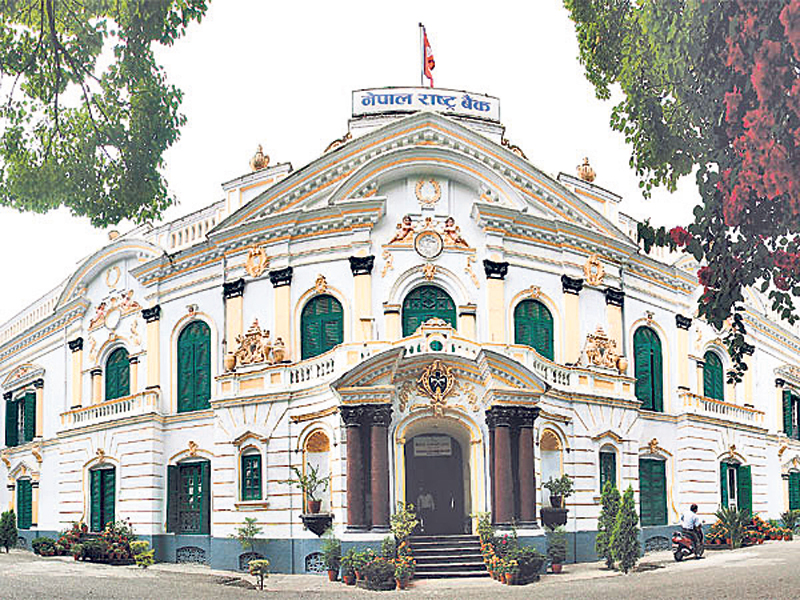
The review covered loans representing a major sample of our system. It found effective Non-performing Loans (NPLs) higher than reported. Restructuring and evergreening were common. Collateral values, often tied to real estate, appeared inflated relative to cashflows. Provisioning fell short in places. Yet Nepal Rastra Bank (NRB) confirmed no outright bank failures. These findings describe a system absorbing stress, not insolvency of a system.
Evergreening persists for structural reasons. Nepal’s economy generates cash flows slowly. Projects take time to mature. Resolution options are limited and forced sales carry high costs in an illiquid market (including socio-political). Thus, banks extend timelines to preserve value. This buys space where immediate truth would force losses. Therefore, evergreening emerges when time is cheaper than truth. It is not Nepal specific, there are numerous examples across time and geographies where different loan modification regimes have been used as a strategic tool to preserve value, confidence of the market and safeguard real economy.
Losses must be recognized; transparency will build credibility – thus the IMF’s emphasis on ending deniability is sound. Accounting must reflect economic reality. Delaying this convergence risks deeper entrenchment, cementing misallocation and eroding productivity over time. Gradualism cannot become indefinite forebearance because truth delayed indefinitely is a value decay.
Nepal should accept diagnostic truth. Rushing towards a sequencing regime that assumes deep markets, fast resolution and abundant recapitalization capacity would be disastrous – because Nepal has none of that. Loss recognition without resolution capacity is not reform – it is a pro-cyclical shock. So, the core risk here is this pro – cyclical shock. Recognition will hit instantly and the system will not be able to process it. Nepal’s loan books lack market pricing; assets are relationship based and illiquid – so provisioning surges will actually compress capital. Lending will tighten as a result. This will amplify stress before recovery can catch up. Sequencing is not an excuse for delay, but rushed recognition ignores the cost of contraction. The real danger to Nepali banking system therefore is not recognition but recognition without a runway.
Real economic impacts will emerge first. Small and medium enterprises depend on rollover credit;mid-market firms need working capital for operations. Under pressure, banks curtail renewal – this will disrupt payrolls, inventories and exports. Production will slow as the credit friction will reach farms and factories long before it reaches the financial sector balance sheet.
Commercial institutions shoulder development burdens. Asset heavy projects with long gestation periods strain short term balance sheets. Alternative financing channels are underdeveloped, thus banks have been absorbing shocks that actually belong elsewhere. This is not a failure of banks, but a mismatch of financial architecture.
Nepal should protect credit continuity above all. Product flows must persist, especially for payroll and working capital. Stability of the Real Economy should anchor reforms. Prioritizing rushed recognition would simply make Real Economy collateral damage for the optics of cleaning up balance sheets.
But forbearance cannot be indefinite, else it invites moral hazard. So, grant recognition a runway. Phase in tighter classification, allow gradual provisioning, set milestones to tied earnings retention. This lets system adapt without shocks. Truth must arrive at the pace that system can absorb. Also, prioritize resolution capacity, separate viable borrowers from the rest and build workout mechanisms (including facilities) to handle impairments. Without this recognition of losses simply is cosmetic accounting and not reform.
Capital will need to be repaired methodically. Start with retained earnings and raise funds incrementally. There is no reason to panic, the system should maintain calm and let the capital repair. The IMF should be engaged fully and the NRB should advance autonomy reforms. However, Nepal should choose correctly sequenced implementation. Realism and continuity should align in this case. What Nepal needs today is a disciplined transition free of engineered shocks. A reform succeeds when truth strengthens the economy, not shrinks it.
Remember – the goal is NOT clean books fast – the goal is a stronger economy that can afford clean books.
(The author is an American Banking Executive. Trained as a Financial Engineer from New York University – he has deep expertise in international financial markets as a Credit Quant. Rijal has experience working for major Wall St banks including as Senior Vice President of Citigroup where he was involved in Citi’s credit portfolio across Latin America, MENA and Americas. Rijal currently is a C-Level Executive at Cross River Bank. Views expressed here are his personal.)


-1200x560-1781083488.webp)