


Gen-Zees may be divided over issues like a directly elected executive, drafting a new compact, constitutional reform, anti-corruption and good governance, overseas voting, and representation in the Cabinet. The country’s politics is revolving around two issues, namely, the re-instatement of the parliament vs. elections on March 5, 2026. For some, these are not mutually exclusive or “either-or” issues, that is, if there are no elections, then the parliament may be re-installed. For others, the re-instated parliament may decide on early polls, including necessary constitutional reforms. However, the fact is that you cannot have your two feet placed under two boats. The Nepali saying, “jharla ra khaula” attitude may invite further disaster. You may trade off the re-installation of parliament with the elections, but in the end, you may end up having none.
Positions of the 3 Bigs
Of the three big political parties, we find the Maoist party and the CPN-UML at the extremes in a continuum. The Maoist party, the third largest party but at a distance, has already agreed to go for the polls. Moreover, it is in no mood to re-install the dissolved parliament. On the other hand, the CPN-UML does not believe that there will be elections on 5 March; there is no point in participating in an election that is not going to be held at all. Therefore, the party is strongly in favour of re-installing the parliament. It is even contemplating challenging the issue in the Court. The Nepali Congress, the largest party in the dissolved parliament, is in the middle. Its official line of thinking is that it will participate in the upcoming elections but will not challenge the issue in court. It has voiced its opposition to the unconstitutional dissolution of parliament. It has expressed its concerns over security issues and the Interim Government bypassing political parties. Other smaller and newer political parties may have their positions and concerns, but they are not significant here. Nepal’s political scenario will be dominated by these three big political parties.
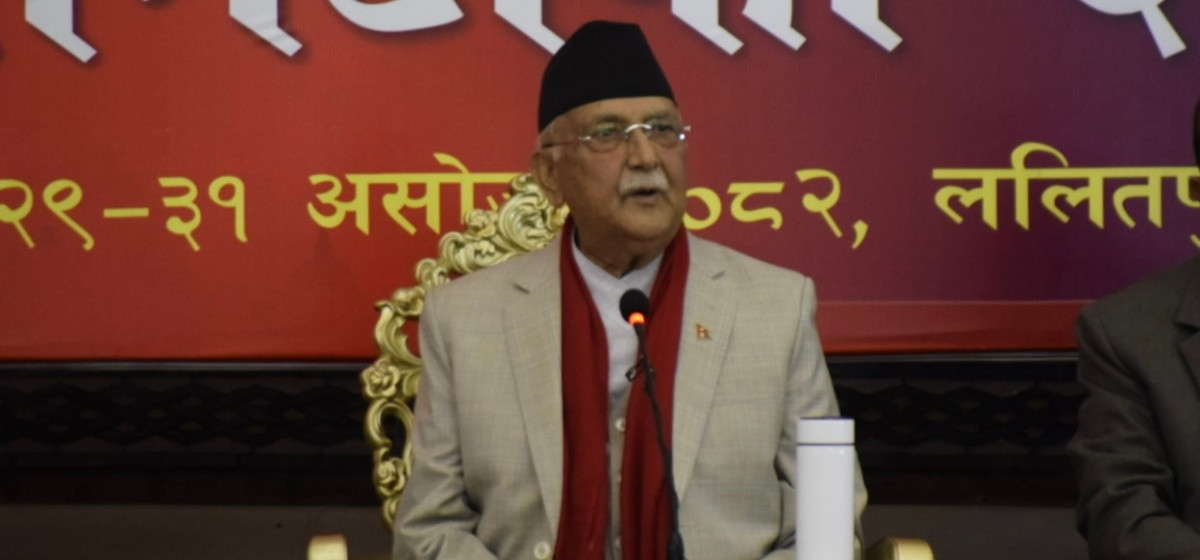
UML Chair Oli says party will skip elections, prioritises HoR r...
Is the Interim Government interested in holding elections?
Prime Minister Sushila Karki has already expressed her commitment to hand over power within six months after holding elections to the new government. However, as senior journalist Mr Kishore Nepal expressed on a TV channel, “her ministers are behaving as if they have been appointed for 100 years.” They keep busy doing mundane things. The government has a lifespan of less than five months. There is no seriousness. The main political parties are already accusing the government of ignoring them and the Karki Government of not showing any interest in communicating, let alone entering into a dialogue, with the political parties. Her Cabinet is composed primarily of party haters; this is what mainstream political parties are wary of. They are demanding a conducive election environment. Deposed PM KP Oli is even contemplating boycotting the elections. This means another political disaster in the making. Managing Oli may become a separate issue for the government.
In management parlance, when it comes to performance, there are three determining factors. These include the ability to do, willingness to do and opportunity to do. The Interim Government may have an opportunity to hold elections, but there is a shortage of both ability and willingness factors. In a country where millions of people residing inside the country are still disenfranchised, calling for overseas voting is a joke. Moreover, since simply counting votes takes months and months, holding elections within less than five months is another big joke and without some donors donating ballot boxes, marker pens and indelible inks, no elections have ever been held. We are contemplating a digital voting system for vote counts. It is stupid to expect a different result by doing the same thing. What different results are Gen-Zees expecting with the same electoral machine?
What Next?
The euphoria of the Gen-Z revolt may be over, but political fluidity and uncertainty will continue to hang on. It may take ages for the country to reel back. The impending court cases for the unconstitutional appointment of Karki as prime minister and her recommendation to dissolve parliament may postpone or delay elections. There is a rumour that the government itself is contemplating delaying the elections by a month or two. This may buy time but may lead to another political disaster in the making. There is no solution if the court reinstalls the parliament either. Overly stressed and stretched by pushing and pulling factors, who knows, the Karki Government may give up in the middle of the road. She is famous for throwing tantrums and eccentricity.
Basically, Nepali society as a whole is in a state of flux. When a hierarchical society, where authority and knowledge flow from top to bottom, with seniority and age being the predominating factors, is challenged by juniors, newcomers, and urbanites, it takes time to settle the trauma and shock. When old people hang on to their past and youngsters look to the future, the present is badly disturbed.





-1200x560-1783083574.webp)




