

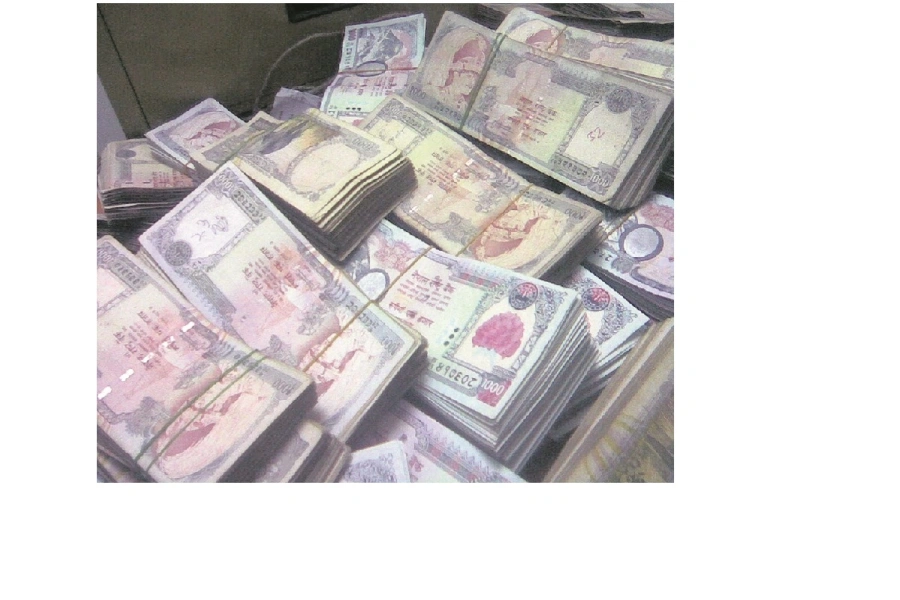
KATHMANDU, Jan 17: Cash payments exceeding Rs 500,000 are no longer allowed, as the government pushes to strengthen financial transparency and clamp down on money laundering. The rule compels individuals and businesses to rely on banks or approved financial channels for high-value transactions, signaling a shift toward more accountable financial practices.
Under the new rule, any purchase, sale, or other transaction involving goods or services worth Rs 500,000 or more in a single instance must be conducted through banks, financial institutions, or approved banking instruments. The decision, which came in effect from January 15, follows a Cabinet resolution and was formally published in the Nepal Gazette on January 8.
Govt to increase vigilance on real estate transactions to check...

The cash transaction limit has been set under Section 44G (1) of the Asset (Money) Laundering Prevention Act, 2064, after consultations with Nepal Rastra Bank (NRB). The move aligns with the government’s broader efforts to encourage the use of formal banking channels and reduce the flow of unaccounted money.
Certain transactions are exempt from the limit. These include cash deposits, savings, or currency exchange at financial institutions, repayment of loan principal and interest, and cash transfers between financial institutions. Individuals are also allowed to carry or transport cash exceeding the limit within the country, provided the source and purpose are clearly declared.
In special cases, financial institutions may permit cash payments exceeding Rs 500,000 if a depositor submits a written request citing valid reasons and the justification is deemed reasonable.
Earlier, Nepal Rastra Bank had instructed banks and financial institutions to ensure that payments above Rs 500,000 are made through account-payee cheques, reinforcing the push toward formal channels.
With this move, the government hopes not only to curb money laundering but also to instil greater financial discipline among citizens and businesses, making the country’s banking system more robust and transparent.

-1200x560-1781083488.webp)








