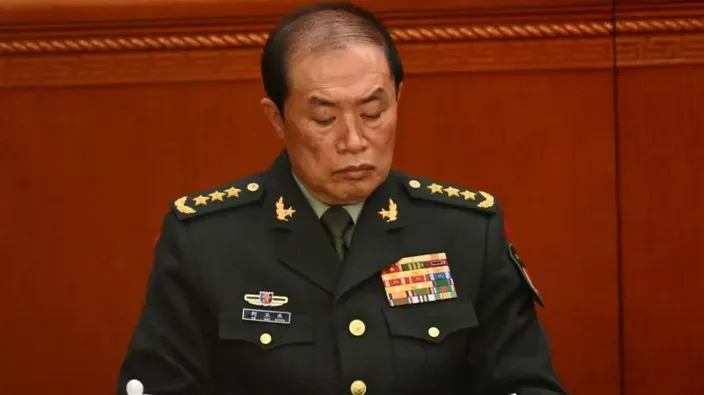
BEIJING, Oct 18: China has expelled nine senior generals from both the Communist Party and the military in what observers call one of the largest purges in decades, according to a report by the BBC.
A statement from the Defence Ministry said the generals, most of them three-star officers and members of the party’s Central Committee, were suspected of serious financial crimes involving huge sums.
The move was presented as part of President Xi Jinping’s ongoing anti-corruption campaign, though analysts say it also serves as a political cleansing ahead of the Communist Party’s upcoming plenum, where key economic plans and new leadership appointments will be discussed, the BBC reported.
Thai embassy organizing "Journey to Thailand & Top Thai Brands...

Those removed include He Weidong, the vice-chairman of the Central Military Commission (CMC) and China’s second-highest military officer after Xi himself.
Others are Miao Hua, He Hongjun, Wang Xiubin, Lin Xiangyang, Qin Shutong, Yuan Huazhi, Wang Houbin, and Wang Chunning. Their removal marks a significant reshuffle within the CMC, which oversees all branches of China’s armed forces, the BBC said.
He Weidong’s disappearance from public view since March had already sparked speculation that he was under investigation.
His expulsion makes him the first sitting Politburo member to face prosecution in Xi’s rule, underscoring the widening scope of the campaign. The Defence Ministry accused the generals of “grave violations of party discipline and duty-related crimes of extremely serious nature,” adding that they now face military prosecution, according to the BBC.
This move follows a series of similar purges across the military and government, including the removal of former defence ministers Wei Fenghe and Li Shangfu, as well as the unexplained disappearance of foreign minister Qin Gang last year.
Analyst Neil Thomas of the Asia Society Policy Institute told BBC Chinese that Xi’s purges are designed to strengthen party control by eliminating “corrupt or disloyal cadres,” but they may also create a rigid, risk-averse bureaucracy. Many are now watching the Fourth Plenum, set for October 20, for signs of how deep the shake-up has gone, the BBC reported.