KATHMANDU, March 2: Panic buying gripped fuel stations across the country on Sunday as motorists rushed to stock up on petrol and diesel, pushing single-day sales to nearly double the usual volume. The sudden spike comes amid escalating tensions in the Middle East, the reported death of a Nepali national, and a week-long holiday coinciding with Holi and the March 5 general elections.
According to the Nepal Oil Corporation (NOC), petrol sales soared to 4,700 kilolitres (kl) on Sunday, compared to the normal daily average of 2,500 kl. Diesel sales also rose sharply to 6,000 kl nationwide. In the Kathmandu Valley alone, the Thankot depot supplied 1,650 kl of petrol and 1,250 kl of diesel in a single day.
The buying frenzy follows growing anxiety over possible supply disruptions and price hikes after the recent US–Israel strikes on Iran and Tehran’s retaliatory actions. Public concern deepened further after news emerged of the death of Nepali national Diwas Shrestha in the Gulf region amid the escalating conflict, heightening fears about the broader impact of the war on Nepal’s economy and overseas workforce.
China says U.S. use of force aggravating Middle East tension

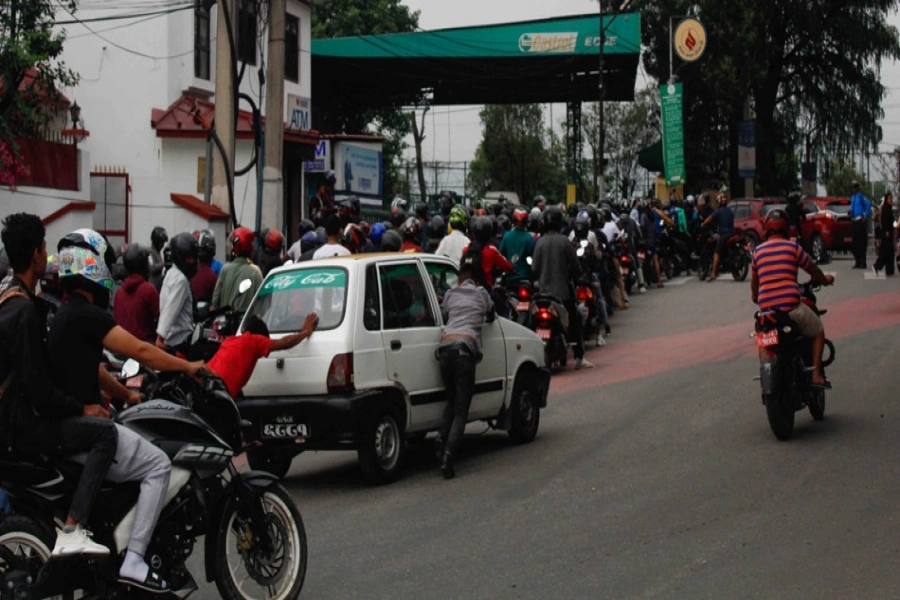
Long queues of two-wheelers and four-wheelers were seen at fuel stations across the Valley from early Sunday morning. Many motorists said they feared an imminent price rise or shortage if the conflict intensifies and affects global oil supply chains.
Despite the rush, the NOC has sought to reassure the public that fuel supply remains stable. Managing Director Chandika Prasad Bhatta, through social media, urged consumers not to hoard petroleum products unnecessarily, stating that imports are continuing smoothly via the cross-border pipeline system.
Bhatta said the corporation is committed to ensuring uninterrupted fuel supply even during the election period. To discourage hoarding, the NOC has directed fuel stations not to sell petroleum products in separate containers and to dispense fuel only directly into vehicle tanks.
While global oil markets remain volatile, officials insist there is no immediate shortage in Nepal. However, with geopolitical tensions persisting and public anxiety running high, the coming days may test both supply management and consumer confidence.